
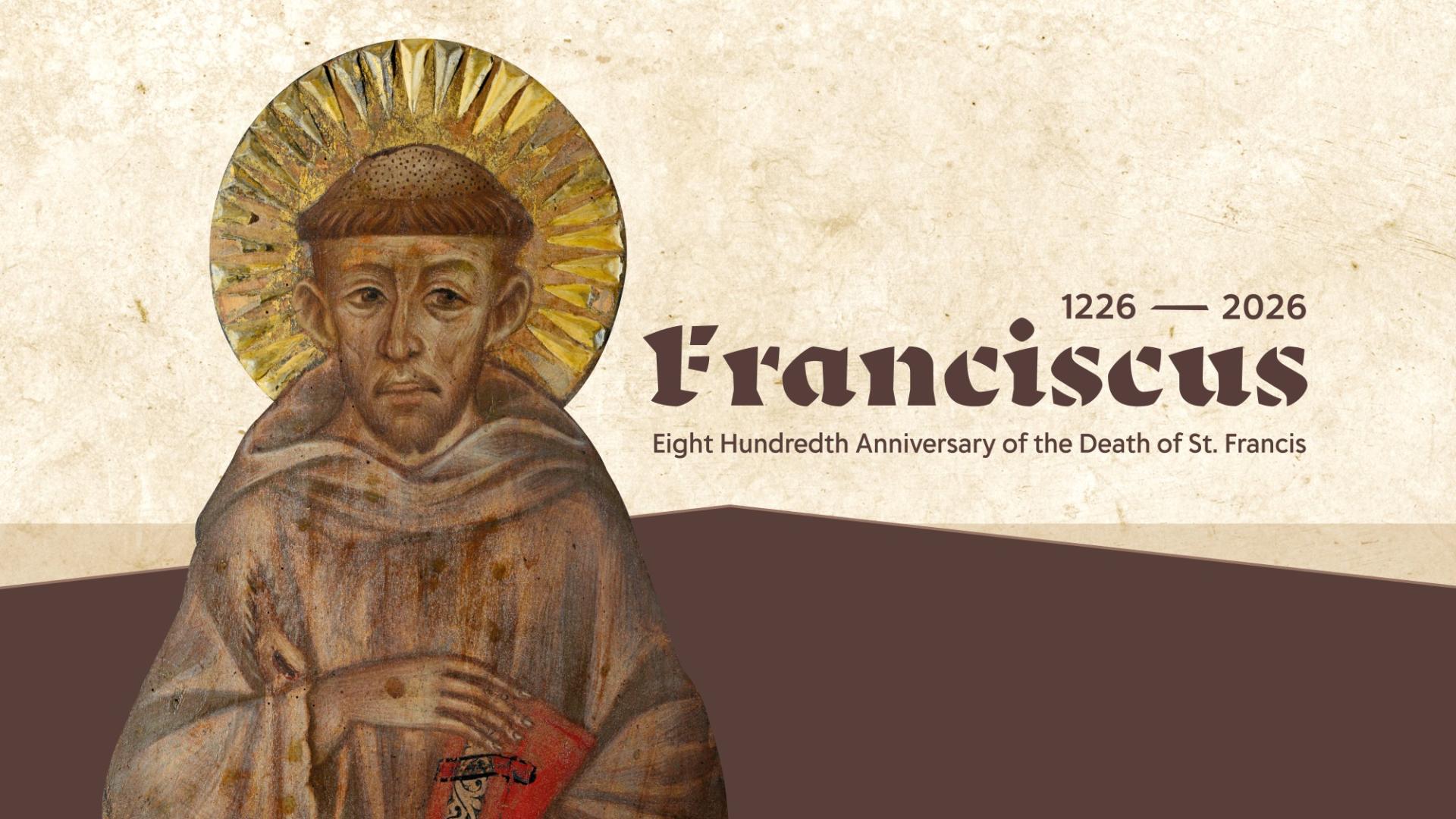
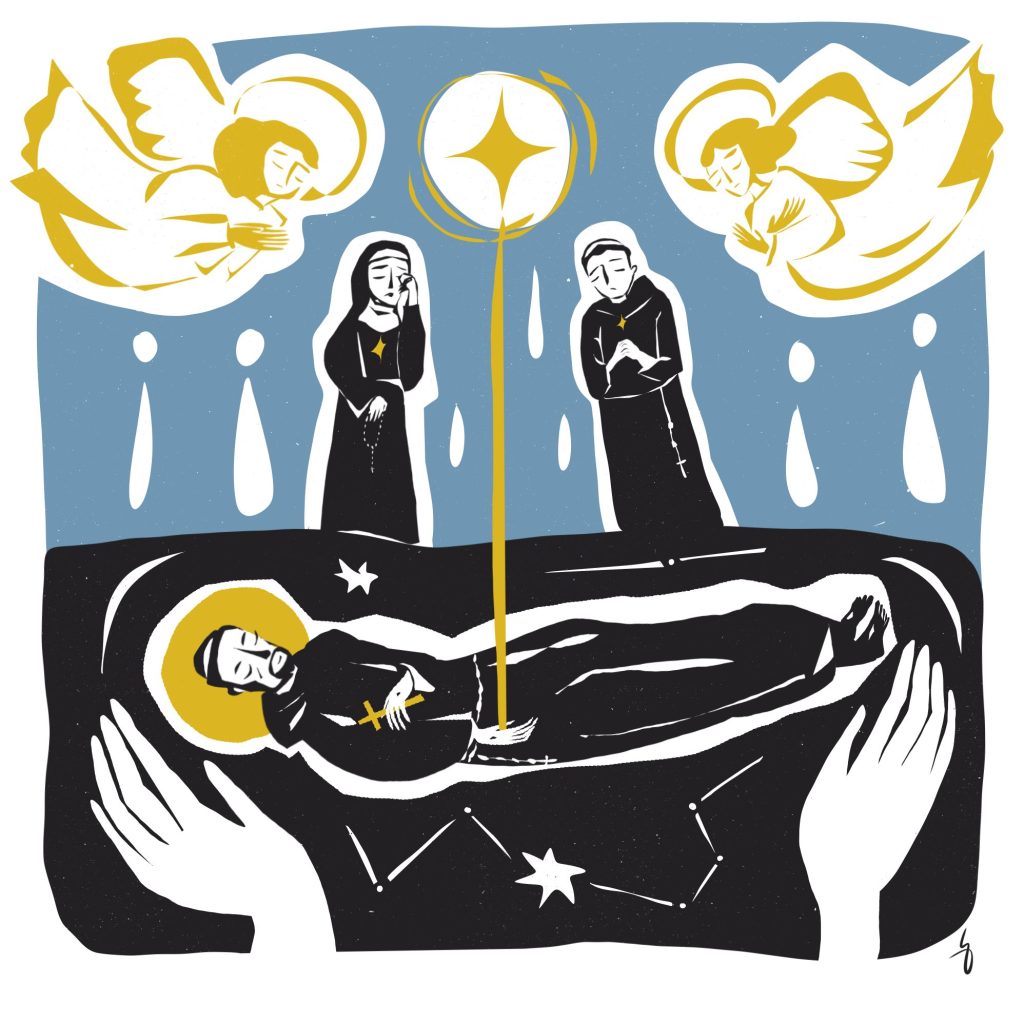
In contemporary society, we rarely think about death, not only because it reminds us that we are limited creatures, but also because it exposes the false security we get from believing that we are masters over time and life. Francis of Assisi, on the other hand, welcomed Sister Death with song, because he understood that death is not the termination of everything but the end that allows us to enter into full communion with God. Indeed, life is a gift that must be given back: “Hold back nothing of yourselves for yourselves, that He Who gives Himself totally to you may receive you totally!” (Letter to the Entire Order 29, FF 221).
At the end of his days, Francis contemplated his life and discovered the presence and action of the Lord everywhere. Thus, in his Testament he repeats, like a refrain: “The Lord gave me, Brother Francis… The Lord gave me such faith in churches… The Lord gave me, and gives me still, such faith… And after the Lord gave me some brothers, no one showed me what I had to do, but the Most High Himself revealed to me that I should live according to the pattern of the Holy Gospel” (Testament 1-14, FF 110-116). This is the same attitude shown by Clare of Assisi when she wrote her Testament, in the last days of her life. In fact, she, too, recognised God as the Divine Giver, to whom thanks must be given for all the gifts he bestows, especially the gift of her vocation (cf. Testament of St Clare 1-2, FF 2823).
The celebration of the 800th anniversary of the Easter of Francis of Assisi invites us to contemplate our life, both personally and as a Franciscan Family, with the eyes of faith, and by doing so, perceive the divine presence and action in everything, even in the difficult and dramatic situations we have experienced or are experiencing now.
It is an opportunity to thank God for all the gifts he has bestowed on us, particularly for the gift of Francis of Assisi and his evangelical life, which has become our charism, articulated in different nuances of discipleship and apostolate, and which today still has the strength to call out to women and men of all cultures, both inside and outside the Catholic Church.
As his passing drew near, Francis said to his brothers: “‘Let us begin, brothers, to serve the Lord God, for up until now we have done little or nothing.’ He did not consider that he had already attained his goal, but tireless in pursuit of holy newness, he constantly hoped to begin again. He wanted to return to serving lepers” (1 Celano 103, FF 500). The Easter of Francis of Assisi reminds us that every day is an opportunity to start fresh, to renew our response to the call of the Lord. He sends us forth as brothers and sisters to the whole world, to bear witness to Him in word and deed, so as to draw everyone to the love of God (cf. Prayer Inspired by the Our Father 5, FF 270).
Finally, celebrating the passing of the Poverello is an occasion to remember that we are all called to holiness, and that like Francis, we are invited to reflect the beauty of the Gospel and of our Franciscan vocation, because “holiness is the most attractive face of the Church” (Gaudete et exsultate 9).
The Guidelines offer four areas for reflection and action. We have drawn from these to offer brief reflections, inviting each of us to pause, pray, and consider how we can live the Franciscan spirit in our daily lives.
Our being in Christ
“Let us refer all good to the Lord, God Almighty and Most High, acknowledge that every good is His, and thank Him, “from Whom all good comes, for everything” (Earlier Rule 17: 17, FF 49).
Reflect: Our life is a gift from God. Like Francis, we are invited to recognise God as the giver of all good and to respond with gratitude.
Our being brothers and sisters
“The Lord gave me some brothers” (Testament 14, FF 116).
Reflect: Francis recognised fraternity as a gift received from God. We too are called to receive one another as brothers and sisters, valuing our relationships and creating spaces where others feel welcomed, heard, and accepted.
Our being in communion
“The Lord gave me such faith in churches” (Testament 4, FF 111).
Reflect: Francis recognised the Church as a gift and sought to live his vocation within it. We too are invited to share the gifts of the Franciscan spirit with others, appreciating the goodness in different cultures and people, and allowing the example of Francis to inspire a more truly human and compassionate world.
Our being in the world
“For this reason He has sent you into the whole world: that you may bear witness to His voice in word and deed” (Letter to the Entire Order 9, FF 216).
Reflect: We are called to share generously the gifts we have received, becoming witnesses of hope and joy through both our words and our actions. Like Francis, we are invited to notice where the Spirit is at work today and to bring the joy of the Gospel especially to those who are on the margins.

0 Comments