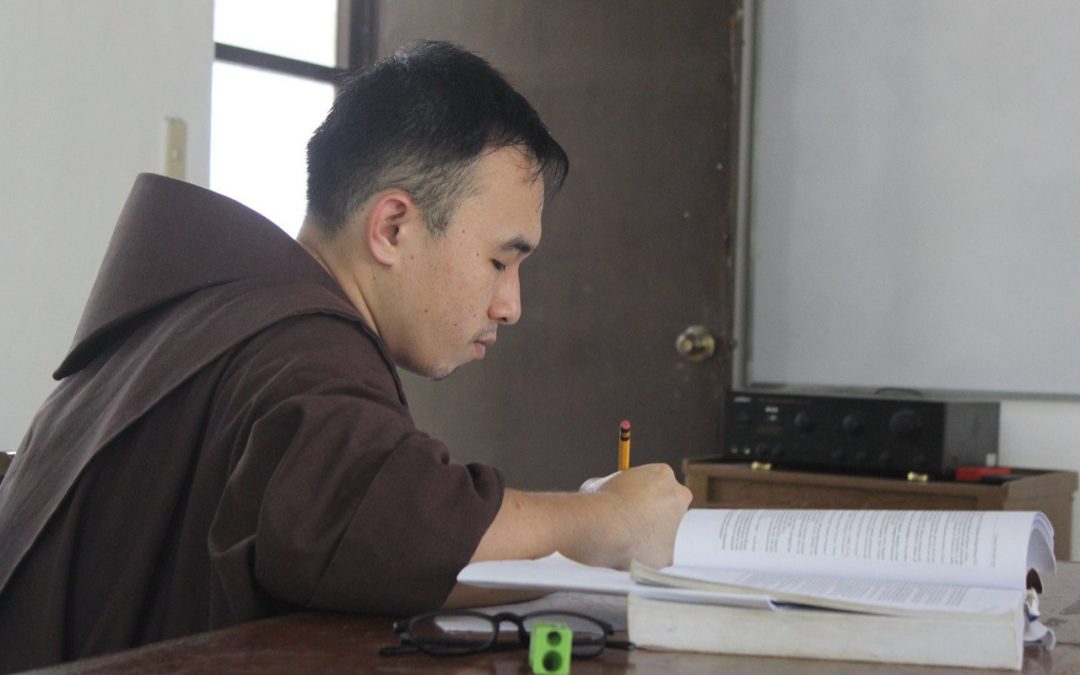
Novice Marvin Voo recently entered the Franciscan novitiate house in the Philippines. He shares a short reflection on his formation journey thus far.
My journey has been very exciting and challenging. My postulancy time of come and see with the friars was about two and a half years. It began in St James of the Marches Friary in Johor Bahru in 2017, moved to the Franciscan Friary in Penang in 2018, and moved to Singapore in 2019. I was in Greccio Friary in upper Bukit Timah from early to mid this year. Now I am in Juan De Plasencia, the Franciscan Novitiate House in Laguan, Liliw, Philippines. Yes, the wind blows wherever it pleases (John 3:8) in the life of the Franciscans.
My time experiencing Franciscan life with the friars as a Postulant was more about knowing myself and establishing a deeper relationship with God as our Father, as St Francis did when he was rebuilding the physical church. I continued to say yes to God, and He brought me here to the Philippines for my novitiate. I wish to cherish whatever experiences come here as the next step of my relationship with God, to know more of him and to follow the way of St Francis in following Jesus, so that what is bitter becomes sweet.
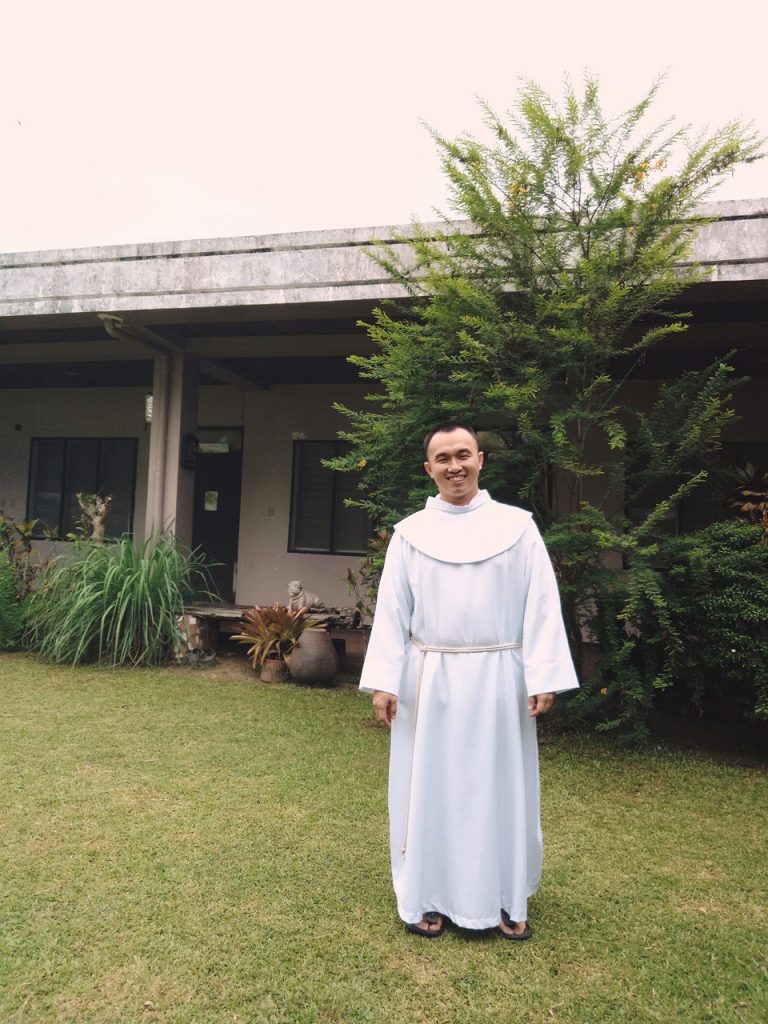
Investiture of the Noviciate Habit in the Philippines.
We novices had our Investiture on 15 July, after a three-day Investiture Retreat. Please pray for us in our year of discernment.
The Investiture is the formal reception of the Franciscan habit. During the ceremony , newly received members of the community symbolically shed their former identities in the world and begin their new lives as religious.
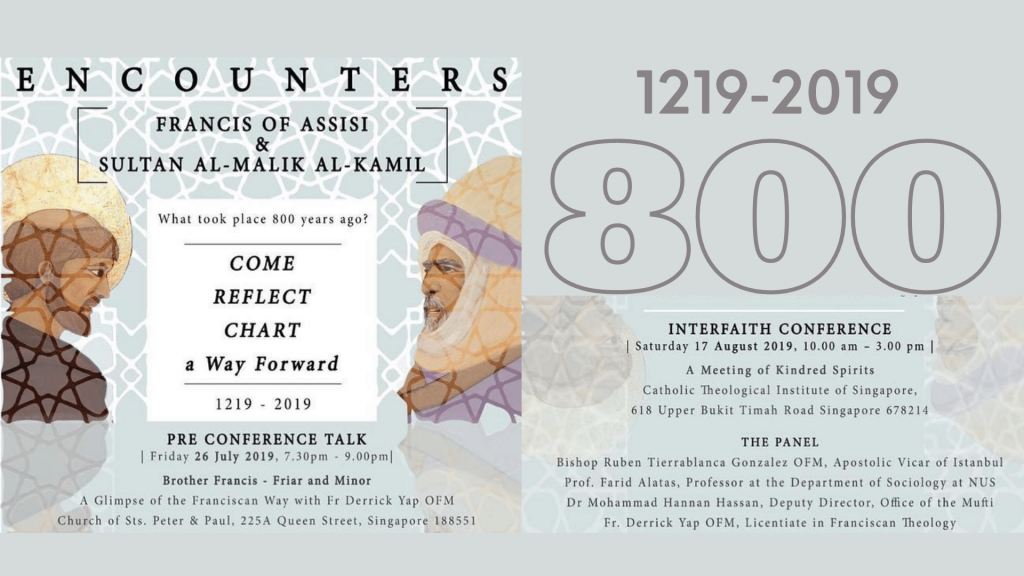
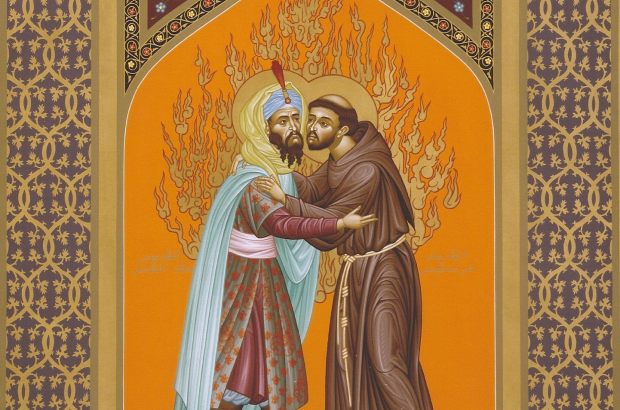
What took place 800 years ago? In the year 1219, while on his way to meet Al-Malik, Francis of Assisi crossed the Crusader army lines and found himself in the siege of Damietta. Their subsequent encounter continues to inspire dialogue today as it become more important and relevant. Check out the recorded videos of the conference from the playlist below.
«
Prev
1
/
1
Next
»
Francis of Assisi & Al Malik – Highlights of ENCOUNTERS
2019 August 17 Franciscans Inter Faith Fr Derick
2019 August 17 Franciscans Inter Faith Ustaz Dr Mohammad Hannan Hassan
2019 August 17 Franciscans Inter Faith Sister Theresa Seow
2019 August 17 Franciscans Inter Faith Prof Farid Alatas
2019 August 17 Franciscans Inter Faith Bishop Ruben Tierrablanca
Francis life is that of his meeting with Sultan al- Malik al-Kāmil in 1219. It was the time of the Fifth Crusade, and since Francis opposed all killing, he sought the blessing of the Cardinal, who was chaplain to the Crusader forces, to go and preach the Gospel to the Sultan. The Cardinal told him that the Muslims only understood weapons, and that the one useful thing a Christian could do was kill them. However, Francis persisted and at last, the Cardinal agreed he could go, although he was certain that Francis and Illuminato, the brother travelling with him, would die as martyrs. The two left the Crusader encampment singing the psalm, “The Lord is my shepherd …”
They were captured and brought before the Sultan, who asked if they wished to become Muslim. Francis replied that they had come to seek his conversion, and if they failed, then let them be beheaded. According to legend, Francis offered to enter a furnace to demonstrate the truth of Christ’s Gospel.
The Sultan was deeply impressed by Francis’ courage and sincerity, and invited him to stay. For a month, Francis and the Sultan met daily. Although neither converted the other, the Sultan had such fondness for his guests that he spared their lives and allowed them to visit Christian holy places under Muslim control. He also presented Francis with a beautifully carved ivory horn that is today among the relics kept in the Basilica of St Francis in Assisi. It is recorded that Francis and Malik al-Kāmil parted as brothers.
How different history would be if the crusades had not happened. During the First Crusade, no one was spared when the Crusaders took Jerusalem in 1099. Men, women and children were hacked to pieces until, the chronicle says, the Crusaders’ horses waded in blood.
During the Fifth Crusade, as Christianity in the West preached the holiness of war, Francis was a voice crying in the wilderness. In a sense, Francis became the soldier he had dreamt of becoming as a boy; he was as willing as the bravest soldier to lay down his life in defence of others. However, there was a crucial difference. Francis wanted not the conquest but the conversion of his adversary.
Francis’ actions – equivalent to leaping into a furnace – were possible because nothing was more important to him than Christ and His Kingdom. As Francis wrote in his Admonitions, “They are truly peacemakers who are able to preserve their peace of mind and heart for love of our Lord Jesus Christ, despite all that they suffer in this world.”