Blessed John Duns Scotus (1266 -1308)

Blessed John Duns Scotus (1266 -1308)

John Duns, later known as the Subtle Doctor, was called Scotus on account of his birth in Scotland. He entered the Franciscans at the age of fifteen and was later ordained a priest. After studies in Oxford and Paris, he went on to hold teaching positions in Paris and Cologne, where he was acclaimed as one of the greatest of the Scholastic theologians. His mystically charged theology held particular charm for the Franciscans, rendering in philosophical terms the creation-centered spirituality of their holy founder. 

Like other scholastic theologians, Duns Scotus tried to present a philosophical “proof” for the existence of God. In his case, he focused on the observation that all things require some prior cause for their existence. From this, he predicated the existence of a primary infinite cause which owes its existence to itself alone. Yet he drew a distinction between what could be “proved” by reason and what could be known only by faith. There was a difference between a rational knowledge of the existence of God and a saving knowledge of the love of God. 

Duns Scotus defined God as infinite love. He taught that the incarnation was not required as payment for sin; it was willed through eternity as an expression of God’s love, and hence God’s desire for consummated union with creation. Our redemption by the cross was likewise an expression of God’s love and compassion rather than an appeasement of God’s anger or a form of compensation for God’s injured majesty. He believed that knowledge of God’s love should evoke a loving response on the part of humanity. He wrote, “I am of the opinion that God wished to redeem us in this fashion principally in order to draw us to his love.” Through our own loving self-gift, he argued, we join with Christ in becoming “co-lovers” of the Holy Trinity.

“I am of the opinion that God wished to redeem us in this fashion principally in order to draw us to his love.”

– Blessed John Duns Scotus

Unlike philosophers in the line of Plato, Scotus did not value the ideal at the expense of the real. Created things pointed to their Creator not only by their conformity to an ideal pattern but by their individuality and uniqueness—what he termed their “thisness” (haecceitas). Thus, the path to contemplation should proceed not only through the mind but through the senses. This insight of Scotus especially endeared him to the most highly distinctive of Catholic poets, the Jesuit Gerard Manley Hopkins. He paid tribute to the Subtle Doctor in one of his poems: 

Of realty the rarest-veined unraveller; a not 
Rivalled insight, be rival Italy or Greece.


Duns Scotus died on November 8, 1308. He was beatified in 1993. 

Source : The Franciscan Saints  (Franciscan Media) 

Louis Massignon (1883-1962)

Louis Massignon (1883-1962)

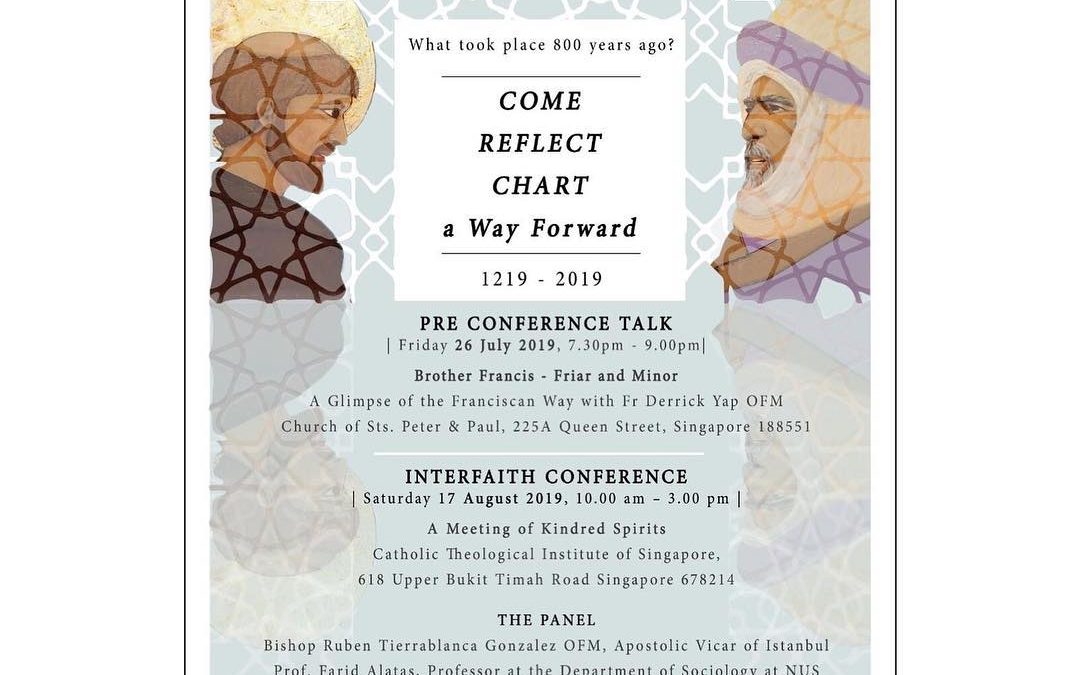
Louis Massignon, a French scholar, played a key role in promoting the cause of Catholic-Muslim dialogue. The seeds of his vocation were planted in his youth and his avid interest in Arab culture. While conducting research in Mesopotamia he was arrested and charged as a spy. During his captivity, he received a profound mystical experience, which brought him to an overwhelming sense of God. This prompted an ardent return to his Catholic roots. But he was also deeply affected by the experience of Muslim piety and vowed to devote his life to increasing understanding between this two religious traditions, both heirs of the faith of Abraham. (He was also deeply influenced by his friendship with the desert hermit Blessed Charles de Foucauld.) In 1931 he became a Franciscan tertiary, taking the name “Ibrahim” (the Arabic form of Abraham).

A key point for reference for Massignon was God’s visit to Abraham as a stranger in the form of three angels. By providing hospitality for God in our hearts, he wrote, “we enter the path of mystical union.” He considered his encounter with Muslim spirituality (one of the three Abrahamic faiths) as a form of “sacred hospitality”. At an abandoned Franciscan church in Egypt where St. Francis had met Sultan al-Malik al-Kamil, Massignon made a vow, offering his life for the Muslims, “not so they would be converted, but so that the will of God might be accomplished in them and through them.”

Later in life, Massignon became a Melkite Greek Catholic and was ordained a priest, permitting him to celebrate the Mass in Arabic according to the Byzantine Rite liturgy. A follower of Gandhian nonviolence, he supported efforts to promote peace in the Middle East and for a peaceful resolution of the war in Algeria. For the sake of sacred hospitality, he became an outspoken advocate for Muslim refugees in France.

He died on October 31, 1962.

Canonization of the Blessed Martyrs of Damascus

Canonization of the Blessed Martyrs of Damascus

In the framework of the celebrations of the Eighth Centenary of the death of St. Francis 1226-2026, in the commemorative year of the Stigmata 2024, on Sunday 20 October Pope Francis will proclaim eight Friars Minor of the Custody of the Holy Land, martyrs of the faith in Damascus in 1860, saints. They are accompanied in martyrdom and glory by the three blessed Massabki brothers, lay Maronites.

In July 1860, the persecution of Christians by the Shi’ite Druze in Lebanon spread to Syria. On the 9th  July , the populous Christian quarter of Damascus was set on fire and the people put to the sword. Christians of various denominations and rites suffered all sorts of violence. That same night the Franciscan friary of St. Paul was also attacked. The eight religious who lived there – seven of Spanish nationality and one of Austrian nationality – together with three lay Maronite collaborators who had taken refuge there, were slaughtered for refusing to deny their Christian faith and embrace Islam. The bodies of the martyrs, pitifully recovered a few days after the massacre, were buried in a common tomb which, with the rebuilding and consecration of the friary church in 1866, became a destination of devotion by the Christians of Damascus. 

The new saints of the Order of Friars Minor and the Maronite Catholic Church will be:

Manuel Ruiz LópezGuardian of the friary; was born in 1804 in San Martín de las Ollas, Burgos, Spain. He entered the Friars Minor in 1825 and was ordained a priest in 1830. The following year he was sent to the Holy Land where, after learning the local languages, he carried out a fruitful apostolate. Forced to return to Europe in 1847 for health reasons, he returned to the Holy Land in 1858. On the night of the massacre, as soon as the rioters entered the friary, he ran to the church to consume the Eucharistic Species, and was slaughtered  at the foot of the altar.

Carmelo Bolta Bañuls, parish priest, was born in 1803 in Real de Gandía, Valencia, Spain. In 1825 he was received among the Friars Minor and in 1829 he was ordained a priest. In 1831 he left for the Holy Land where he resided in the friaries of Jaffa, Damascus and Ain Karem at the Sanctuary of the Visitation. In 1851 he was transferred to Damascus as parish priest and teacher of Arabic. 

Engelbert Kolland, parochial vicar, born in 1827 in Ramsau, Salzburg, Austria. He entered the Friars Minor in 1847 and was ordained a priest in 1851. He reached the Holy Land in April 1855. He carried out his missionary apostolate first at the friary of the Holy Sepulchre, Jerusalem, then in Damascus as assistant parish priest, where he was much loved by the people. 

Nicanor Ascanio Soria, was born in 1814 in Villarejo de Salvanés, Madrid, Spain. In 1830 he entered the Friars Minor. Due to the suppression of religious, he was ordained a priest amongst the diocesan clergy. With the reopening of the College for the Missions of Priego di Cuenca, he was able to return to the Friars Minor in 1858. He arrived in the Holy Land in February 1859 and was assigned to the friary of Damascus. His readiness for martyrdom was a constant note of his spirituality.

Nicolás María Alberca Torres, born in 1830 in Aguilar de la Frontera, Córdoba, Spain. Already a religious amongst the Brothers of the Jesús Nazarene Hospital in Cordoba, he was received amongst the Friars Minor in 1856 and ordained a priest in 1858. Called to missionary life, he arrived in the Holy Land in 1859 and was assigned to the friary of Damascus to learn the Arabic language.

Pedro Nolasco Soler Méndez, was born in 1827 in Lorca, Murcia, Spain. After some work experience he was received at the age of twenty-nine amongst the Friars Minor in 1856 and ordained a priest in 1857. The following year he submitted a request for the mission of the Custody of the Holy Land, where he arrived on the 20th February, 1859. He was sent to the friary of St. Paul in Damascus where he spent just over a year.

Francisco Pinazo Peñalver, was born in 1802 in the village of El Chopo in Alpuente, Valencia, Spain. He was admitted to the novitiate of the Friars Minor in 1831. As a lay brother he held the office of sacristan until 1835, the year of religious suppression in Spain. In order to re-embrace community life, he opted for service in the Custody of the Holy Land, where he arrived in October 1843. For about 17 years he worked as a cook and tailor in various friaries. In the friary of Damascus, at the time of his martyrdom he was the sacristan. 

Juan Jacob Fernández, was born in 1808 in the town of Moire, Ourense, Spain. In 1831 he entered as a lay brother amongst the Friars Minor. Unfortunately, the suppression of 1835 interrupted his experience of conventual life for a few years. In 1858 he asked to be associated with the Custody of the Holy Land. In 1859 he was serving as the cook at the friary in Damascus.

Francis Massabki, a Maronite Christian, silk merchant, was well known in Damascus and esteemed as an honest and pious man. He was married and the father of eight children. He gave an example of great generosity everywhere, especially towards the poor and needy. He was linked to the Franciscan friars for whom he acted as a proxy. Together with his brothers Mooti and Raffaele he was at the friary of St Paul at the hour of his martyrdom.

Mooti Massabki, lived with his wife and five children in the same house as his older brother Francesco. He attended the convent of St. Paul daily, both for prayer and to carry out teaching activities in the local school for the boys. Ready to shed his blood for Christ, as he taught in catechism lessons, he did not hesitate to offer his life in the name of faith. His two sons, Naame and Joseph, were pupils at the convent school at the time and were eyewitnesses to the martyrdom.

Raffaele Massabki, younger brother of Francis and Mooti, unmarried, gladly lent his help to his family and to the friars; he was very devoted to Our Lady and paused for a long time in prayer in the church of the friary. He was still present within the conventual walls of St. Paul on the night between 9th and 10th July 1860, when the Druze burst in, by whom he was murdered together with his two brothers.

In 1872 the Order of Friars Minor began the process for the beatification of Manuel Ruiz and the seven confreres. With a special procedure authorized by Pius XI at the request of the Maronite Patriarchate, the names of the three Massabki brothers, collaborators of the religious, were added to the group of Friars Minor shortly before the beatification. The rite was solemnly celebrated in St. Peter’s Basilica in the Vatican on the 10th October, 1926. 

The resumption of the Cause has recently been determined by the observation of the ever-growing fame of martyrdom of the eleven Martyrs of Damascus and the spread of their cult throughout the world, particularly in the Maronite Church. Associated with this was the certainty that their canonization could constitute a message of dialogue, peace and unity in the Middle Eastern context, which was less and less serene and more and more agitated by the winds of war. To this end, the Holy Synod of Maronite Bishops in the year 2022 invoked from Pope Francis the canonization of the Blessed Massabki Martyrs, heroic exponents of Maronite lay holiness. The Minister General of the Order of Friars Minor and the Custos of the Holy Land also joined in the petition, emphasizing the aforementioned pastoral opportunities and in honour of the Eighth Centenary of the death of St. Francis of Assisi.

In the Consistory of the 1st July 2024, Pope Francis established that the solemn Canonization would come to pass in St. Peter’s Square on Sunday the 20th October, 2024, World Mission Day.

Source: OFM Official Website

Saint Peter of Alcantara (1499-1562)

Saint Peter of Alcantara (1499-1562)

St. Peter, who was born in Alcantara, a small town in Spain, studied at the great university of Salamanca, and entered the Franciscans at the age of sixteen. From the start, Peter adopted a habit of extreme austerity. He trained himself to sleep no more than two hours at night; he wore no sandals on his feet; he would eat no flesh and drink no wine. Eventually he won permission to found a group of Franciscans along these lines. It was said that their cells – only seven feet long – resembled more graves than rooms. Nevertheless, he found many willing followers.

In the course of extensive preaching tours, he came to know St. Teresa of Avila and became her spiritual advisor. At that time, she was seeking courage to undertake her reform of the Carmelite Order and she later testified on behalf of his canonization that it was Peter, more than anyone, who had encourage her mission. “When I came to know him he was very old, and his body so shriveled and weak that it seemed to be composed as it were of the roots and dried bark of a tree rather than flesh,” she wrote. She also claimed, after his death in 1562, to receive visions of Peter, so that “Our Lord has been pleased to let me enjoy more of him than I did when he was alive.”

One time a brother was complaining to Peter about the wickedness of the world, and the saint replied. “The remedy is simple. You and I must first be what we ought to be; then we shall have cured what concerns ourselves. Let each one do the same, and all will be well. The trouble is that we all talk of reforming others without ever reforming ourselves.”

St. Peter died on October 18, 1562. He was canonized in 1669.

Source : The Franciscan Saints  (Franciscan Media)