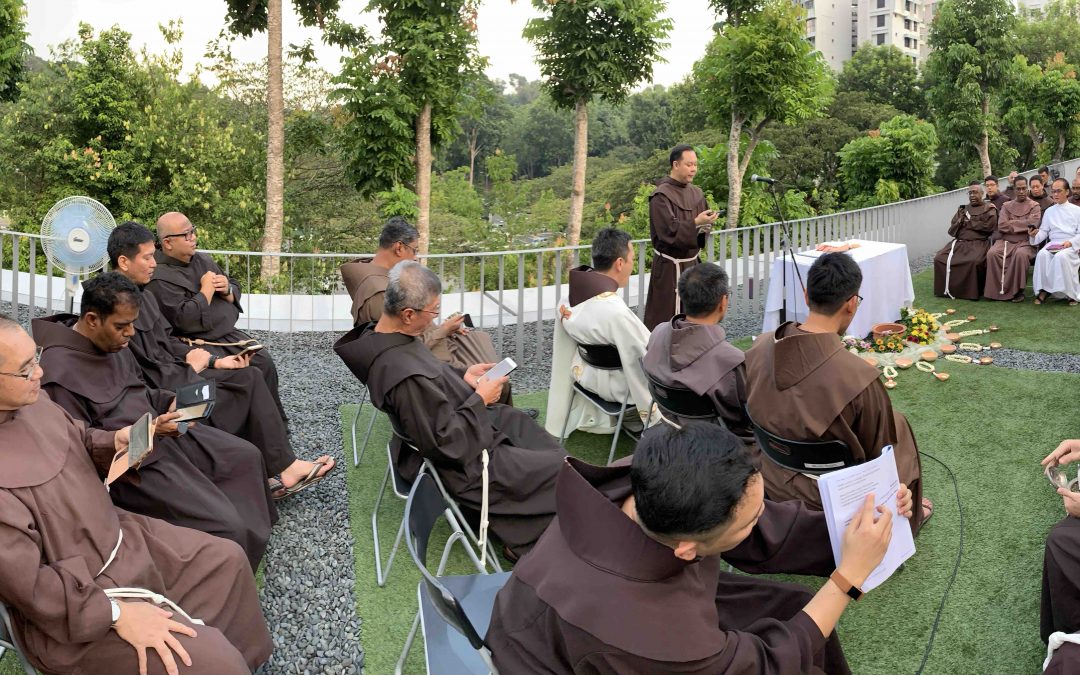
The start of the year saw fresh appointments within the Custody of St Anthony.
Having completed the 2019 Custody Chapter in October last year, and after much consultation, prayer and deliberation, our Custos, Friar Derrick Yap, announced new appointments to the friars on 25 Oct 2019.
The new appointments took effect on the 1 Jan 2020, and run until the end of 2022. Assignments of offices, along with movements of members within the communities take place once in three years, following a Custody Chapter or meeting.
Below is the full list of appointments (and movements) of the brothers.
St Anthony’s Friary (Singapore)
Peter Michael (Guardian)
John Paul Tan
Michael D’Cruz
Julian Mariaratnam
Martin Low
Kenny Anthonysamy
Gerard Victor
John Wong
Justin Lim
Jason Richard
Esmond Chua
Aiden Peter Jr
Greccio Friary (Singapore)
Vernon Chua (Guardian)
Joseph Nasanathan
Rowland Yeo
Derrick Yap
Robin Toha
Crispus Mosinoh
Sixtus Pitah Amit
Gerald Tan
Gerald Saimel (Friars-In-Initial Formation)
Cosmas Francis (Friars-In-Initial Formation)
Nelson Evarinus (Friars-In-Initial Formation)
Sylvester Singh (Postulant)
Julian Chua (Postulant)
St. Francis of Assisi Friary (Sarawak, Malaysia)
William Lee (Guardian)
Don Don Ramerez
David Au
Cruzender Alex
St James of the Marches (Johor, Malaysia)
Joseph Lee (Vicar)
Moses Yap
Claurence Motoyou
Penang Friary (Malaysia)
Arul Mariadass (Guardian)
John Soh
Oliver Tham
Timothy Fong (Postulant)
Overseas
Michael Goh (Auckland, NZ, to end 2020)
Francisco Basyanake (Sydney, AUS, to 2022)
Clifford Augustine (Franciscan Chapel Centre, Roppongi, Tokyo)
Marvin Voo (Manila,PH,to end of novitiate)
Parishes
CHURCH OF ST MARY OF THE ANGELS
Parish Priest: Michael D’Cruz
Assistants: Gerard Victor & Esmond Chua
ST ANN CHURCH (Kota Padawan) Kuching, Malaysia
Rector: William Lee
Assistants: Don Don Ramarez, David Au & Cruzender Alex
RISEN CHRIST CHURCH Penang, Malaysia
Parish Priest: Arul Mariadass
Assistant: Oliver Tham
ST ELIZABETH CHURCH (Kota Tinggi) Johor, Malaysia
Administrator: Joseph Lee
JOSEPH CHURCH (Plentong) Johor, Malaysia
Assistant Parish Priest: Moses Yap
CHURCH OF THE IMMACULATE CONCEPTION (Johor Bahru) Johor, Malaysia
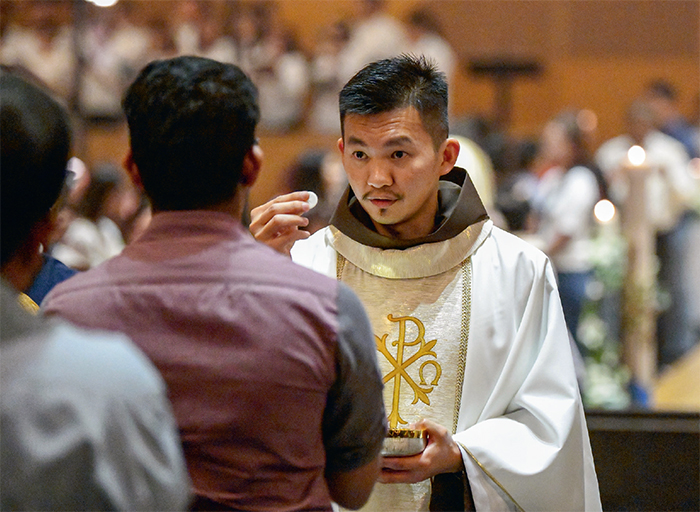
On 10 October, the newly-elected leadership team of the Custody of St Anthony Malaysia- Singapore-Brunei began its three-year term. Friar Derrick Yap is Custos, and his Council members are Friar Michael D’Cruz, Friar Julian Mariaratnam, Friar Martin Low and Friar David Au.
A few words from the Custos, Brother Derrick:
“Lord, give me a scripture verse to live by as I take on this new role” was the question in my heart after I said “yes” to my Provincial Minister Friar Philip Miscamble on 10 October, when he asked if I would accept the role of Custos.
That very evening, during Vespers, the scripture reading read thus “you should all agree among yourselves and be sympathetic; love the brothers, have compassion and be self-effacing. Never pay back one wrong with another, or an angry word with another one; instead, pay back with a blessing. That is what you are called to do, so that you inherit a blessing yourself.” (1 Pet 3:8-9)
I literally exclaimed that my guiding passage had been revealed to me! To love the brothers, that’s my call and my mission as I assume the role of Custos. For those unfamiliar with the term, “Custos” is “Custodian” in English, and for me, it is the service of leadership of the Franciscan Friars in Malaysia-Singapore-Brunei.
St Francis of Assisi, calling himself a “friar minor”, wanted his brothers to be minor (or lesser), and hence even the titles given to leaders in our Order reflect this sense of minority. Instead of “Superior” or “Prior”,
St Francis preferred ‘Minister”, “Guardian” and “Custodian”. Franciscan leaders are meant to serve, guard and look after.
Hence this scripture passage hit the nail on the head for me: to love the brothers in the way the Lord wants me to. Our Custody Statutes state that the task of the Custos is “to visit the brothers regularly, exhort them spiritually, support them and humbly and charitably correct them”. I intend to do just that, if the friars allow me to, and to humbly journey with them towards greater authenticity and audacity as we live our Franciscan life and charism, in the service of God and God’s beloved people. May the Holy Spirit who inspired St Francis continue to inspire us, the sons of St Francis, today.
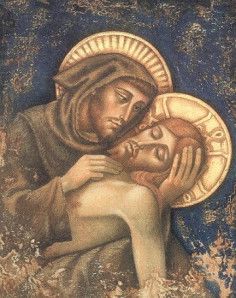
Caught up in life and its vicissitudes, we can begin to believe the great myth of human ego that this earthly life lasts forever and then, when Sister Death draws near to us, we are lost in panic, lost in pain. We are simply lost, and we hold out against her, not knowing that her gentle purpose is to bring us home. We have forgotten how to die.
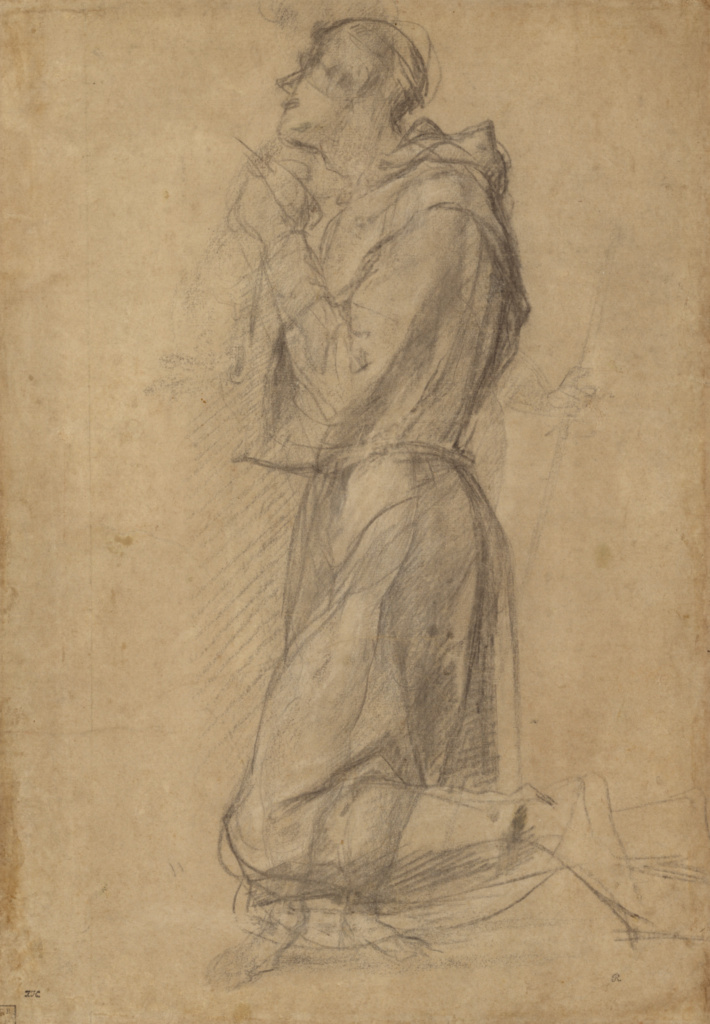
St Francis remembered how to die. He knew that when we face the embrace of our sister when it comes, we must do so with love. We must yield to her, and allow ourselves to be ushered by her into the Divine Presence, and for this to happen in such a gentle way, we must practice dying.
We must die, every day, just a little. We must die to our self, die to our false self, die to every part of us that is the accretion of property and wealth for their own sake. We must die to the use of others, die to holding on to power so as to dominate, and even and especially die to the belief that we are at the centre of all things.
Francis himself died to each of these.
He died to the rich home and sumptuous clothes of his youth and to the joy a young man takes in his own vigour and power. He died to the rich young man, who was the toast of Assisi and the centre of attention, known as “Master of the Revels”. He died to his family’s longing to see him raise their profile and their fortune. He died to the noble knight whose armour was forged from the ambition of his father and the myths that filled the head of a young boy who believed war was noble.
He died to the pride that saw only the sores of the lepers and not their souls. He died to the embarrassment of the poor man who begs for his living from door to door. He died to the rejection of some and the adulation of many. He died to the opinion of bishops and princes, popes and kings.
He died to the fear that the brotherhood would not listen … and would not follow. He died to the desire to be a martyr. He died to the fear of suffering and pain. He died to his own flesh, to the world, to the devil. He died to his own will. He died upon the Cross with Christ.
And in so doing, he remembered how to die, teaching us how to die so that one might truly live.
St Paul almost seems to be taunting death with these two questions in his first letter to the Corinthians. And I am wondering how many of us have the audacity to do that.
The culture of death seems to be around us where the voiceless have no right to life and the pain-filled have the right to end life. Diseases and disasters, pride and profit become tentacles of death – an end from which no living person can escape. Majestic royalty or meagre rogue, all fall within the clutches of death. Doesn’t death appear to win eventually?
No, and never with Christ. St Paul follows his questions with a confident affirmation, “so let us thank God for giving us the victory through our Lord Jesus Christ”. Victory does not belong to death. Instead, death has been destroyed by God. How? By the willingness of Jesus Christ to enter into his Passion where he embraced death (death which cannot contain life itself ), and then, burst forth from the tomb having been raised to new life in the resurrection. That is what we celebrate at the Triduum, particularly in Easter! Death gives way to Life!
I say that Jesus embraced death because it was a sacred and free act of his. Consummatum est, we read in John 19:30; it is consummated or accomplished or finished, depending on the English translation. What is accomplished? The saving act of Christ which culminated on the cross, where the cross of shame becomes the throne of glory. In obedience to God, Jesus countered the disobedience of Satan. In the utter humility of dying naked on the cross, Jesus shamed the pride of the evil one.
We continue to read in John 19 that Jesus gave up the spirit. Jesus is in control. He is not a passive victim of an unjust trial, but a director in bringing forth justice and salvation for all. And perhaps, even psychologically, the example of Jesus can help us face death and face the process of dying: to “take charge” of our own life and death, and how we die.
I sometimes see people who, having been diagnosed with cancer, live as if they have already lost the fight, but I have also seen others battle on and live fully until the very last minute. I would like to mention Venerable Antonietta Meo, an Italian girl who died from aggressive bone cancer just before she turned seven. Despite her young age, she serenely embraced her illness and united her tremendous sufferings with that of Jesus’ Passion. Today, her remains are held in the Church of the Holy Cross in Rome, very near the relics of the true cross, and the process towards her sainthood is underway because she could see her suffering in the light of Christ’s.
Similarly for St Francis; as he neared his end, he called out to Sister Death and welcomed her. He even composed a stanza on Sister Death within the Canticle of Brother Sun.
Praised be You, my Lord, through our Sister Bodily Death, from whom no one living can escape. Woe to those to die in mortal sin. Blessed are those whom death will find in Your most holy will, for the second death shall do them no harm.
We are told that St Francis could embrace Sister Death so readily because he was already assured by the Lord of his salvation. This was the message Francis received when moved to self-pity one day: “Then brother, be glad and rejoice in your illnesses and troubles, because as of now, you are as secure as if you were already in my kingdom.”
It is really easy for those of us who are healthy to talk about sickness and suffering, and have lofty spiritual ideas about it. But I think we need to already begin to confront our own mortality and creatureliness. Sickness and death are part of human living, and it is pertinent to begin confronting these conditions when our health is still holding up and our faith is still unshaken. In fact, it would be wise for us to keep deepening and strengthening our faith in the Lord and in his providence, so that when anything untoward besets us, we have a firm foundation that will not crumble.
I find it beautiful that All Souls Day follows All Saints Day, where our celebration of the latter gives hope to the celebration of the former. Hope that carries us on our journey of faith whilst on earth; hope that breathes light and refreshment in our darkness and tiredness; hope that the ultimate victory is God’s and we just need to claim and participate in this gift.