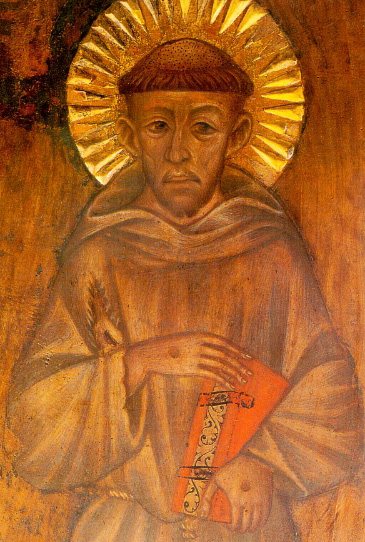
In a one-day observance, some 1,350 faithful passed through the Chapel of San Damiano Franciscan Centre at the Bukit Batok parishon Feb 22 to venerate the relics of three Franciscans.
To mark 800 years since the death of St Francis of Assisi, Pope Leo XIV declared a Franciscan Jubilee Year which began on Jan 10 and will conclude on the same date next year.
The jubilee recalls St Francis’ Transitus on Oct 3, 1226 – a term used to describe his “passing over” from earthly to eternal life.
Catholics in Singapore joined the commemoration with the public veneration of relics at the Church of St Mary of the Angels on Feb 22, when the Friars of the Custody of St Anthony (Malaysia-Singapore-Brunei) opened their chapel to the public.
The centre is generally open to the public for retreats and days of recollection. For the Jubilee observance, it was made accessible to the wider faithful.
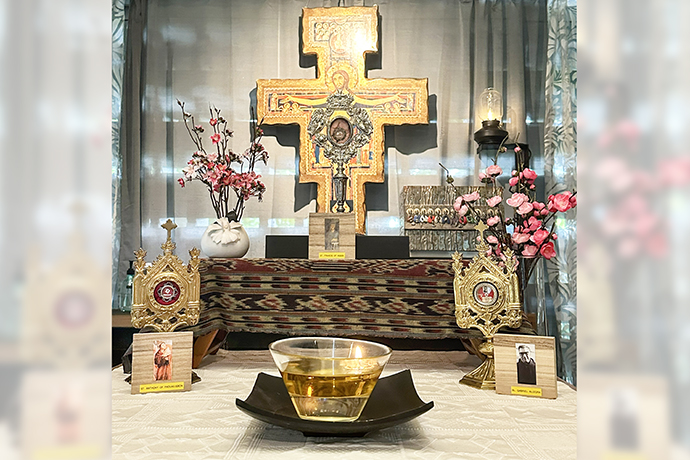
Displayed were first-class bone relics of three Franciscans: St Francis of Assisi, St Anthony of Padua, and Blessed Gabriel Allegra.
Friar Derrick Yap OFM, Custos of the Custody of St Anthony, said the three relics were selected in line with the identity of the Custody.
“It is the Jubilee of St Francis and he is our founder. St Anthony is our patron. Blessed Allegra is our co-patron,” he said.
Bl. Allegra (1907 – 1976), a Franciscan Scripture scholar, translated the Catholic Bible into Chinese from the original Hebrew and Greek texts.
According to Fra Yap, Bl. Allegra was instrumental in the development of the sociological centre in Singapore and played a foundational role in establishing the Franciscan presence here.
“Without him, there would not be the current group of friars,” he said.
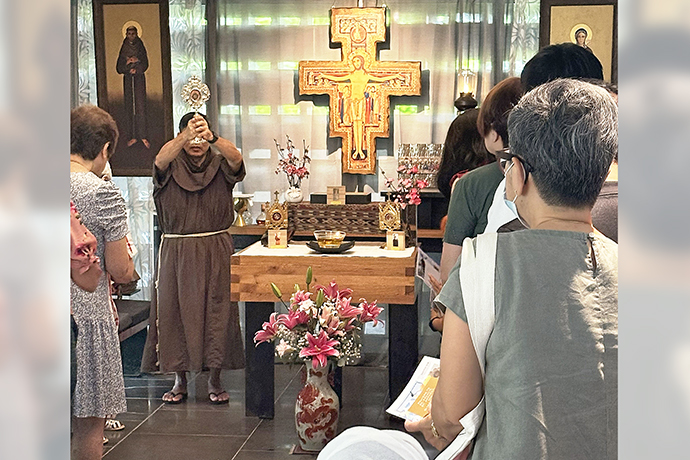
Friar Michael Goh OFM, Director of San Damiano Franciscan Centre, gives a public blessing with the relic of St Francis. Photos: Catholic News.
Oriented to God
Fra Yap said the Jubilee is not merely about recalling events from eight centuries ago. “The relics remind us that they were ordinary human beings just like us,” he said. “They had struggles, desires, and ambitions, but everything in their lives was reoriented towards loving God.”
He added that the reorientation gives meaning to the Franciscan understanding of the Transitus, not as an ending of life, but as a transit from earthly to heavenly life.
“It is from life to life,” said Friar Yap. “It’s not just about doing; it’s about being – allowing Christ within you to be present for others.”
Plenary indulgence
As part of the Jubilee provisions, the Apostolic Penitentiary has granted a plenary indulgence to the faithful who make a pilgrimage to a Franciscan church or place of worship dedicated to St Francis. They must also receive the Sacraments of Reconciliation and the Eucharist, and pray for the intentions of the Holy Father.
A series of events
The 2026 Franciscan Jubilee, which focuses on the saint’s Transitus, is the culmination of a series of octocentenary events marking key moments in the final years of St Francis’ life.
These included the 800th anniversary of the Nativity at Greccio and the approval of the Franciscan Rule – the guiding way of life of the Order – in 2023; the anniversary of the Stigmata – the wounds of Christ which appeared on St Francis – in 2024; and the anniversary of the Canticle of the Creatures – his hymn of praise on the beauty of creation – in 2025.
The Feb 22 public veneration marks the start of the local Jubilee programme at St Mary’s which spans 2026 through to January 2027.
Upcoming events include Franciscan pilgrimages, a Mother’s Day reflection inspired by St Francis’ early life, an art showcase, a “Care for Creation” initiative, and the traditional blessing of animals on Oct 4.
The Jubilee will reach its local summit on Oct 3 with the Transitus celebration at 8pm at the Church of St Mary of the Angels. The event will involve the entire Franciscan family in Singapore, and will be hosted by the Secular Franciscans.
For Fra Yap, the Franciscan Jubilee is a personal invitation drawn from the saint’s final words: “The Lord has shown me what is mine to do. May He show you yours.”
Musim Pra- Paskah merupakan satu panggilan untuk kembali kepada Tuhan melalui doa, pertobatan dan pembaharuan hidup, kata Friar Cosmas Francis, OFM semasa memimpin Rekoleksi Persiapan Pra-Paskah di Gereja Katolik Risen Christ pada Januari 25.
PULAU PINANG: Musim Pra- Paskah merupakan satu panggilan untuk kembali kepada Tuhan melalui doa, pertobatan dan pembaharuan hidup, kata Friar Cosmas Francis, OFM semasa memimpin Rekoleksi Persiapan Pra-Paskah di Gereja Katolik Risen Christ pada Januari 25.
Rekoleksi yang berlangsung pada pukul 9.45 pagi hingga 3.00 petang, dianjurkan oleh Apostolat Bahasa dan disertai oleh 75 orang peserta.
Program ini bertujuan membantu umat membuat persiapan rohani yang lebih mendalam menjelang musim Pra-Paskah.
Rekoleksi ini memberi ruang kepada para peserta untuk berhenti seketika daripada kesibukan harian, seterusnya memberi tumpuan kepada kehidupan rohani melalui doa, refleksi dan panggilan kepada pertobatan.
Suasana rekoleksi yang tenang dan penuh penghayatan membantu peserta membuka hati untuk memperbaharui hubungan peribadi dengan Tuhan.
Sesi utama rekoleksi disampaikan oleh Friar Cosmas Francis, OFM. Beliau menekankan kepentingan doa, keinsafan diri dan penghayatan amal kasih sebagai asas utama dalam perjalanan iman sepanjang musim Pra-Paskah.
Beliau mengajak para peserta untuk menghayati Pra-Paskah bukan sekadar sebagai amalan luaran, tetapi sebagai satu perjalanan pertobatan dalaman yang sejati.
Selain itu, Friar Cosmas turut memberikan penjelasan mengenai amalan puasa dan pantang sepanjang musim Pra-Paskah, khususnya pemahaman tentang amalan berpantang daging pada hari Jumaat, serta makna rohaninya dalam membentuk disiplin dan pengorbanan sebagai umat beriman.
Beberapa peserta berkongsi bahawa rekoleksi ini telah membuka kesedaran baharu untuk menjalani kehidupan iman dengan lebih jujur, rendah hati dan berbelas kasih terhadap sesama, selaras dengan semangat Injil.
Secara keseluruhannya, rekoleksi ini bukan sahaja memperkukuh iman peribadi peserta, malah turut mengeratkan persekutuan dalam komuniti bahasa di paroki.
Apostolat Bahasa merakamkan setinggi-tinggi penghargaan dan terima kasih kepada Friar Cosmas Francis, OFM atas kesediaan beliau membimbing umat dalam rekoleksi ini.
Penghargaan juga ditujukan kepada Friar Crispus Mosinoh, OFM, Paderi Paroki Gereja Katolik Risen Christ, atas sokongan dan bimbingan beliau yang berterusan terhadap pelayanan Bahasa Apostolate.
Rekoleksi ini diakhiri dengan sesi soal jawap dan seterusnya jamuan makan tengah hari.
From the Ordinary Jubilee of 2025, we have entered a Year of St Francis celebrated from 10 January 2026 to 10 January 2027. In this extraordinary jubilee, which commemorates the eighth centenary of the passage of St Francis of Assisi, the Christian faithful are invited to follow the example of the Saint of Assisi, becoming models of holiness of life and constant witnesses of peace.
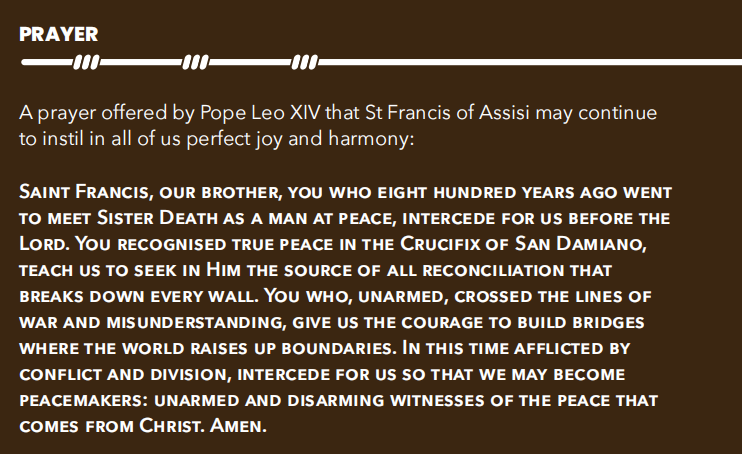
As Pope Leo XIV said in his letter to the Ministers General of the Franciscan Family on the opening of the centenary, “In this age, marked by so many seemingly interminable wars, by internal and social divisions that create mistrust and fear, he continues to speak. Not because he offers technical solutions, but because his life points to the authentic source of peace.”
The Holy Father concluded his letter thus, “Dear brothers and sisters, may the example and spiritual legacy of this Saint, strong in faith, steadfast in hope and ardent in active charity towards his neighbour, inspire in everyone the importance of trusting in the Lord, of living a life faithful to the Gospel, and of accepting and illuminating every circumstance and action of life with faith and prayer.”
So how may we follow the example of St Francis? We offer here some suggestions for action and reflection from “Francis of Assisi: A Seed for Eternal Life“, a letter from the Franciscan Family issued in Assisi on 10 January 2026 on the occasion of the centenary.
Action
Perform an act of mercy toward someone on the margins of society.
Spend 10 minutes in silence in front of a crucifix.
Participate in the Eucharist with renewed attention.
Give thanks for the Church, even with its shortcomings.
Apologise to someone instead of justifying yourself.
Bring peace to a conflict within family or at work.
Reflection
I try to recognise the “lepers” of my time; who are the excluded people I encounter?
Where do I see today the “opened eyes” of the Crucifix looking at me?
How do I experience my belonging to the Church with its poverty and riches?
Where do I “sow my seed” of the Gospel? Where are my places of witness?
Do my relationships seem “circular” or “pyramidal”? Where do I recognise that I am exercising power rather than service?
How do I effectively bring peace to the places where I live?
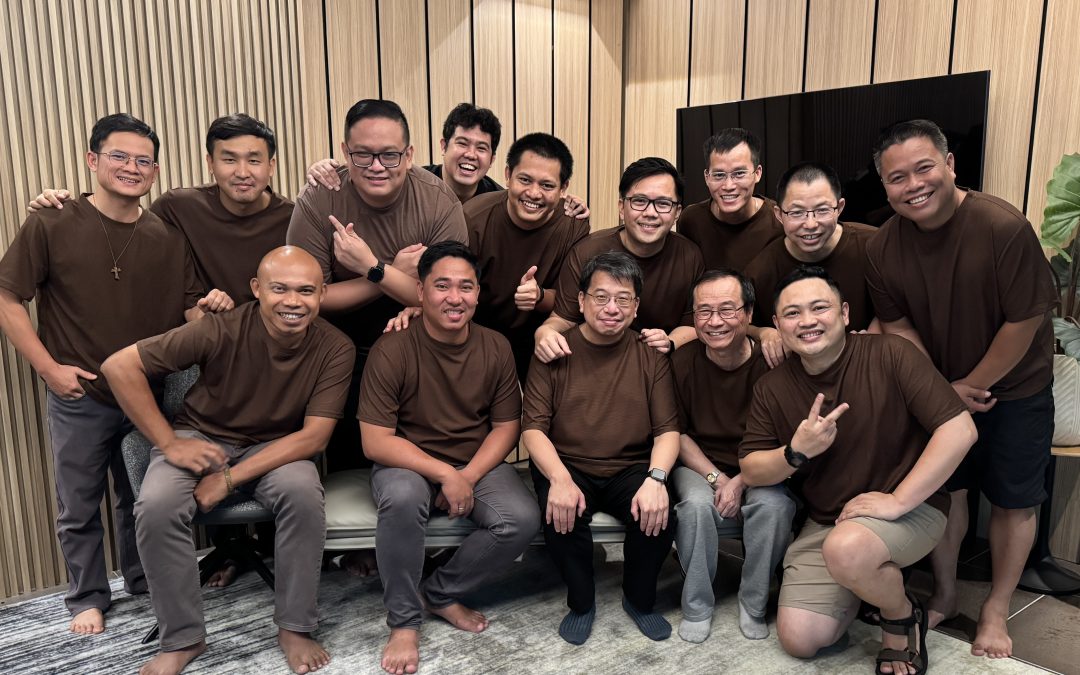
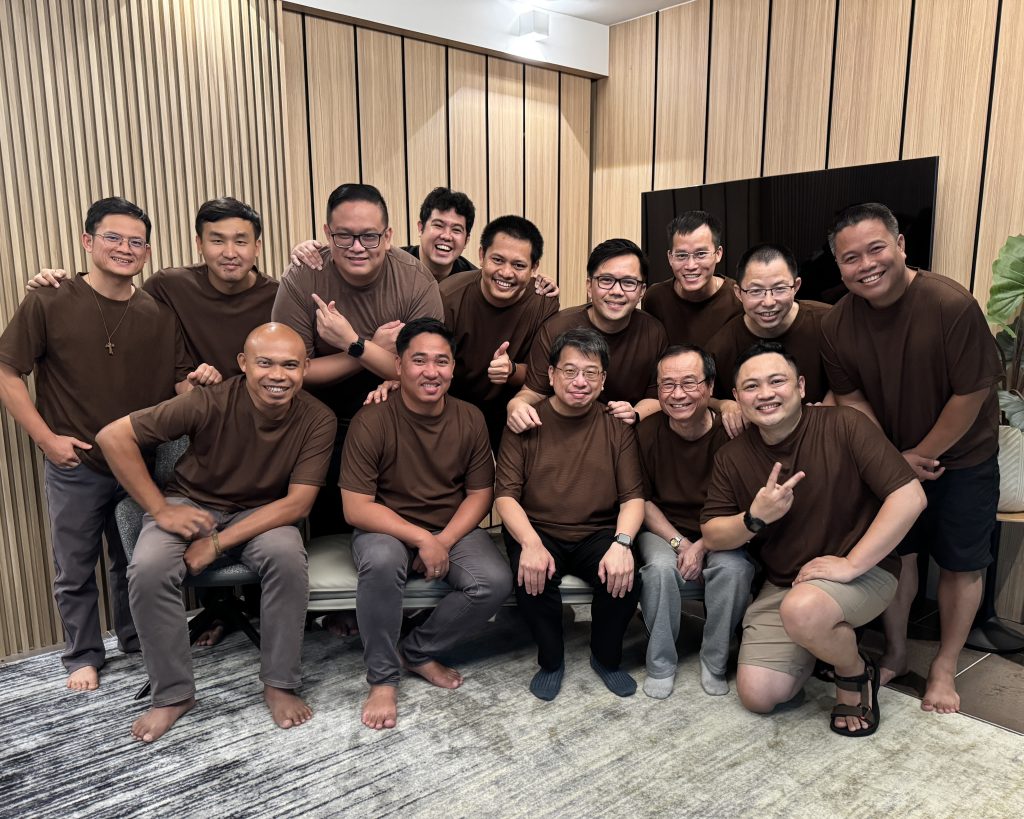
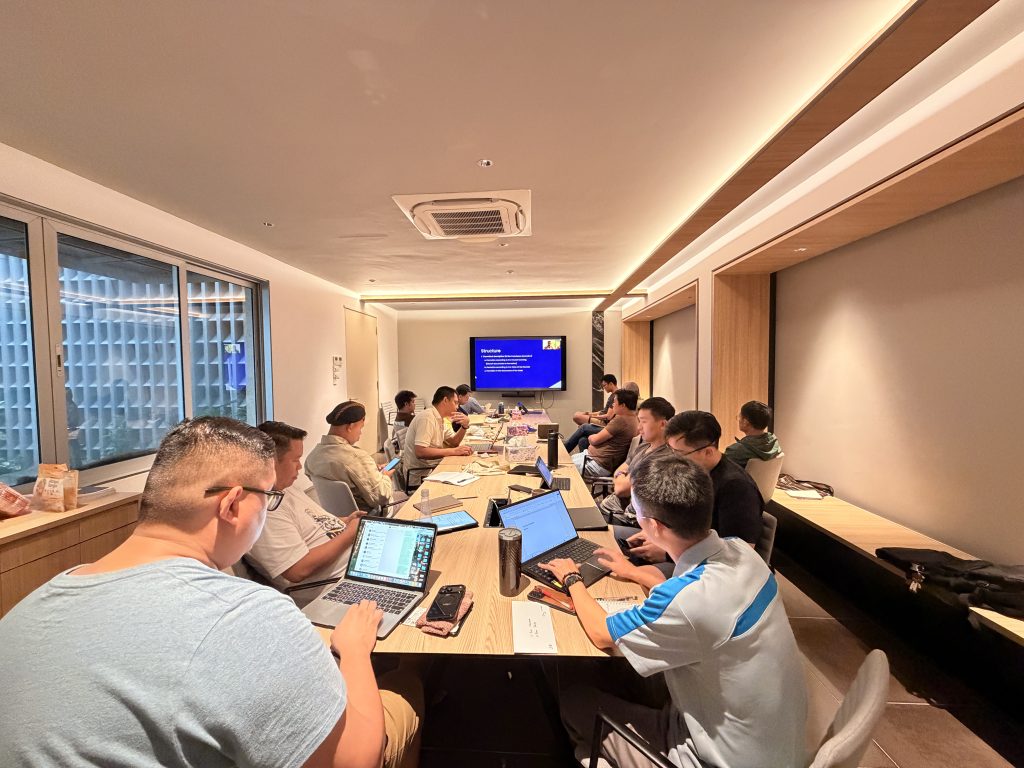
Friar Sixtus Peter OFM was one of 14 friars from seven countries in the 2025 run of the Asian Franciscan Formators Training (AFFT) programme. He shares a reflection on his experience.
“Six, see if you’re interested in joining next year’s AFFT. If you’re open, Crispus and you can enrol.” That was the simple invitation from our Custos, Derrick, to me in November 2024.
I immediately thought: “Am I going to be a formator?” I had never heard any suggestion that I might be heading in that direction. Still, trying to remain open to God’s prompting – and knowing that Crispus would be journeying alongside me – I agreed.
When I shared my intention with my Bishop and parish priest, they expressed some concern, given my responsibilities in the Diocese of Malacca-Johore. I explained to them that this was something I genuinely desired to undertake as part of my personal growth, particularly in my effort to journey more deeply with the people entrusted to my care. With that, they gave me the green light to proceed.
The training required a great deal of effort and commitment. It was not always easy to understand the lectures and participate meaningfully in the Friday Zoom sessions, and I stayed up past midnight on many nights to watch the video lessons. Often, after watching them once, I would read the transcripts to gain a clearer and deeper understanding. The presenters – friars and lay experts from across the globe – were truly the best of the best, and I did not want to take their sharing lightly.
Over the course of ten months, the lectures helped me become more aware of the different generations and how each views life and faith. I learned about formation realities in various Franciscan entities across different countries, as well as the Franciscan approach to formation and its strong biblical and ecclesial roots. Each lesson was so rich, I often found myself drawing from what I had learnt and weaving it into my Sunday homilies.
Beyond the learning and meaningful exchanges with fellow participants, I received something I did not expect: a renewed sense of fraternity. It is not that I had lost my love for community life. However, since moving out of our formation house at Chestnut Drive, I have been living in a smaller community of three – a life that brings its own joys and challenges.
For the first half of the programme, we met only through Zoom, before finally coming together for an in-person residency in Manila, and another at the end of the programme, this time in Singapore. Though we came from seven countries, we connected almost immediately. It felt as if we had grown together for years. For me, this was God’s quiet but powerful way of rekindling and strengthening my fraternal spirit.
The question still lingers: “Am I going to be a formator?” This time, however, I ask it with greater peace and confidence. If I am called to this path, I know I will not walk it alone. I have a community of brothers who will journey with me, as I journey with them, in forming persons to become who God calls them to be – following in the footsteps of our holy founder, Francis of Assisi.