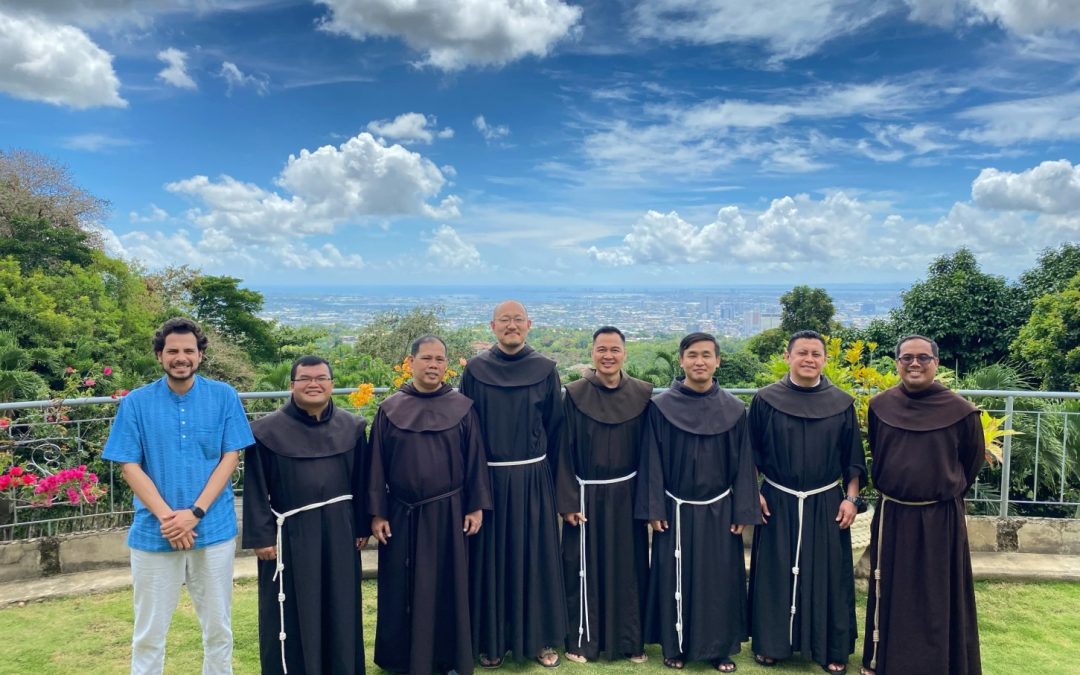
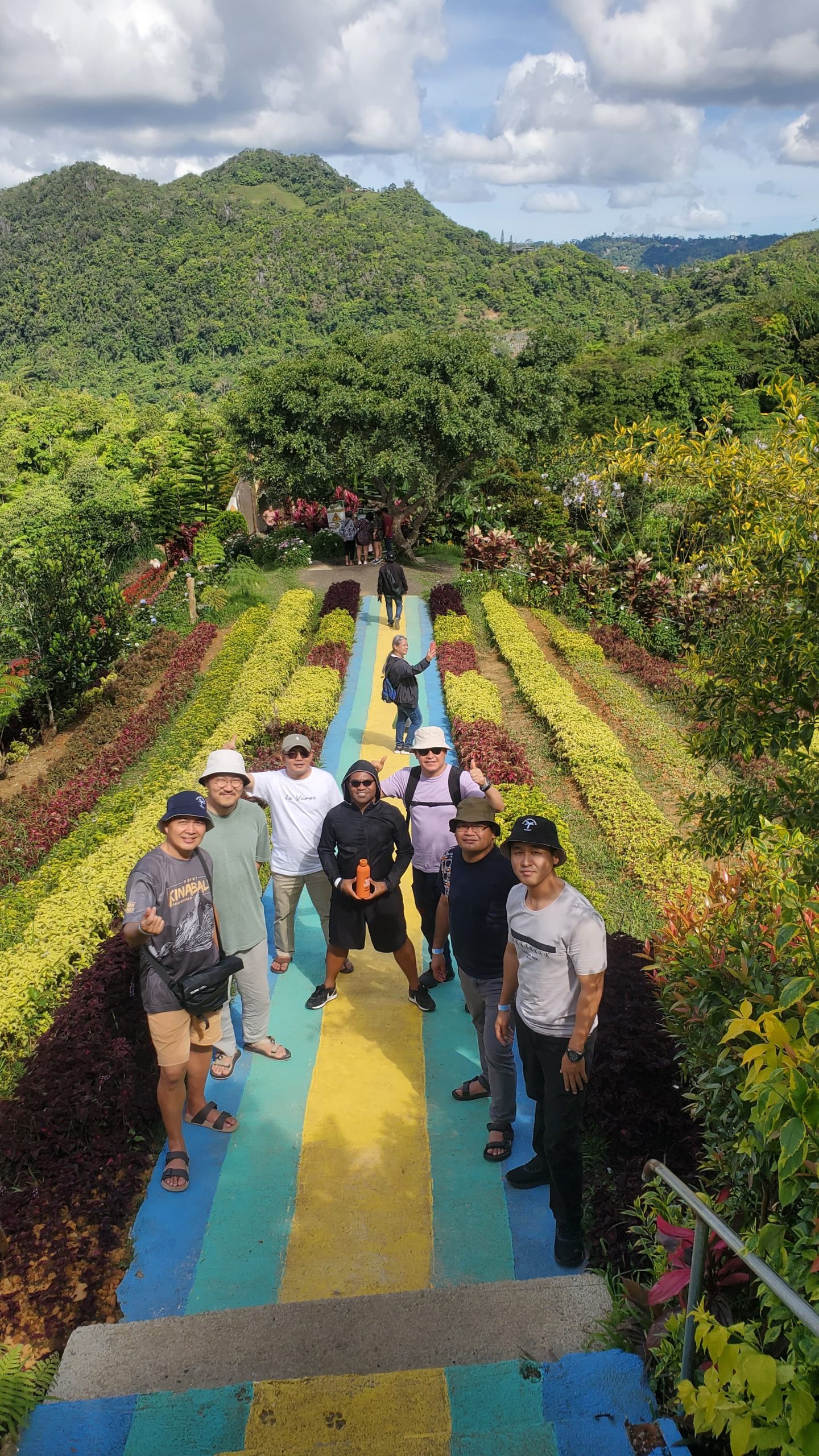
Formed just last year, the Franciscan Network for Peace and Integral Ecology in Asia has already held its second gathering. The meeting from 7 to 11 April 2025 in Cebu, Philippines was to follow up on the resolutions and discussions of the first gathering in October 2024 in Kota Kinabalu.
The network’s main goals are to explain why building peace is important, identify key areas of concern, lay out action plans and objectives, and find potential partners with whom to work.
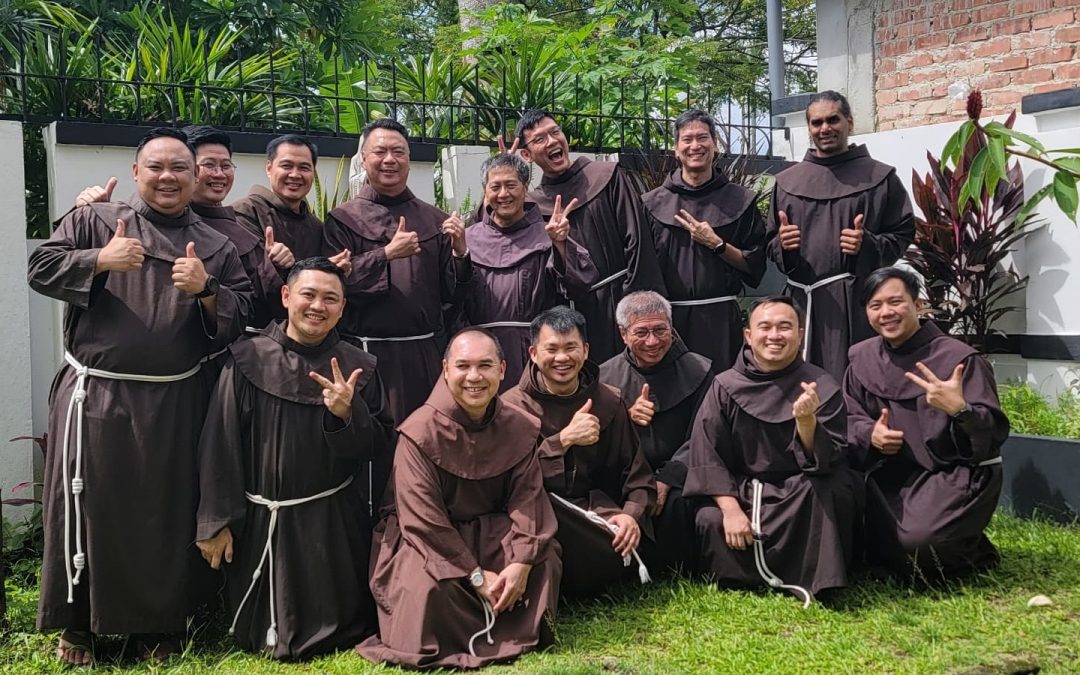
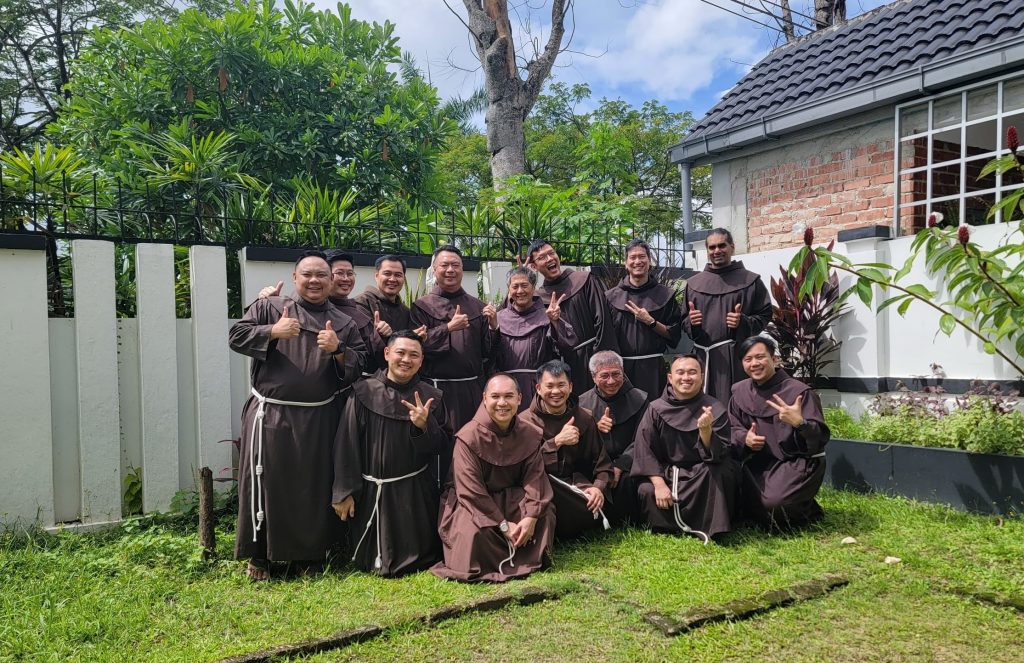
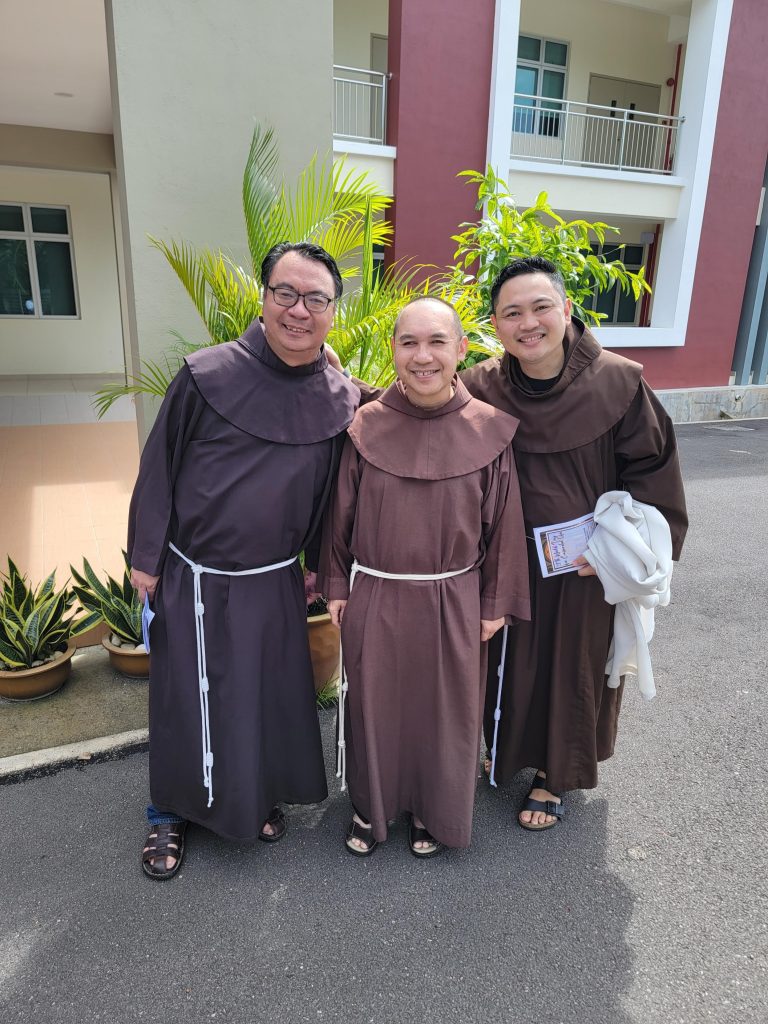
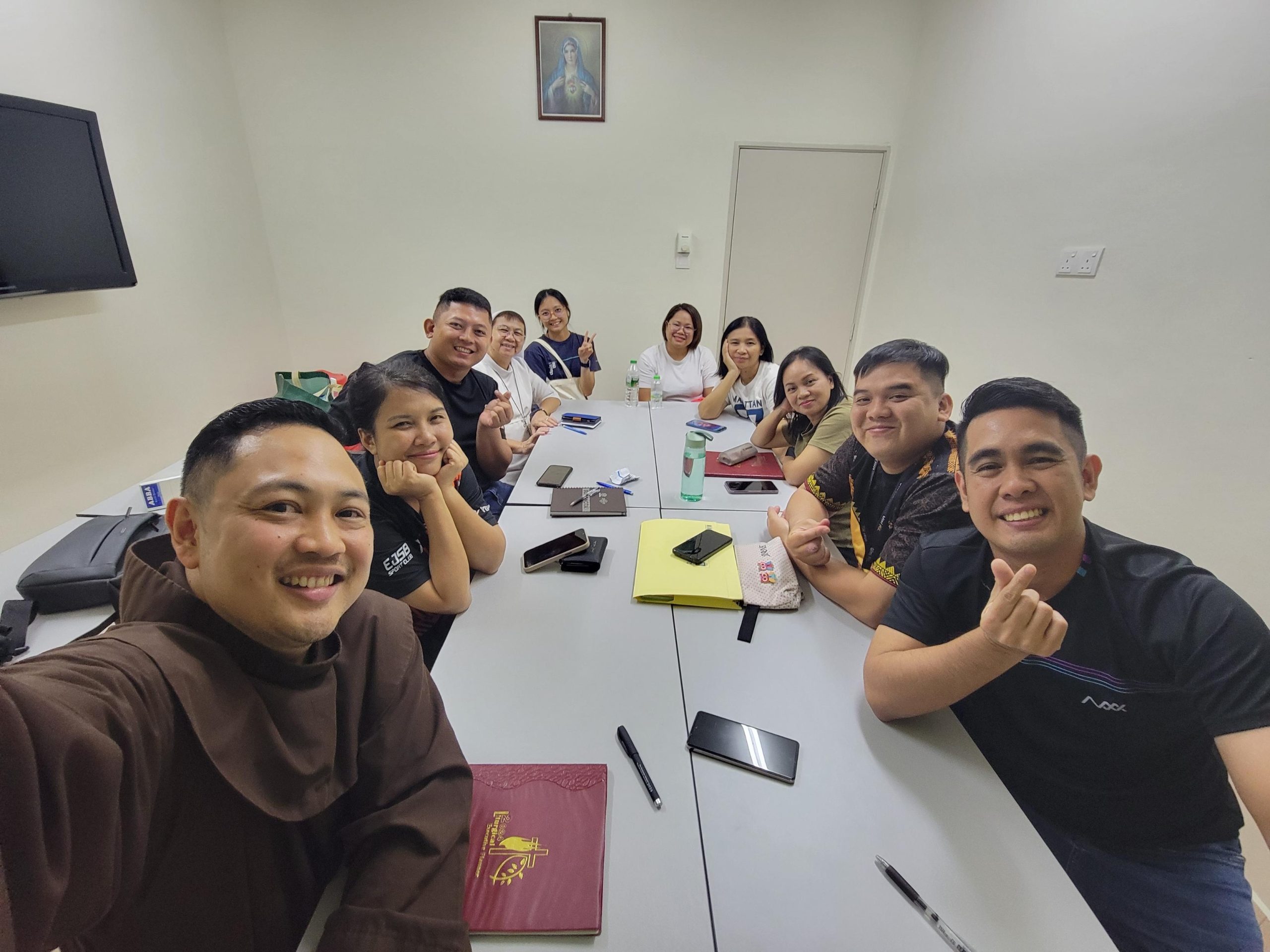
At the meeting were Justice, Peace, and Integrity of Creation (JPIC) leaders and animators from the Philippines, Myanmar, South Korea, Indonesia, Malaysia-Singapore-Brunei, and West Papua, as well as Franciscans International in Geneva and the JPIC Office in Rome.
The meeting began with a warm welcome from Friar Renee C Dean, Provincial of the Province of St Anthony of Padua in Cebu, who congratulated the participants for their dedication and efforts.
Next, Friar Derrick Yap, President of the South Asia, Australia and Oceania Conference (SAAOC), addressed the group: This year marks 800 years since the Canticle was written by St Francis of Assisi. During this special time, we continue to let God speak through our simple and humble lives even when our hearts feel broken. As brothers and sisters living out our mission, we share hope with others, especially those who are suffering or in need of God’s loving mercy. We do this by walking with them, helping them with our hands, and bringing peace through the smiles we share.
Friar Daniel Rodriguez Blanco, Director of JPIC at the General Curia, shared the Assisi Document. This is the result of a meeting of the OFM International Council for JPIC from 1 to 7 March 2025 in Assisi, during which they discussed the most urgent problems facing the world today, especially those related to human suffering and humanitarian issues.
He also told the animators of the Franciscan Network of the Mediterranean and its work on migration and refugees, dialogue and peace, and encouraged them to draw inspiration from this network as they build the Asian JPIC network.
Inspired by Laudato Si’, Fratelli Tutti and the Franciscan charism, and guided by the spirit of the Canticle and the Assisi Statement, the group agreed on the following resolutions:
Peace Resolution The network has chosen Myanmar as the focus of its peace project. This is in response to the powerful earthquake that hit the country in March, as well as the ongoing civil conflict. The network aims to offer emergency support and aid to victims.
Integral Ecology Resolution The network sees the importance of supporting and empowering JPIC animators in Franciscan communities across Asia. This will help strengthen their efforts in caring for people and the planet.
Social Media Advocacy Resolution The network acknowledges that social media is a powerful tool for raising awareness and promoting messages of peace and care for creation. Therefore, it has decided to create a website and use various social media platforms to broaden advocacy.
The group noted that the success of these resolutions depends greatly on the support of all the leaders of the Franciscan family in Asia.
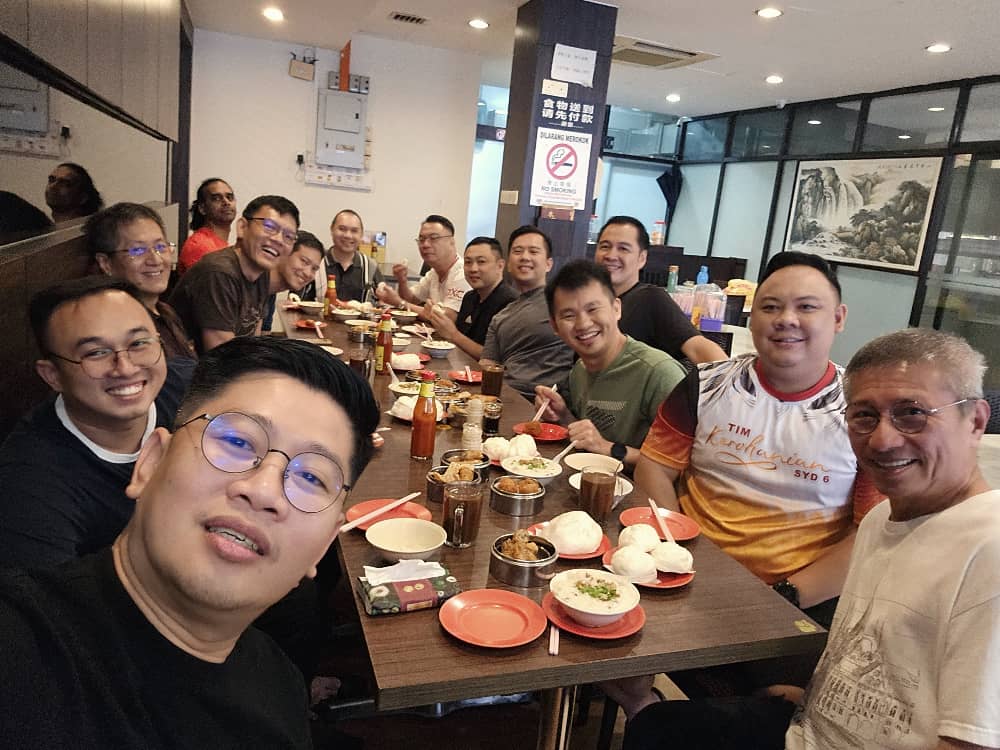
The meeting ended with dinner at the Provincial House with members of the Franciscan family, including various congregations of Sisters who may be potential partners for the Franciscan Network for Peace and Integral Ecology in Asia. The next gathering will be held in October in Manila.
Friar Cosmas Francis OFM JPIC Animator for the Custody of St Anthony (Malaysia-Singapore-Brunei)
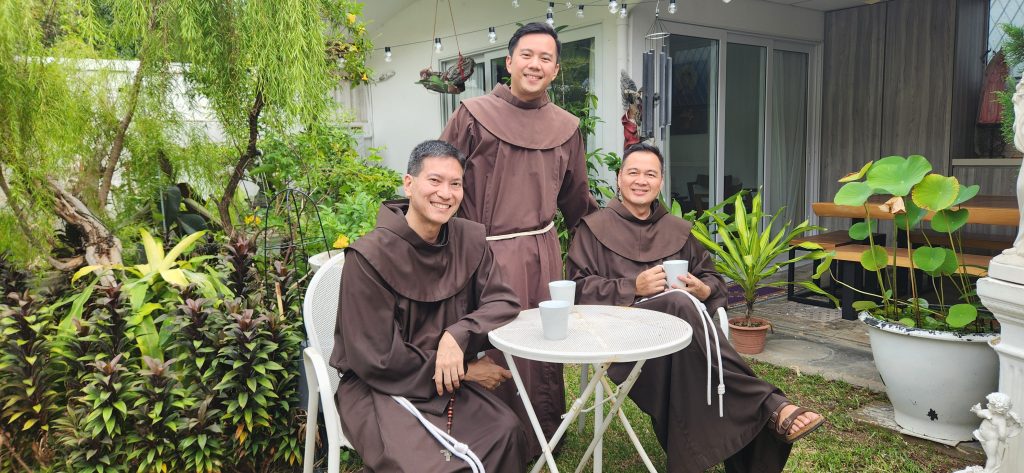
St Anthony Friary was established in 1991, alongside the founding of our Custody of St Anthony (Malaysia-Singapore-Brunei). It was to be the Mother House of our regional entity – a place of prayer, formation, governance, and mission. As Guardian of this house 30 years or so later, I am privileged to witness the constant, quiet unfolding of grace in our daily fraternal life. Our friary is not merely a place where brothers sleep and eat; it is a living organism, where prayer breathes life into ministry, where work finds rhythm in contemplation, and where individual vocations are nurtured in communion with others.
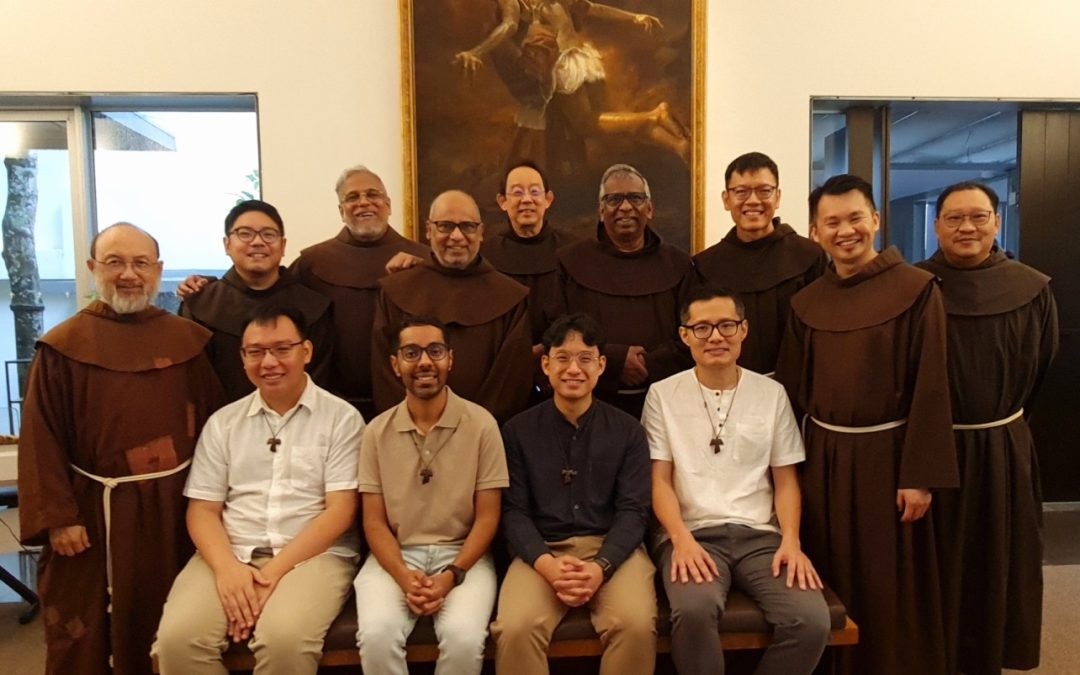
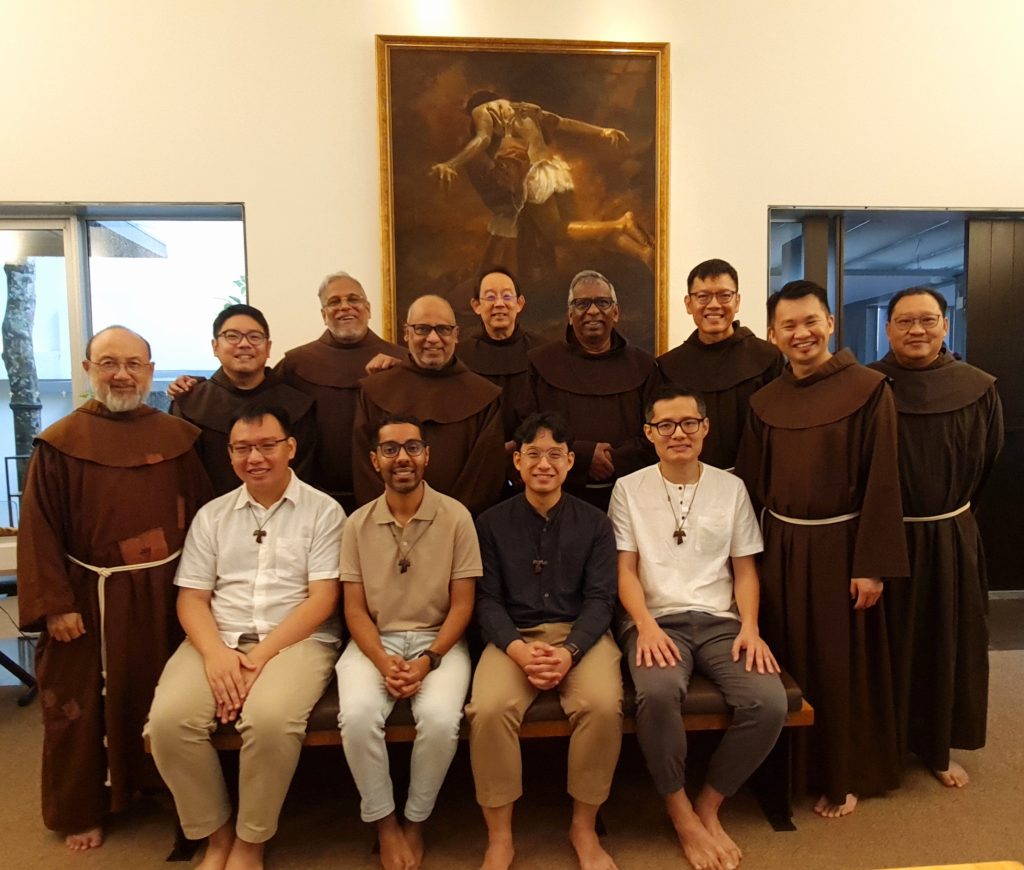
In 2025, our community comprises 14 friars – one from Sri Lanka, two from Malaysia, and 11 from Singapore. This cultural diversity enriches our community for each brother brings his story, his temperament, his faith journey into the fabric of the community, adding texture and depth to our common life.
Our friary is the Custody’s house for postulancy, and this year, we are blessed with four postulants: Mark Lee from Malaysia, and Samuel Tan, Daniel Xavier, and Jason Ng from Singapore. To accompany these young men in their year of discernment is a joy and a sacred responsibility. They remind us older brothers of the raw questions and youthful hopes that brought us to the friary gates. Their energy and curiosity infuse the house with fresh life, even as they learn the demands and disciplines of our vocation.
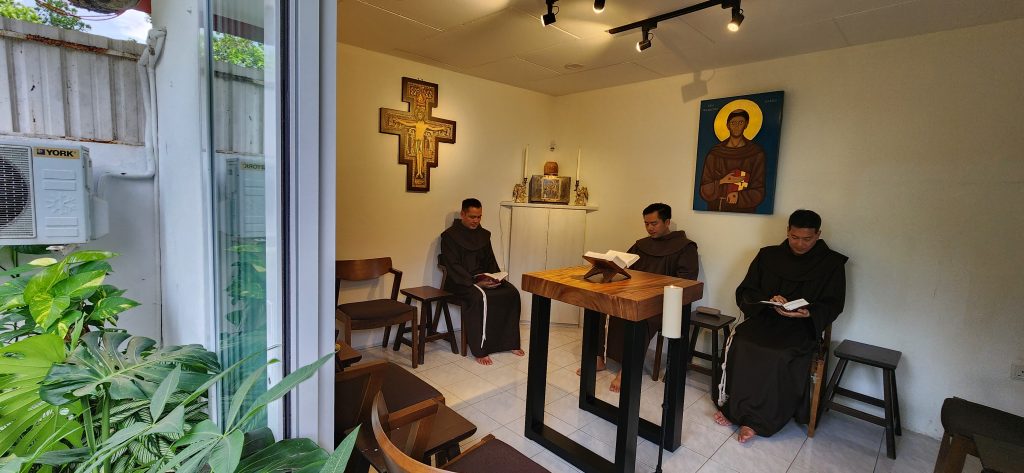
The life of the friary is structured yet deeply human. Our days begin with meditation at 6.45am, followed by Lauds and the Eucharist at 7am. These shared moments of stillness and praise set the tone for the rest of the day. Breakfast follows, before each brother departs for his respective ministry or study. At 12.30pm, we reconvene for lunch – another opportunity for fraternal sharing. In the evenings, after a full day of work or apostolate, we gather for meditation at 5.45pm, then Vespers at 6pm, before sharing our evening meal.
Our friary is a working house; nearly every friar is actively engaged in ministry. It is alive with movement, tasks, and pastoral outreach, but underlying this is our steady fraternal rhythm anchored in prayer, mutual support, and shared table.
Each brother contributes to the life of the Custody and the Church in different ways. Friar Justin Lim, with quiet dedication, manages our Columbarium, offering pastoral care to grieving families and tending to the memory of the departed. Friar John Paul Tan tirelessly promotes vocations, engaging the youth and animating them with the spirit of Francis. Friar Joseph Nasanathan is the Holy Land Commissary, fostering a deeper love for the land of Christ and building connections with the wider Church. He is also our Custody’s Secretary of Formation, helping to coordinate and support the journey of our younger brothers across various stages of initial formation.
Among us is Friar Rowland Yeo, whose hearing impairment has never been a limitation. His ministry to the deaf community, and his teaching of sign language to student friars and laity alike are a powerful witness to inclusion, resilience, and the creativity of love.
St Anthony Friary is also home to our Custos, Friar Derrick Yap. Despite the administrative load he carries, he remains actively involved in teaching and forming seminarians at the St Francis Xavier Major Seminary. His leadership is both fatherly and fraternal – always present, always encouraging.
Four friars minister in various capacities in our parish of St Mary of the Angels. Friar Michael D’Cruz serves as parish priest, supported by Friars Julian Mariaratnam, Robin Toha, and me. The parish brings us close to the people – into their joys, their struggles, their search for God. It is in these pastoral encounters that our fraternity is often tested and deepened, as we carry the burdens of others together, not alone.
I am reminded daily that to be a Guardian is about care. The Latin root of “guardian” (guardare) means to watch over, to tend. I see myself as a shepherd, a keeper of the communal flame, ensuring that no brother is left isolated, unheard, or unseen.
With so many of us engaged in external work, there is always the temptation to neglect community life. But we try to resist this. Our common prayers are non-negotiable. Our meals are not rushed. Our house gatherings are sacred times to listen, clarify, and support. Fraternity is not an automatic fruit of religious life – it is a discipline, a grace, and a daily decision.
Living together under one roof, with cultural differences, varied temperaments, and diverse workloads, we are bound to face tensions and misunderstandings. However, it is precisely in this crucible of shared life that the Gospel becomes real. We learn patience. We learn to forgive. We learn to laugh together – often at ourselves – and to carry one another in times of sorrow.
As I look at our community, I see a house alive with possibilities. St Anthony Friary is, in many ways, the beating heart of our Custody – not just because it is the administrative centre, but because it is a living witness to the kind of brotherhood St Francis dreamed of – simple, joyful, prayerful, and ever open to God’s surprises.
Friar Aiden Peter Jr OFM Guardian, St Anthony Friary
In 2013, the words “Don’t forget the poor” were whispered to Cardinal Jorge Bergoglio in the Sistine Chapel. These words so deeply penetrated his heart that when asked what name he would take as Pope, he chose “Francis”, after St Francis of Assisi, becoming the first Pope to be named “Francis” or “Franciscus” in Latin, the name that is inscribed on his tomb.
As Franciscans, we could not have been happier for a Pope to take the name of our founder and father. Pope Francis truly lived out his name in the spirit of Francis – humble and simple to the end with the stark simplicity of his choice of coffin, funeral rite and place of burial within the Basilica of Santa Maria Maggiore. The global grief at his passing demonstrated clearly that his 12-year papacy had left a deep legacy that had impacted many lives.
Servant-leaders like Pope Francis are authentic in their words and works, and with this inner dynamic unity, they invite, encourage and exhort us to embody what Christ desires of us.
On 8 May, we welcomed Pope Leo XIV chosen by the Holy Spirit to lead the Church into the next frontier, but we do not forget the dream and vision of Pope Francis. Indeed, we are called to honour the legacy of Pope Francis, whilst embracing the vision of our new Pope Leo XIV, building hope upon hope, faith upon faith, to bring about peace with fraternal dialogue to impact the lives of the suffering.
This is a crucial year for Franciscan Friars in Malaysia and Singapore for we have our Custody Elective Chapter in September, during which we will elect our new leadership team.
Although we are voting friars to the various roles, the crux of it all is about listening to the Holy Spirit, to what God desires of us friars and our Custody at this season of our life and history, and which friar candidate’s vision can best fulfil the fruits of our collective discernment.
During my nearly six years as Custos, I have strongly advocated returning to our core identity as friars and minor: a more intimate prayer life and a closer relationship among us friars, so that we can truly be “contemplative fraternities in mission”, as the Order calls us to be.
I see this as a call to embrace a more intentional Fraternal Life Project (FLP) accompanied by a Personal Life Project of prayer, poverty and penance. Our Franciscan Life must flow from being grounded in God and then growing into more authentic Franciscans. Then and only then will our mission to the poor, especially the “new poor”, be firmly rooted in the Gospel life and freedom.
In this issue, Friar Cosmas Francis, our Custody’s Animator for Justice, Peace and Integrity of Creation (JPIC), shares what friars are doing to serve the poor and needy in Asia. At their meeting in April, our Asian Network for JPIC made a commitment to respond promptly and adequately to the urgent need for relief funds for the earthquake in Myanmar.
Our Custody has a special reserve fund called “St Anthony’s Touch – Poor & Mission Fund” for such purposes, and St Antony’s Touch is one of the options in the donation tear-out of this newsletter. I see this as a concrete way of continuing the vision of our late Holy Father Pope Francis to not forget the poor. By the way, it was a Franciscan Friar, Cardinal Claudio Hummes OFM from Brazil, who whispered these memorable words to Pope Francis.
Now, let us entrust our new Holy Father, the successor of St Peter, to our Lord and our Lady as he guides the Church towards greater discipleship and life-giving mission. Allow me to end with the first words of our new Pope to the world, quoting the first words of the Risen Christ “Peace be with you all!”. May this peace deeply penetrate our hearts and our lives.
“Praised be You, my Lord, through our Sister Bodily Death, from whom no one living can escape.” – St. Francis of Assisi, Canticle of the Creatures
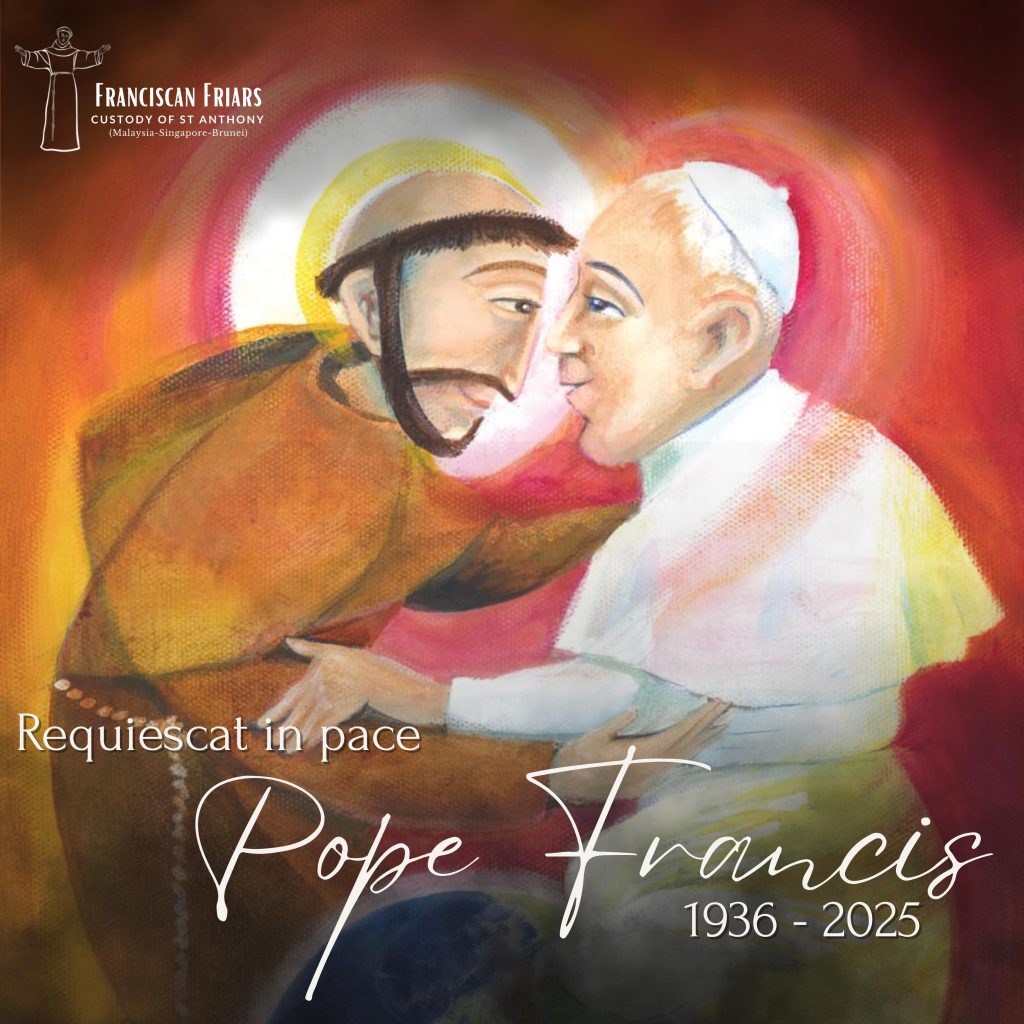
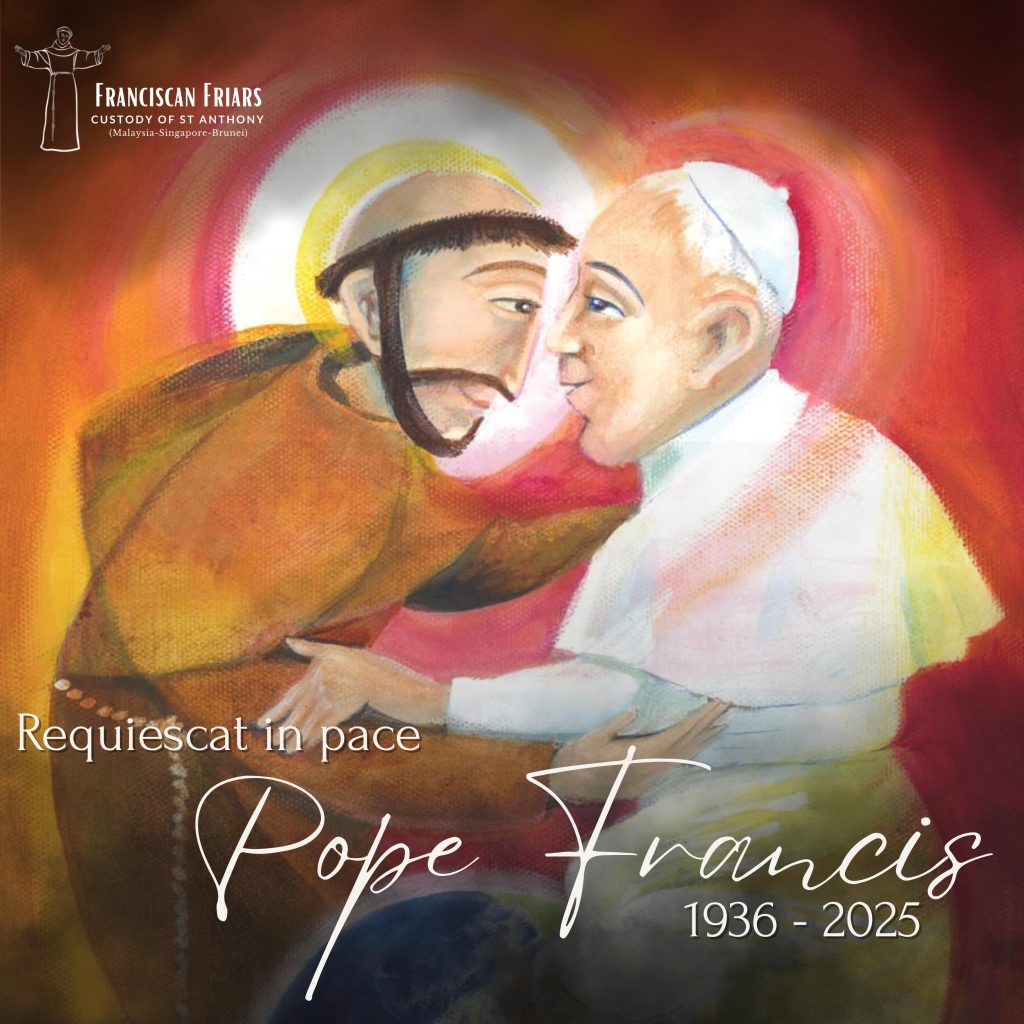
The Franciscan Friars of Malaysia and Singapore join the universal Church in mourning the passing of our beloved Holy Father, Pope Francis.
In his life and ministry, he reflected the simplicity, compassion, and deep joy of St Francis of Assisi. He was a shepherd who walked with the poor, a voice for the voiceless, and a bridge-builder in a broken world. His words, actions, and humble spirit rekindled hope and reminded us all of God’s boundless mercy.
We give thanks for his life, his witness, and his fearless love for the Gospel.
Eternal rest grant unto him, O Lord, and let perpetual light shine upon him.
The Malaysian Franciscan Friars in our Custody of St Anthony Malaysia-Singapore-Brunei gathered as a group for the first time recently to pray, reflect, and discuss the fraternity’s future. Over two days, 15 to 16 January 2025, the 14 friars shared their struggles, hopes, and vision for the Malaysian Franciscan community, reaffirming their commitment to fraternity and mission.
The Malaysian Brothers Gathering, held at St James of the Marches Friary in Johor, began with Mass and Lauds before embarking on the three sessions planned for the first day. In Session One, the friars reflected on the theme “Where do we find ourselves?”. Many spoke honestly about the challenges of ministry and community life but recognised how God has been present in their journeys. The session emphasised the need for honest dialogue and mutual support among the friars.
Session Two focused on the future of the Franciscan presence in Malaysia, particularly the Tampasak Retreat Centre in Sabah. Custos Friar Derrick Yap encouraged friars interested in formation studies to prepare for service at the retreat centre, which will provide retreats, counselling, and formation for Secular Franciscans and others seeking spiritual guidance. The session highlighted the need for the vocation team to walk closely with young adults discerning their path in life.
Session Three addressed fraternal life. The brothers acknowledged the challenges of maintaining community life amid ministry demands and reaffirmed the importance of having at least three friars in a friary to foster fraternity and mutual support. Although resources are stretched, the commitment to living in brotherhood remains strong.
On the second day, the friars gathered in small groups based on age to share their personal reflections and hopes, and the support they needed. While the discussions revealed a range of perspectives as well as the challenges faced by each friar, there was a shared commitment to strengthening fraternity and supporting one another in mission. The gathering concluded with Mass and a farewell lunch.
Even with the challenges we face, I left the gathering feeling hopeful and touched. There was an openness and honesty in our sharing that reminded me of how important it is to be present for one another. If we continue to support and walk with each other, our fraternity will not only endure but thrive.
For Friar Marvin Voo, the gathering was an opportunity to understand his role in the community. Currently studying theology in Singapore, he admitted, “I feel like I can’t contribute much yet, but I will try to support the community in Johor by being present on weekends.”
The Malaysian Brothers Gathering was a reminder that our fraternity is built not just on shared ideals but on real experiences of walking together through struggles and sacrifices, joys and hopes toward a common vision for the future.
In this issue, we feature our Custody’s two communities in Peninsular Malaysia – St James of the Marches Friary in Johor and St Peter of Alcantara Friary in Penang.
Johor: St James of the Marches Friary
The St James of the Marches Friary is in a diverse Johor Bahru neighbourhood of Malay, Chinese, and Indian families, and the friars live simply among the people, following the Franciscan spirit of service and fraternity.
The friary is named after St James of the Marches, an Italian Franciscan friar who lived from 1391 to 1476. He is often depicted holding a chalice with a snake escaping from it, a reference to an attempt by heretics to poison him. His commitment to preaching and defending the faith, and his life of dedication, are a source of inspiration for the friars.
Until February 2025, the community consisted of three friars: Friar Moses Yap, who served as guardian of the house, Friar Claurence Motoyou, and Friar Sixtus Peter. The friars are engaged in various pastoral and social ministries in Johor Bahru.
Friar Moses served as the parish priest of the Church of St Joseph in Plentong from 2021 to 2024. He was also the spiritual director of the Legion of Mary and the Bishop’s Delegate for the Office of New Evangelisation. In February, as he marked his silver jubilee, he moved to the San Damiano community in Singapore for a sabbatical year.
Friar Claurence is parish priest of the Church of Mary Immaculate. He works closely with the migrant community and is a board member for mission schools in Johor Bahru. He also works with Villa Poulos, a home that provides care and shelter for underprivileged children.
Friar Sixtus is assistant parish priest at the Cathedral of the Sacred Heart of Jesus. He is the Bishop’s Delegate for the Office of Social Communication, managing the diocese’s website, media channels, and digital platforms. He is also vice-chairperson of the Episcopal Regional Commission of Social Communication for the Catholic Bishops’ Conference of Malaysia, Singapore, and Brunei. In addition, he is a member of our Custody’s Development Office, assisting with social media content and the Franciscan calendar.
The St James of the Marches Friary is a place of prayer and service, where the friars continue their ministry in a simple and humble way, reaching out to those in need and contributing to the wider Church community.
Friar Sixtus Peter OFM
Penang: St Peter of Alcantara Friary
The Franciscan friary in Penang was established in 2017 as a place of prayer, fraternity, and formation. Named after St Peter of Alcantara, a 16th-century Franciscan, the friary serves as a formation house for Malaysians discerning the call to join the Order of Friars Minor.
St Peter of Alcantara was renowned for his deep spirituality, austere way of life, and commitment to reform within the Franciscan Order. A contemporary of St Ignatius of Loyola and St John of the Cross, he was a guiding figure in the spiritual lives of many, including St Teresa of Avila, whom he encouraged in her Carmelite reform. His unwavering dedication to prayer, humility, and penance are core values we strive to live by in our friary.
On a lighter note, the initials of St Peter of Alcantara (SPA) seem fitting for a friary on an island known for its sun, sea, and sand! Just as a spa offers refreshment and renewal, we hope that all who encounter us will experience the warmth, peace, and joy of Christ.
St Francis of Assisi said, “The Lord gave me brothers”, and our community of three solemnly professed friars—two from East Malaysia and one from Peninsular Malaysia—finds joy in living and serving together as brothers. Each friar brings unique talents that enrich our fraternity, from preparing home-cooked meals (Friar Cosmas Francis) to beautifying our friary (Friar Crispus Mosinoh) and reaching out to others with simplicity and joy (Friar Esmond Chua).
Our friars engage in varied ministries within the Diocese of Penang. We oversee the care of Risen Christ Catholic Church in Air Itam and provide Mass in English, Malay, and Mandarin across the island and the mainland, including celebrating weekly Mass at Mt Miriam Cancer Hospital.
We support the bishop in matters related to Religious communities, and we collaborate with fellow Religious in diocesan initiatives. We also provide spiritual direction to seminarians.
Additionally, we serve in several roles at the Custody level—Vocations, Development Office, Formation, and JPIC (Justice, Peace, Integrity, and Care for Creation).
There is always much more to be done, and we ask that you pray for us—for our friars, those we serve, and for more vocations to the Franciscan way of life.