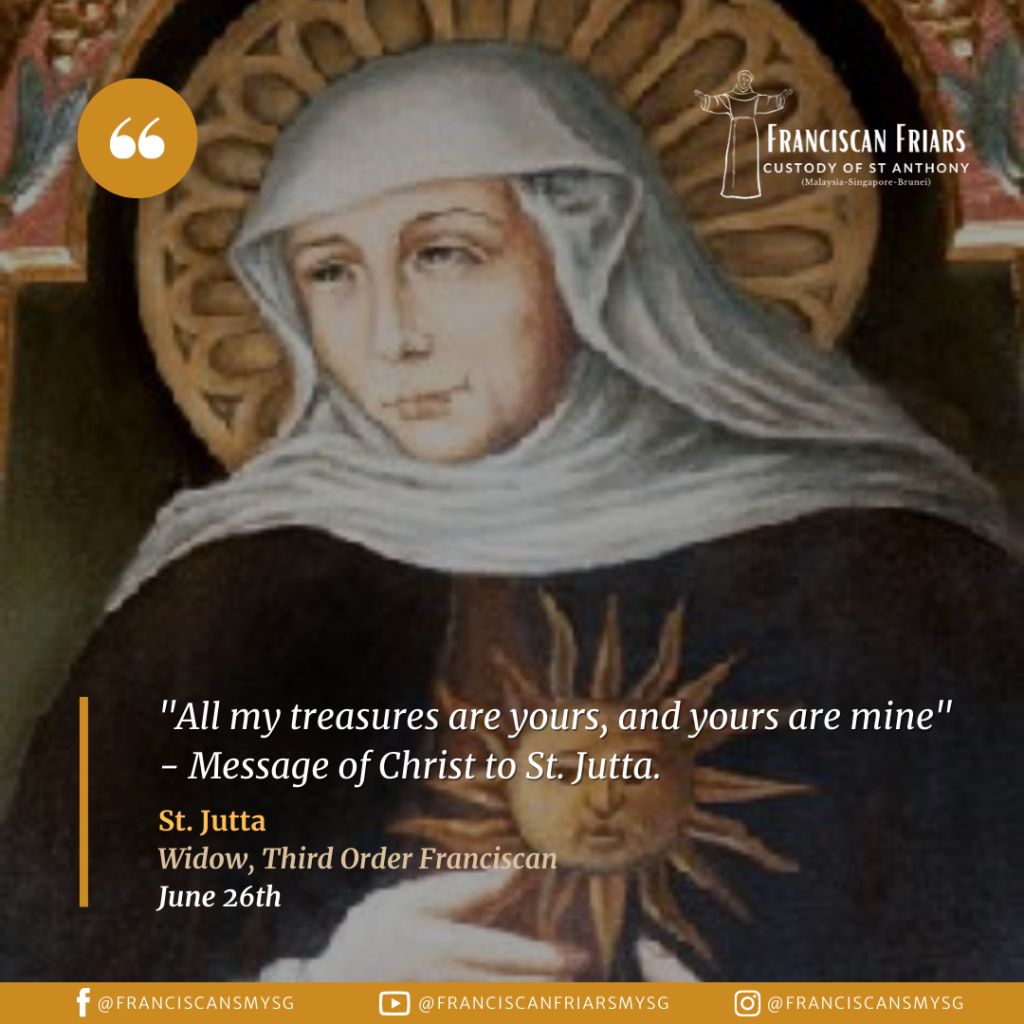
St. Jutta was born in Thuringia, in Germany. At the age of fifteen, she married a nobleman, with whom she enjoyed a happy marriage. Inspired by the example of St. Elizabeth of Hungary, a Thuringian princess who had renounced her royal station to embrace as a Franciscan tertiary, Jutta attempted to conform her life, and that of her family, to the principles of the Gospel: charity, service and a spirit of poverty.
While on pilgrimage to the Holy Land, Jutta’s husband died, leaving her to raise their children alone. When, over time, each one of them entered religious life, she was free to pursue her heart’s desire. After giving away all her property to the poor, she donned a simple dress and became a wandering pilgrim. Though many were moved by her piety and the austerity she had exchanged for her precious privilege, others greeted her conduct with derision.
Jutta liked to say there were three things that brought one nearer to God: painful illness, exile from home and voluntary poverty. She experienced all three. Eventually she made her way to a distant corner of Prussia, where she became a Third Order Franciscan and took up residence as a solitary hermit. Many visitors found a path to her home, whether seeking nursing care, consolation in their troubles, or spiritual counsel.
She died at the age of sixty and was later embraced as a patroness of Prussia.
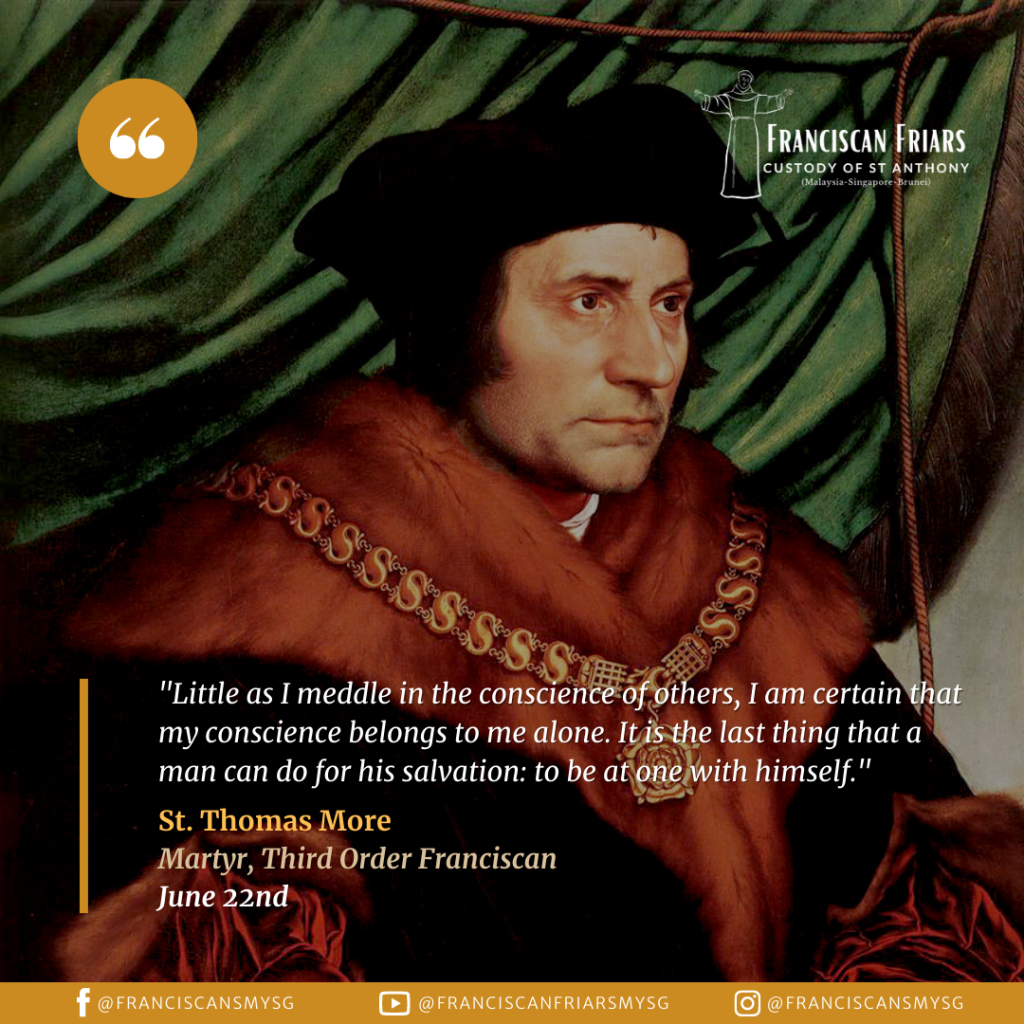
Thomas More was one of the most highly respected men of his time. A successful barrister, an honest judge, a famous scholar, he rose to the highest status of any commoner in England, appointed by Henry VIII to the office of lord chancellor.
More had little ambition for worldly success. As he later wrote, “Reputation, honor, fame, what is all that but a breath of air from another person’s mouth no sooner spoken but gone? Thus whoever finds his delight in them is feeding on wind.” More was a man of deep and demanding faith. In his youth he had considered a monastic vocation before discerning instead that he was called to serve God in the world. While outwardly he enjoyed a life of comfort, in the privacy of his spiritual life he wore a hair shirt, attended daily Mass, and practiced a strict discipline of prayer. He is believed to have become a Third Order Franciscan (and indeed his name is listed in the calendar of Franciscan saints).
More considered himself a loyal friend and servant of the king. But circumstances were to evolve to the point that Henry required a more absolute loyalty than More could offer. For some years Henry had been moving toward a fateful collision with the authority of the Catholic Church. The issue was his desire to annul his marriage to Catherine of Aragon to marry Anne Boleyn. When the pope blocked his way, Henry divorced Catherine, married Anne, and required that all subjects repudiate “any foreign authority, prince or potentate.” Rather than oppose the king, More resigned his position, but when he refused to take an oath he was arrested and imprisoned in the Tower of London. The miseries of prison life, including cold, hunger and vermin were compounded by pressure from his family. When his wife tried to coax him to alter his course, he responded, “My good woman, you are no good at doing business. Do you really want me to exchange eternity for twenty years?”
After fifteen months, More was put on trial and convicted on the basis of perjured testimony. Now, with his fate settled, he at last broke his silence. He denied that Parliament had the authority to set up a temporal lord as head of the Church. He prayed, “that though your lordships have now here on earth been judges of my condemnation, we may yet hereafter in heaven merrily all meet together to everlasting salvation.”
On the day of his execution on July 6, 1535, he displayed his characteristic wit, asking for the executioner’s help in ascending the scaffold: “As for my coming down, let me shift for myself.” Addressing the gathered crowd, he spoke: “I die in and for the faith of the holy Catholic Church. Pray for me in this world, and I shall pray for you in that world. Pray for the king that it please God to send him good counselors. I die as the king’s true servant, but God’s first.”
Thomas More was canonized in 1935. In 2000, he was declared “the heavenly patron of statemen and politicians.”
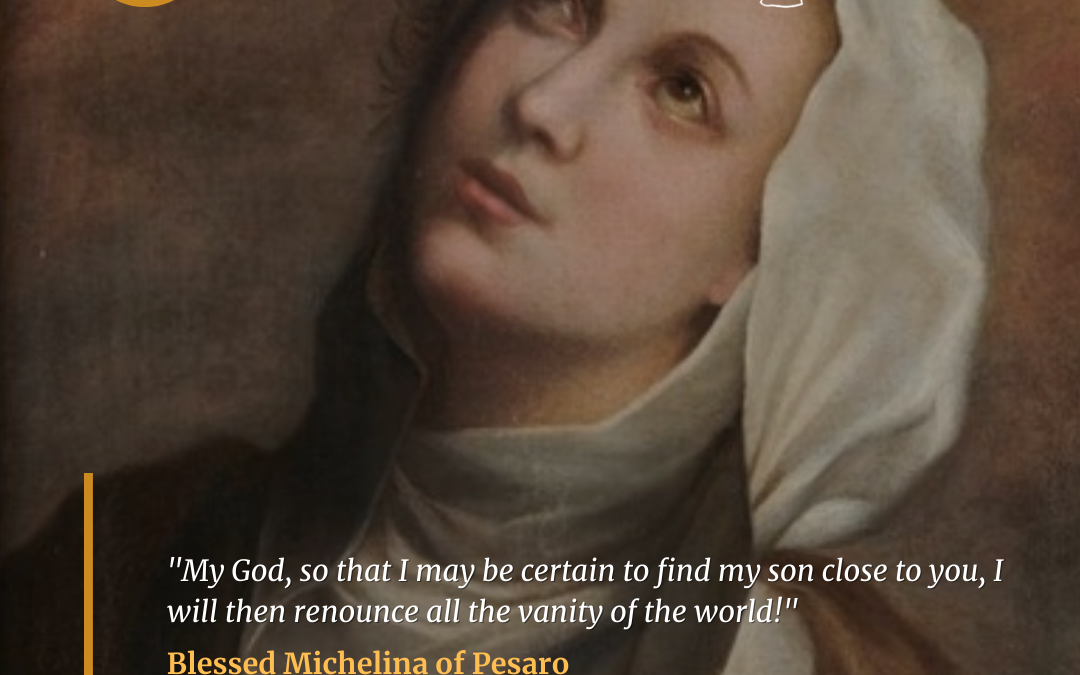
Blessed Michelina was born in the town of Pesaro, on the east coast of Italy. At twelve she married a wealthy member of the powerful Malatesta family and went on to enjoy a rich and frivolous social life. By twenty, however, she found herself a widow with a young son. He became the center of her life. A Franciscan tertiary named Syriaca, whom she had befriended, urged her to put aside worldly occupations and devote herself to God, but Michelina resisted this counsel. When her son subsequently fell ill and died, however, she put on the habit of a Franciscan tertiary, gave away all her possessions to the poor, and took to begging alms from door to door.
Her sudden embrace of voluntary poverty did not inspire a corresponding charity on the part of her neighbors. Her family, thinking her mad, had her confined. In time, however, they were won over by her evident sincerity, and she was free to dedicate herself to works of mercy, especially care for the sick. In imitation of St. Francis, she had a special dedication to lepers, and there were stories of her effecting cures by the power of her kiss. Toward the end of her life, she went on pilgrimage to Rome, where she received a mystical share in the sufferings of Christ. She died on June 19, 1356. She was beatified in 1737.
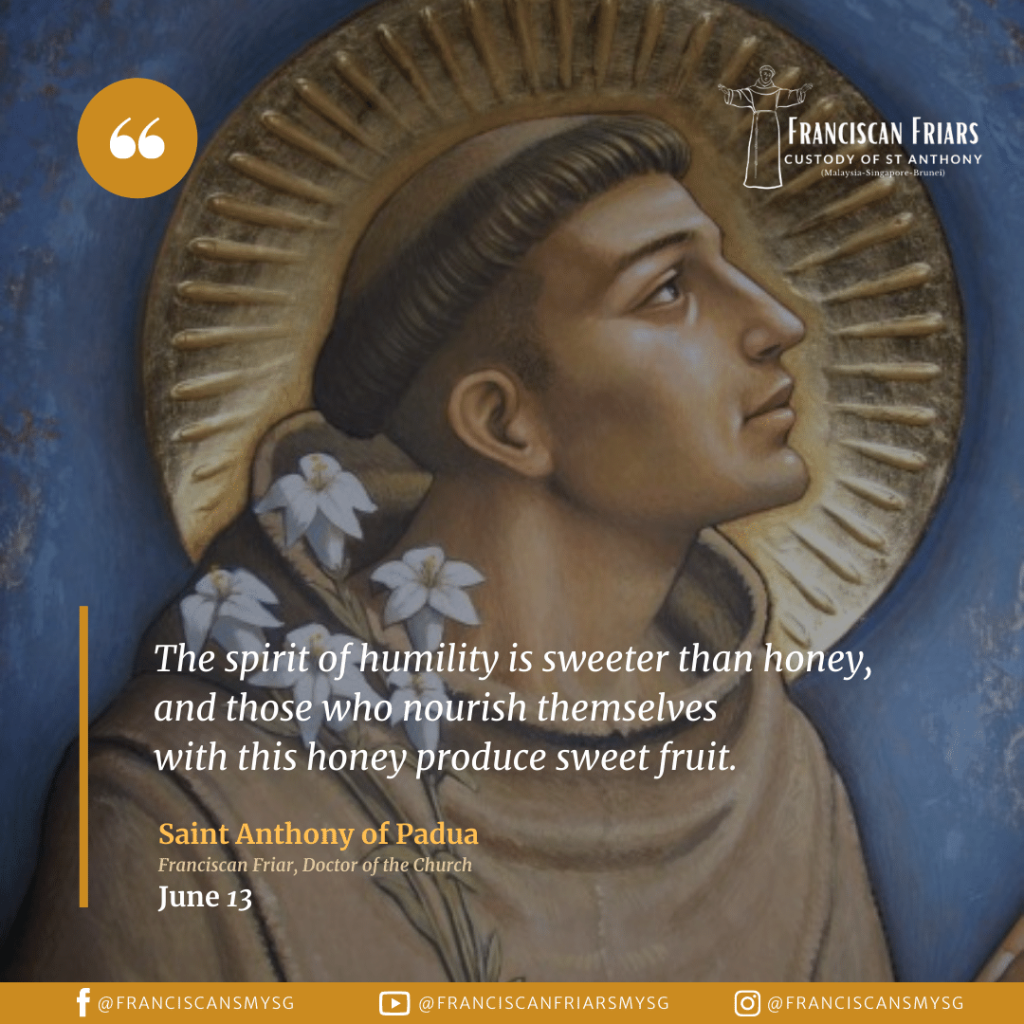
St. Anthony, who was born in Lisbon, first entered religious life as an Augustinian canon in Coimbra. There one day he met a group of visiting Franciscans (St. Be- rard and his companions) on their way to Morocco. He was greatly impressed by these courageous missionaries, the more so when news came of their subsequent martyrdom, followed by the return of their remains by way of his monastery. At once, he was inspired to join the Franciscans. He was accepted and was even granted his wish to follow in the footsteps of the martyrs. But no sooner had he arrived in Morocco than he became so ill that he was forced to turn around.
In 1221, he attended—along with three thousand other friars—a great Franciscan gathering, the last held in the lifetime of St. Francis. Afterward, he received a lowly assignment to a small hospice for lay brothers at Monte Paolo.
But soon his star would shine. At an important occasion, where the preacher failed to arrive, Anthony was asked to extemporize. He astonished his audience with the unexpected elegance, conviction, and profound learning of his sermon. Word quickly spread, and Anthony received a letter from Francis himself autho- rizing him to preach and to teach theology to the friars.
…he was unsparing when it came to the failings of the clergy and worldly bishops, whom he called “the most impudent dogs, having a harlot’s forehead, refusing to blush.
Eventually, he was sent on a preaching mission that covered all of Italy. Thousands flocked to hear his open-air sermons, and his visits had the impact of a spiritual revival. He attacked the tyranny of the powerful, exhorting his listeners to compassion and charity toward the poor, and he was unsparing when it came to the failings of the clergy and worldly bishops, whom he called “the most impudent dogs, having a harlot’s forehead, refusing to blush.” So successful were his exhortations to charity that he earned the title “Friend of the Poor.”
Anthony died on June 13, 1231, at the age of thirty-six. He was buried in Padua, where he had spent his last years, and his canonization followed only a year later. In 1946, Pope Pius XII declared him a Doctor of the Church. (Popularly, he is often invoked for his help in locating lost objects.)
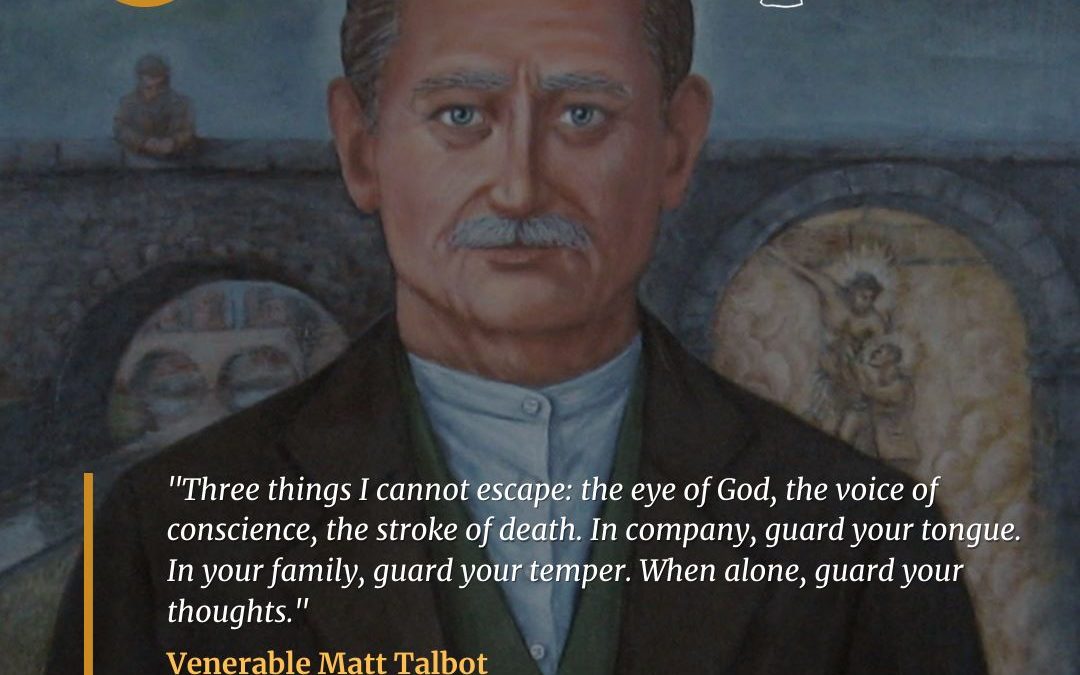
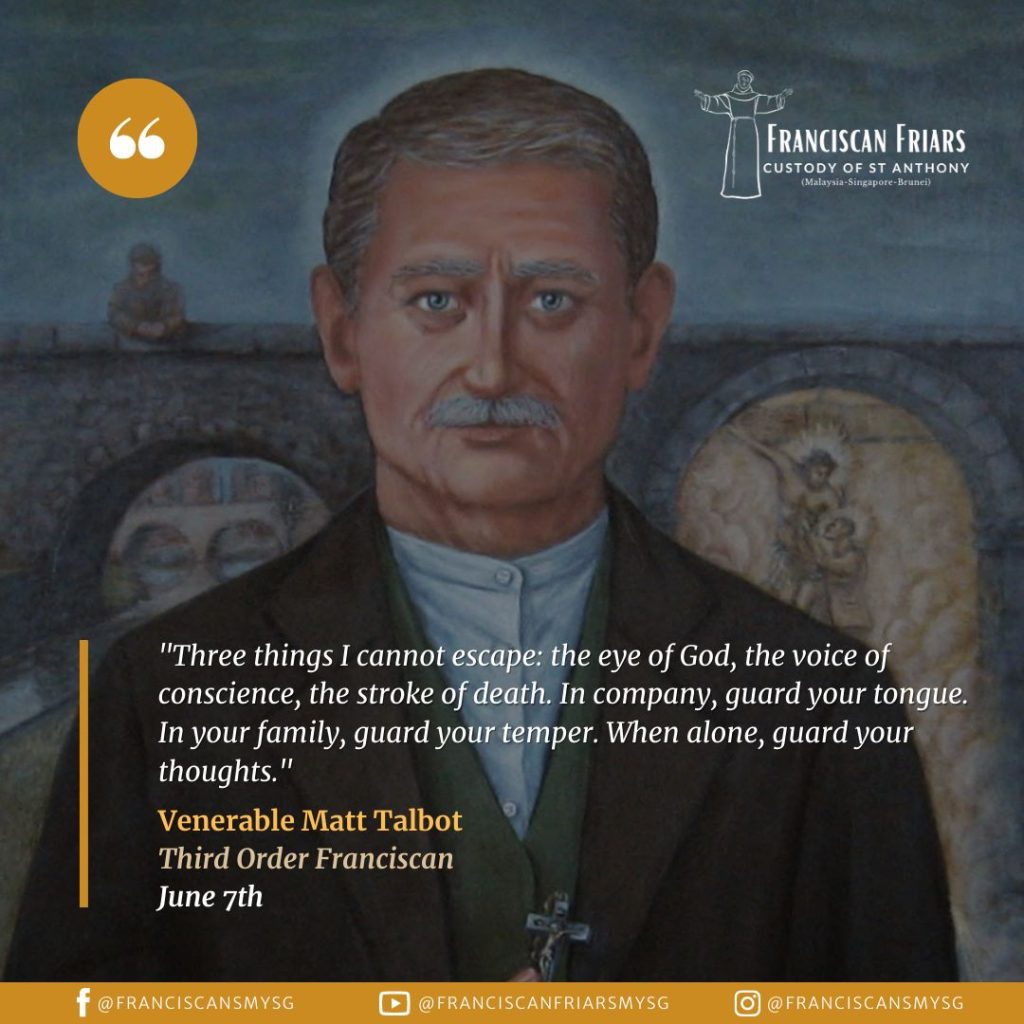
Matt Talbot was one of twelve children born to a poor family in Dublin. His addiction to alcohol began at twelve, when he got his first job with a wine merchant. Before long, drink had become the primary focus of his life. All the wages he earned carrying bricks went to support his addiction. What funds he lacked, he begged, borrowed, or stole.
This lasted until the age of twenty-eight, when he was overcome with disgust for his life. Entering a church, he made his confession and took the pledge of abstinence for three months. His mother had cautioned him: “Go, in God’s name, but don’t take it unless you are going to keep it.” Those first three months were agonizing. At one point he collapsed on the steps of a church, in despair at the thought of breaking his oath. But he kept at it, renewed it for another three months, and thus, by constant vigilance, remained sober for the next forty-one years.
From the point that he took the pledge, the focus of his life shifted dramatically. He became a Franciscan tertiary, attended daily Mass, ate sparingly, prayed half the night, and gave generously to charity. (He never carried money with him – always fearful of the temptation to step into a pub.)
On June 7, 1925, Talbot collapsed in the street and died. It was discovered that his body was wrapped in penitential chains, which were buried with him. His cause of canonization was soon opened, and in 1975 he was declared venerable. He is the patron of alcoholics.