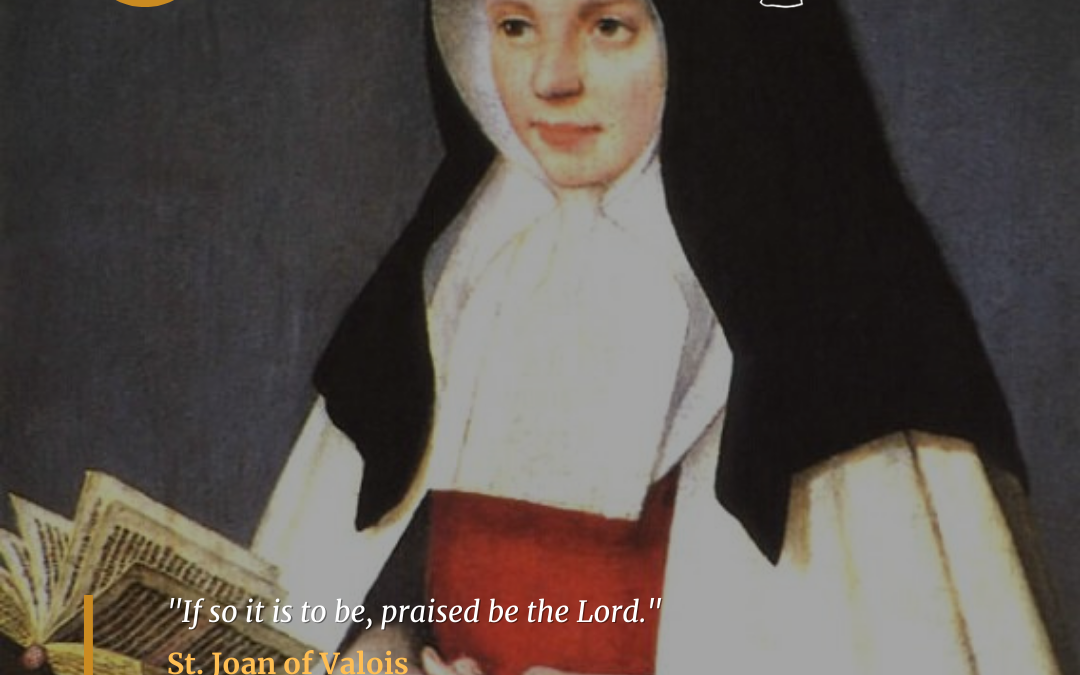
Saint Joan of Valois (1464-1505)
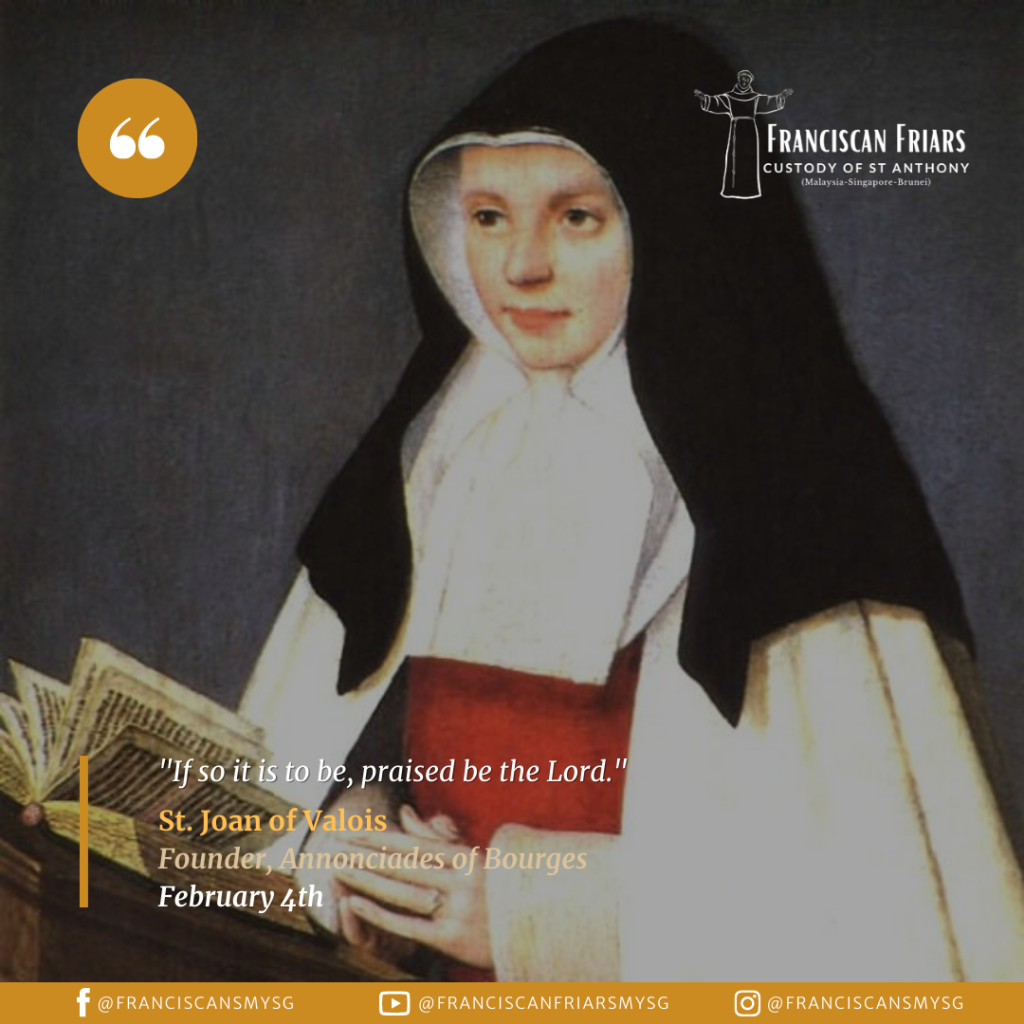
St. Joan, daughter of King Louis XI of France, was apparently misshapen from birth, a fact that incited her father’s contempt. When she was eight weeks old, he arranged her betrothal to her two-year-old cousin Louis, Duke of Orleans. The marriage transpired when Joan was twelve. Though her husband accepted the arrangement for pragmatic reasons, he felt no affection for his bride. Joan was subjected to constant abuse and ridicule in the court. She accepted all this without shame or complaint. But when Louis, after becoming king, sought to have the marriage annulled on the grounds of Joan’s deformity, she resisted as best she could. In the end, however, Pope Alexander VI decided in Louis’s favor, judging that the marriage had not been entered freely. Joan accepted this decision as the will of God and retired to Bourges to devote herself to a life of prayer and charity. Louis bestowed on her the title Duchess of Berry.
With the support of her Franciscan confessor, Joan established a religious foundation devoted to “the ten virtues of Our Lady.” The first postulants were eleven girls from the local school – some of them not yet ten. Under a rule that eventually received papal approval, they became the Franciscan order of the Annonciades of Bourges. Publicly renouncing her title and her property, Joan embraced a life of voluntary poverty. She died within a year. Her canonization followed in 1950.
Source : The Franciscan Saints (Franciscan Media)