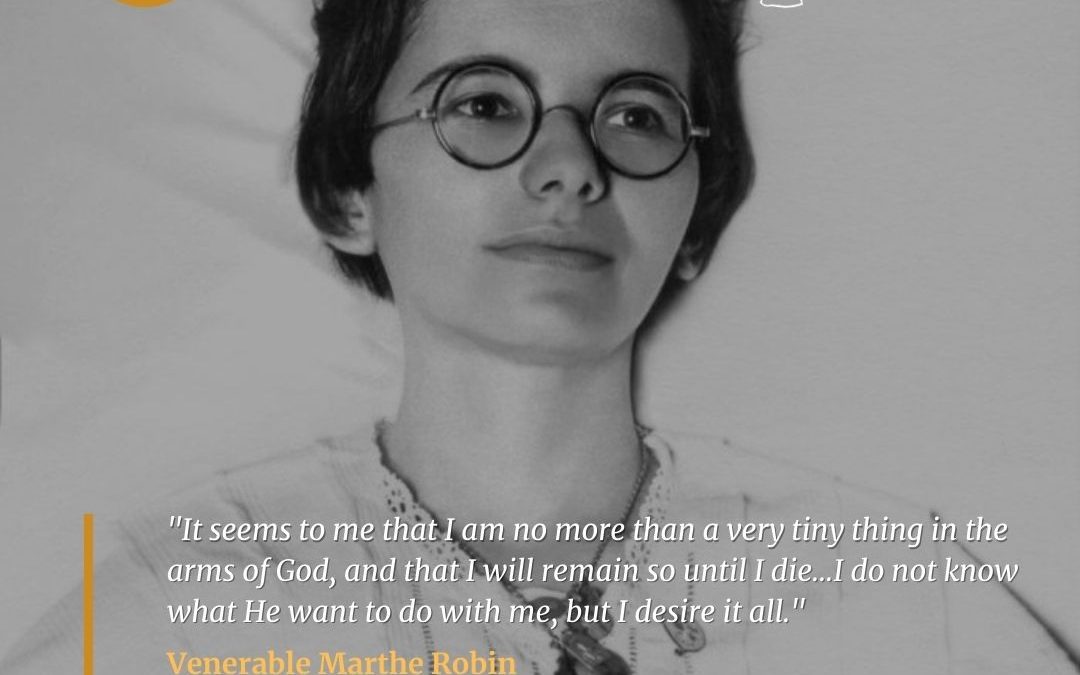
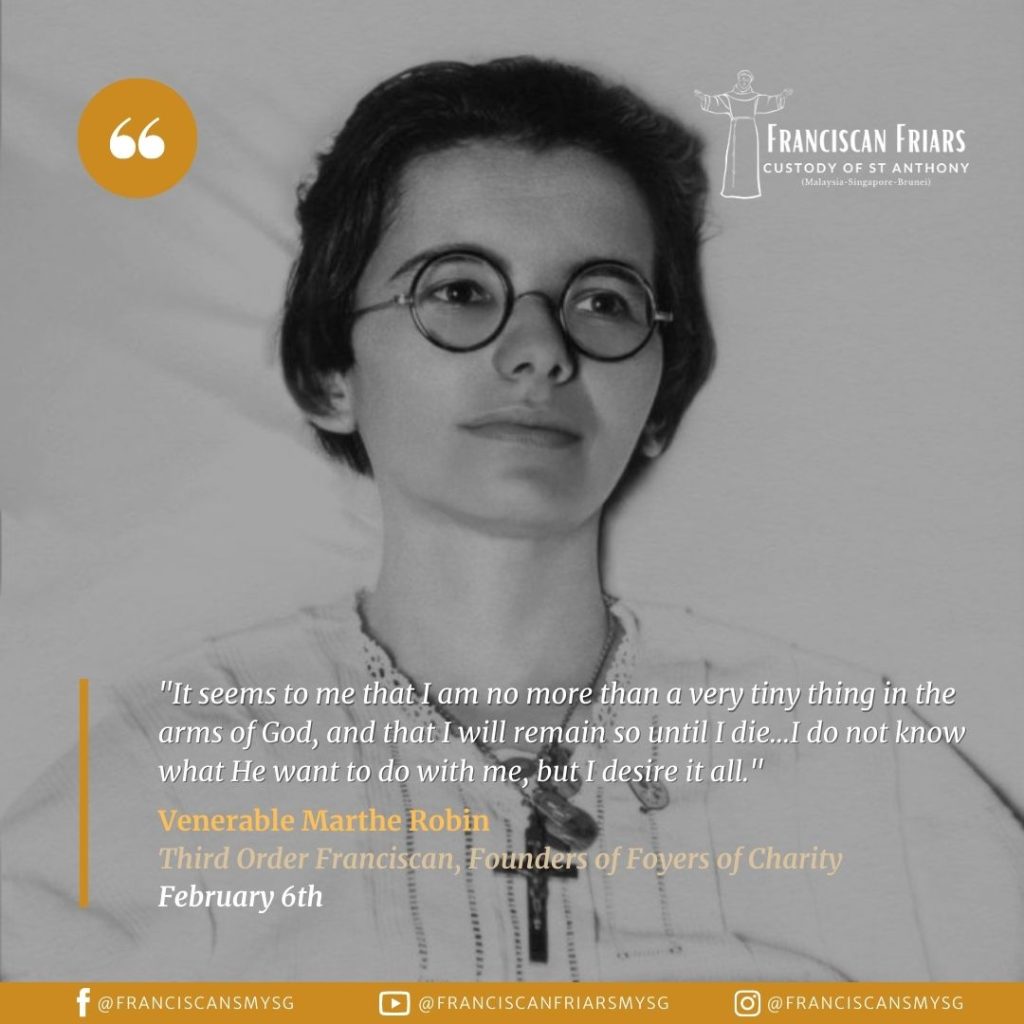
Marthe Robin was born in 1902 in a small village near Lyons. Her early childhood was happy and unremarkable. When she was sixteen, however, she showed the first symptoms of a grave disease that would eventually leave her bedridden. On March 25, 1925, she offered a solemn prayer consecrating her life and her sufferings to God to help spread love in the world. Within three years she was totally paralyzed. That same year she entered the Franciscan Third Order. Unable to eat or drink, she was reported sustained for the rest of her life by the Eucharist alone. In time, she also received the marks of Christ’s wound on her hands and feet.
In 1936, a young priest named Georges Finet came to serve as her spiritual director. To him, she confided her vision for a new apostolic movement, the Foyers of Charity. With his help, her vision was realized. The Foyers of Charity is an international network of Catholic men and women who live, work, and pray together as a family to spread Christ’s love in the world.
Marthe lived on for many years – blind and immobilized, yet active through her prayers in the life of the Church, dispensing spiritual counsel, and showing that even when a person is stripped of everything, she still has the power to love.
She died on February 6, 1981. In 2014, Pope Francis recognized her heroic virtues and she was declared venerable.
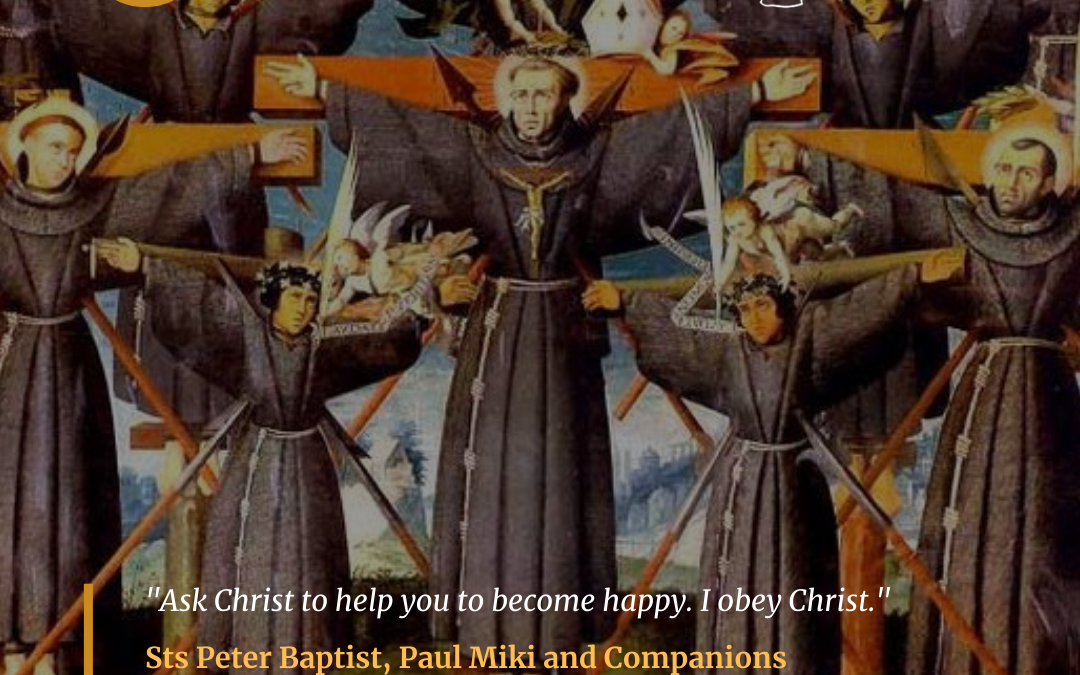
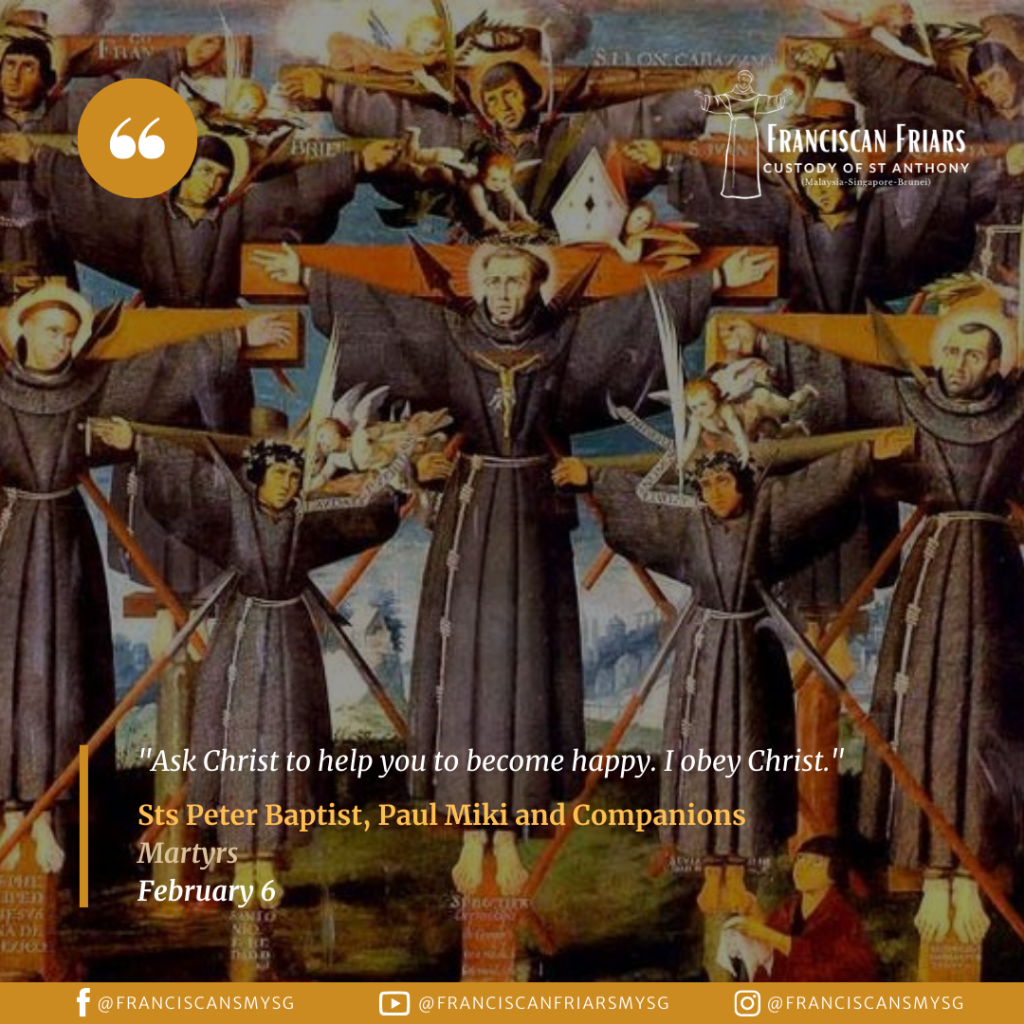
Pedro Bautista Blásquez was born in Spain in 1542; at the age of 22 he entered the Franciscan Order and after finishing his studies and being a preacher for many years, in 1580 he left as a missionary for Mexico. Later, he was sent to the Philippines; in Manila where he founded a new Province – which today bears his name – of which he was elected Minister Provicial in 1591. During his ministry many friaries were erected and he himself, barefoot, took the Gospel to all the islands of the archipelago.
His fame as a missionary reached the King of Spain, who wanted to send him as a missionary to Japan. It was here, unfortunately, that his evangelizing work clashed with the political choices of Emperor Hideyoshi, after an initial flourishing phase, in which Peter founded friaries and hospitals in different parts of the country, it was then opposed by a rapid and inexorable decline. The local rulers were opposed to the spread of Christianity in the Empire, so Hideyoshi was forced to ban all Catholic missionaries.
For this reason, fr Peter Baptist, his five confreres and seventeen Franciscan Tertiaries, were arrested and condemned to undergo the torture of crucifixion. Taken to the city of Nagasaki, tortured and exposed to public ridicule, they suffered martyrdom on the 5th February, 1597. Together with them was Paul Miki, the Jesuit, and two of his catechists who were also martyred.
These martyrs were beatified on the 14th September, 1627 by Pope Urban VIII and canonized on the 8th June, 1862 by Pope Pius IX.
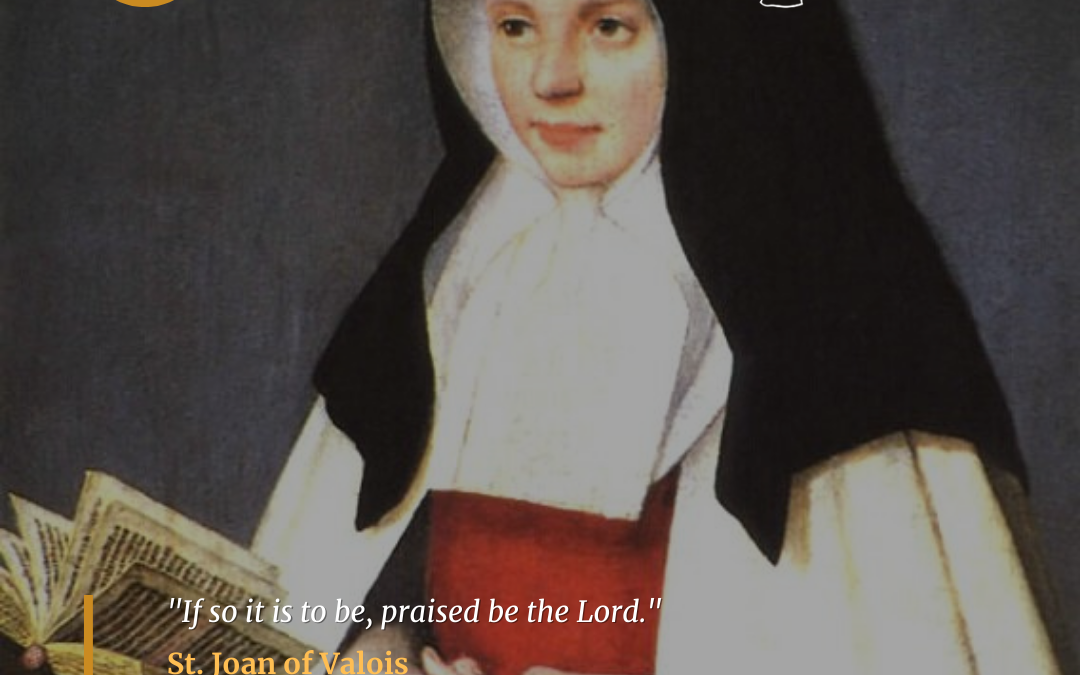
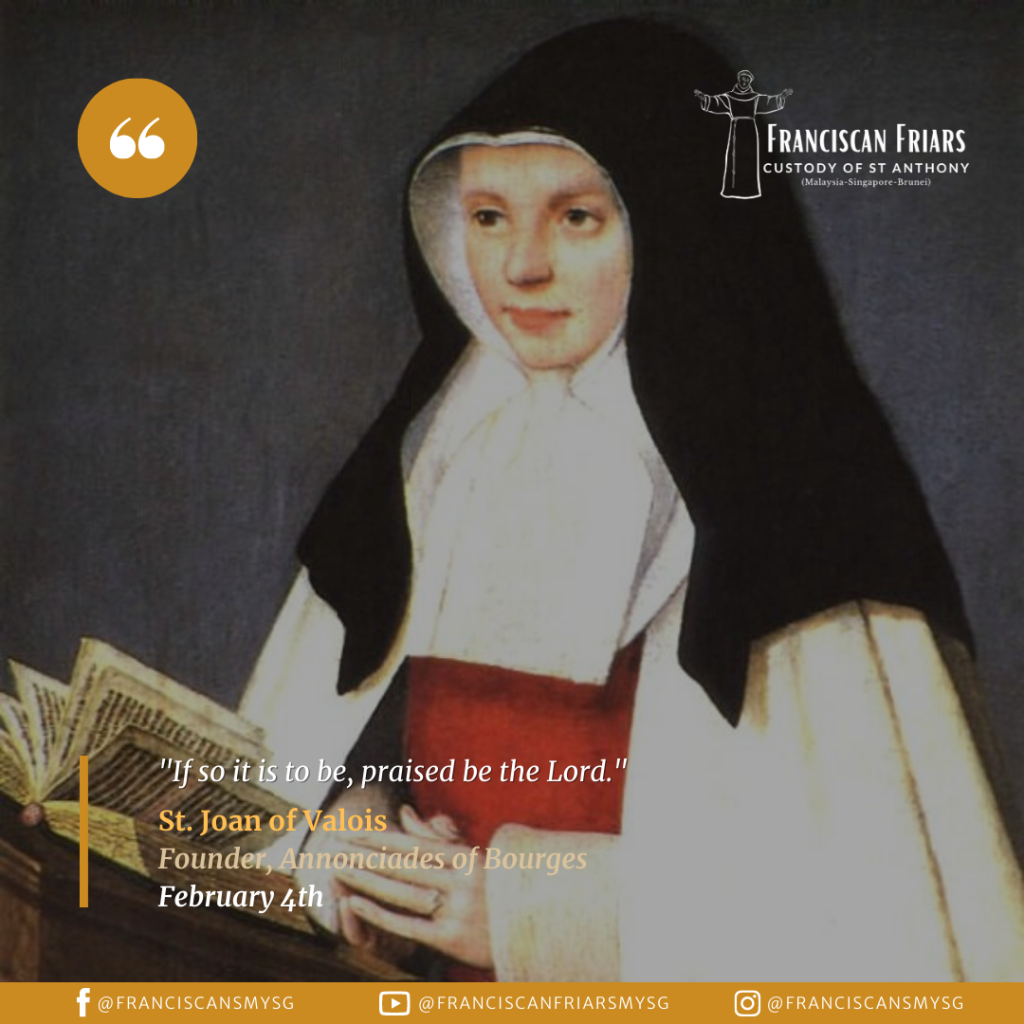
St. Joan, daughter of King Louis XI of France, was apparently misshapen from birth, a fact that incited her father’s contempt. When she was eight weeks old, he arranged her betrothal to her two-year-old cousin Louis, Duke of Orleans. The marriage transpired when Joan was twelve. Though her husband accepted the arrangement for pragmatic reasons, he felt no affection for his bride. Joan was subjected to constant abuse and ridicule in the court. She accepted all this without shame or complaint. But when Louis, after becoming king, sought to have the marriage annulled on the grounds of Joan’s deformity, she resisted as best she could. In the end, however, Pope Alexander VI decided in Louis’s favor, judging that the marriage had not been entered freely. Joan accepted this decision as the will of God and retired to Bourges to devote herself to a life of prayer and charity. Louis bestowed on her the title Duchess of Berry.
With the support of her Franciscan confessor, Joan established a religious foundation devoted to “the ten virtues of Our Lady.” The first postulants were eleven girls from the local school – some of them not yet ten. Under a rule that eventually received papal approval, they became the Franciscan order of the Annonciades of Bourges. Publicly renouncing her title and her property, Joan embraced a life of voluntary poverty. She died within a year. Her canonization followed in 1950.
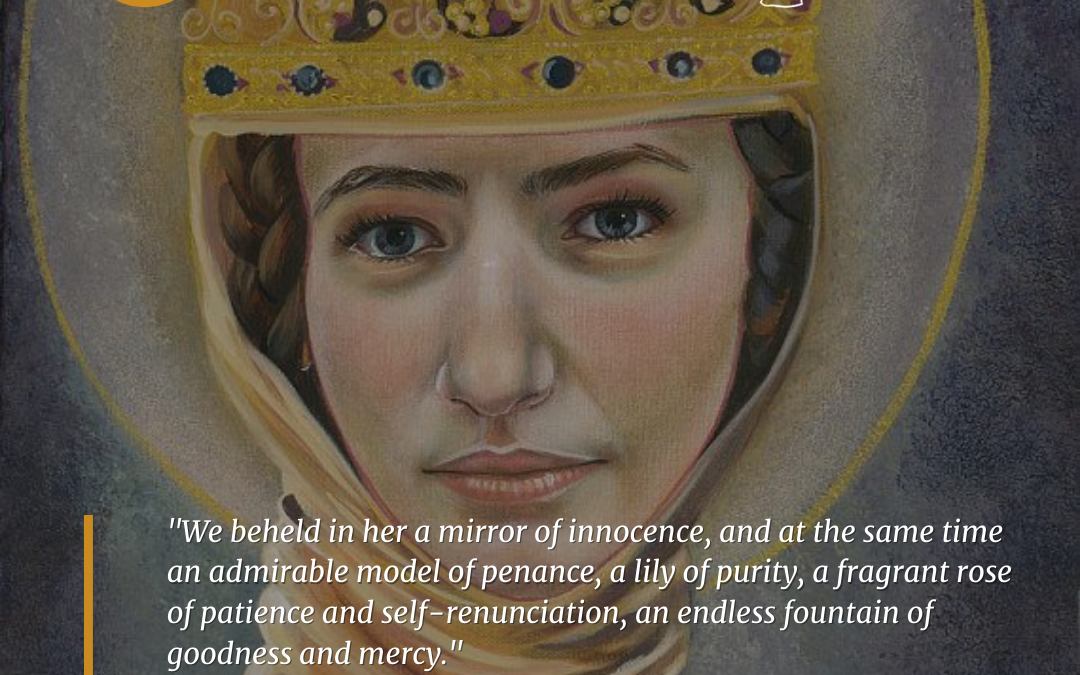
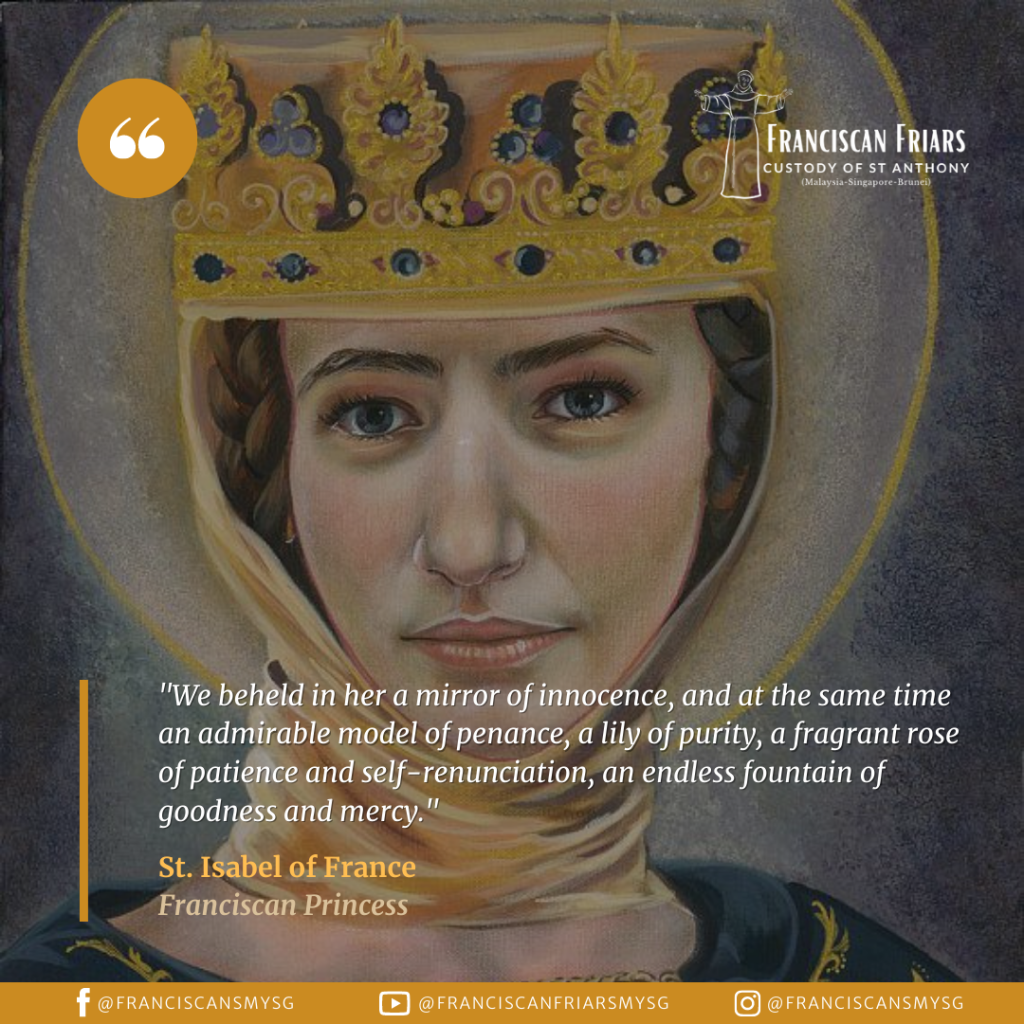
Beautiful, clever, and the daughter of a king (Louis VIII of France), Princess Isabel was destined for a life of pomp and luxury. But her heart was drawn elsewhere. When her frequent fasts and austerity cause her to fall ill, her mother consulted a holy woman, who told her that when Isabel recovered she should be considered as dead to the whole world. So it was. Isabel refused all proposal of marriage – even when urged on her by Pope Innocent IV, who said that her marriage would serve the good of Christendom. She insisted on serving God before all else.
Increasingly, Isabel felt attracted to the Franciscan movement that was sweeping Europe. At dinner each day she would welcome a number of poor people, whom she waited on personally. In the evenings she would leave the palace to visit the sick. When her brother Louis ascended the throne, he agreed to support her plan to establish a Franciscan convent in Longchamps. St. Bonaventure himself helped to devise its rule. It was called the Monastery of the Humility of the Virgin Mary.
Isabel did not formally join the enclosed community. Instead, she lived in quarters separate from the nuns and continued to wear secular clothing, while devoting herself to prayer and contemplation. SHe died in 1270.
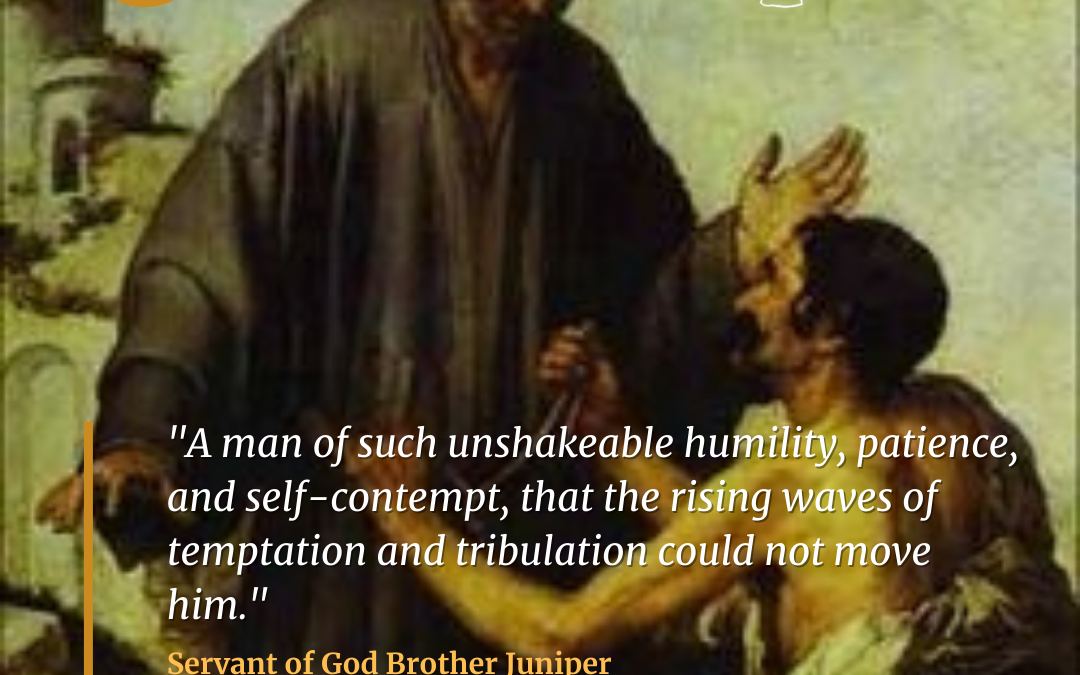
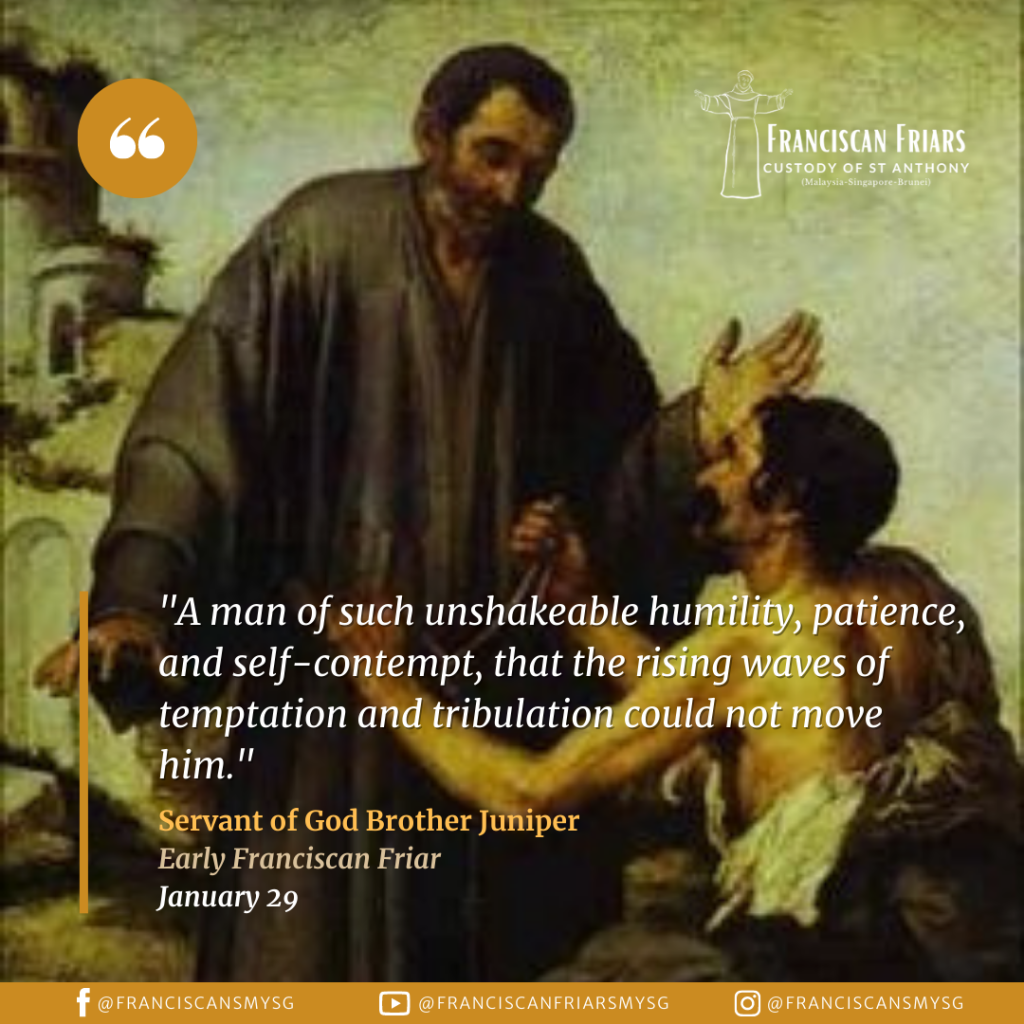
Brother Juniper was one of the original companions of St. Francis and
” a man of such unshakeable humility, patience, and self-contempt, that the rising waves of temptation and tribulation could not move him.”
Brother Juniper evidently attained such a degree of holiness that he was quite indifferent to the opinion or regard of others. This was fortunate, since “he was considered stupid and foolish by those who did not know how perfect he was.”
Apart from the stories in his brief “Life,” little is known of his biography. In these stories, he appears to function as a kind of living parable. Francis and his followers were regarded by the world as “fools for Christ.” Just so, the exasperating foolishness of Juniper served among the friars as a standard by which to measure their own compromise with the wisdom of the world.
Over and over again, Juniper tested the patience of his brothers. And not infrequently, after one of his escapades, “the friars were very much shocked and scandalized, and they rebuked him forcefully, calling him a lunatic and a fool and a disgrace to the order of St. Francis, and declaring that he should be put in chains as a madman,” At the sight of the poor, for instance, he was filled with such compassion that he would hand them his garment or rip off a sleeve or a cowl to give them. Not content with giving away his own habit, he would freely dispense his books, altar vestments, or anything else he could lay his hands on. As a result, “when poor people came to Brother Juniper to beg, the friars used to take and hide the things they wanted to keep.”
One time, he set out to surprise the brothers by preparing a feast. After filling pots with water, he tossed in everything – “chickens with feathers and eggs in shells” – so that everything could cook together. When he set down before the friars “that hodgepodge of his, which not a single hog in the city of Rome would have eaten.” they scolded him severely. Juniper displayed such humble abasement that the guardian was moved. Such an edifying example of simplicity, he said, was worth the waste of food.
So on this, and many other occasions, Juniper’s foolishness ultimately bore such a lesson in charity, faith or humility, that Francis himself was moved to observe on one occasion, “My Brothers, if only I had a great forest of such junipers.”
He died in Rome in 1258.
Once when Brother Juniper was praying – and perhaps he was thinking of something extraordinary – a hand appeared to him in the air, and he heard a voice saying to him: “Oh Brother Juniper, without this hand you can do nothing.” He quickly arose and ran through the friary, gazing up at heaven, dancing and shouting in a loud voice: “Indeed that is true, Lord! Indeed that is true!” And he kept on shouting that for a long time.
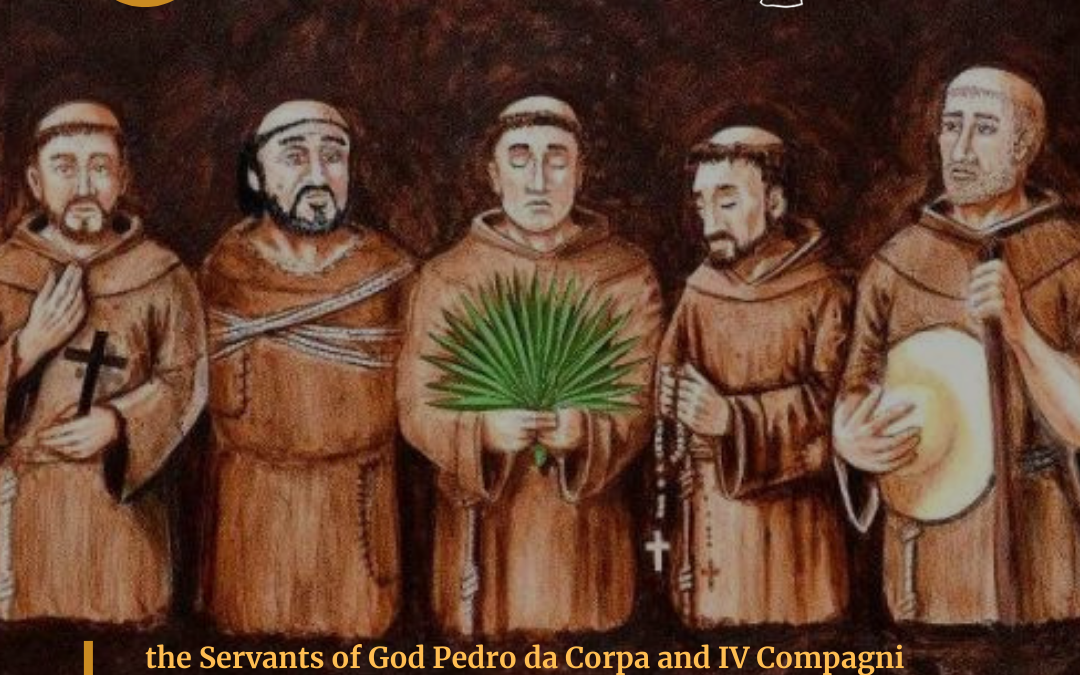
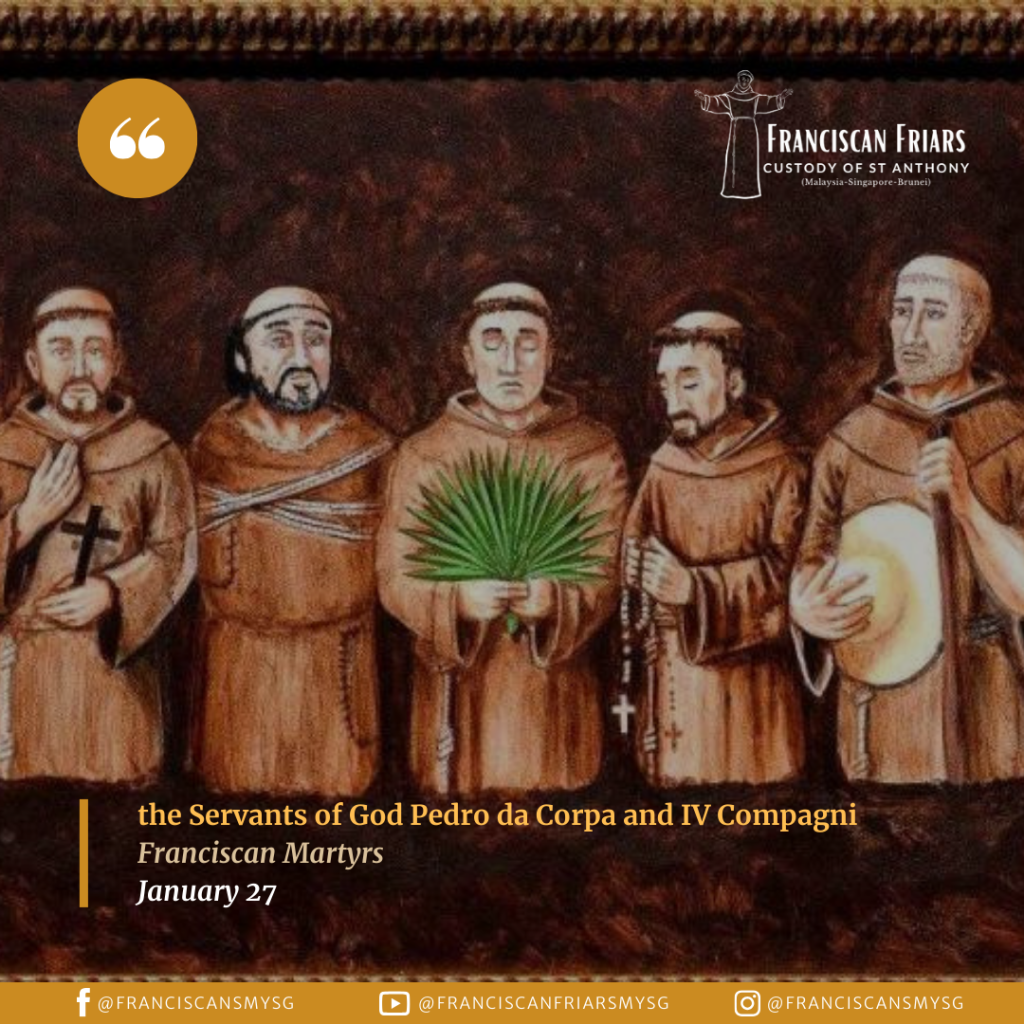
On the 27th January 2025, the Holy Father Francis received in audience Cardinal Marcello Semeraro, Prefect of the Dicastery for the Causes of Saints, and authorized the Dicastery to promulgate the Decree concerning the recognition of the martyrdom of the Servants of God Pedro da Corpa and IV Compagni, religious of the Order of Friars Minor,murdered in hatred of the faith in the territory of the current Diocese of Savannha -USA in 1597.
The five Venerable Servants of God, all originally from Spain, responded generously to the Lord’s call to evangelize the peoples of America, even to the point of giving their lives.
Friar Pedro de Corpa was born in the small village of Corpa, in the diocese of Madrid-Alcalá, around 1560. He was a priest of the Province of the Friars Minor of Castile. In 1587 he embarked for Florida. He served the population in the village of Tolomato (near present-day Darien). Polygamy was in force among the native populations of these lands: in pastoral practice, the Franciscans had chosen to administer baptism to an equal adult only when he or she had committed himself to monogamous marriage. The crisis came when a young warrior, named Juanillo, a baptized and married Christian, decided to take a second wife. The situation was delicate as Juanillo, grandson of the tribal chief, was on his way to taking command of the village. Juanillo, rejecting Friar Pedro da Corpa’s warnings about the commitments made in baptism, left the mission and conspired with other natives of the interior region to eliminate the friar. In the first days of September 1597, the warriors attacked and murdered Fr Pedro de Corpa in his hut, they struck him with an axe and mutilated his body. The odium fidei was soon turned against the other four Friars Minor operating in the same territory, in different villages.
Friar Blas Rodríguez de Cuacos was born in the village of Cuacos (Cáceres – Spain), between 1550 and 1560. He was a priest of the Alcantarina Province of the Friars Minor of San Gabriel. In 1590 he had left for the Florida mission and at the time of the events he was working in the village of Tupiquí, near present-day Eulonia. In missionary work he shared the position against polygamy. When he found himself in front of the hostile band of rebels, aware of his imminent death, he asked to be able to celebrate his last Mass. After Mass, around the middle of September, he was barbarously murdered with an axe blow. His body was left abandoned in the woods and was devoured by beasts.
Friar Miguel de Añón, a priest of the Province of the Friars Minor of Castile, carried out his mission on the island of Santa Catalina, together with the lay religious Friar Antonio de Badajoz. The date of his birth in Zaragoza is uncertain. He faced the death, preceded by various tortures, together with his confrere Fr Antonio. His body was buried next to that of his confrere inside the village chapel.
Friar Antonio de Badajoz, a lay religious of the Alcantarina Province of the Friars Minor of San Gabriel, was born in L’Albuera, near Badajoz. After the outbreak of the revolt, the tribal chief of the island of Santa Catalina tried to warn him of the impending danger, but he did not accept, preferring to remain at the mission with Friar Miguel de Añón.
Friar Francisco de Veráscola was born on February 13, 1564 in Gordejuela, into a Basque family; he entered the Franciscan Province of Cantabria and left for the Florida mission in 1595. Here he was entrusted with the new mission of the island of Asao, today San Simón, opposite the current village of Brunswick, Georgia. His imposing stature and physical strength earned him the nickname “Cantabrian giant”. This characteristic made him popular amongst the gualeyouth, with whom he competed in wrestling, ball play and “throwing” spears. At the time of the death of his companions, he was not at the mission, but had gone by canoe to San Agustín, to take the necessary material for the chapel. Disembarking in Asao, he was immediately attacked by the rebels who murdered him with an axe blow.
The Cause of Beatification of this group of Franciscan martyrs, supported by the U.S. Episcopate, began in the Diocese of Savannah in 1981, as Postulator General of the Order of Friars Minor Br. Antonio Cairoli, OFM.