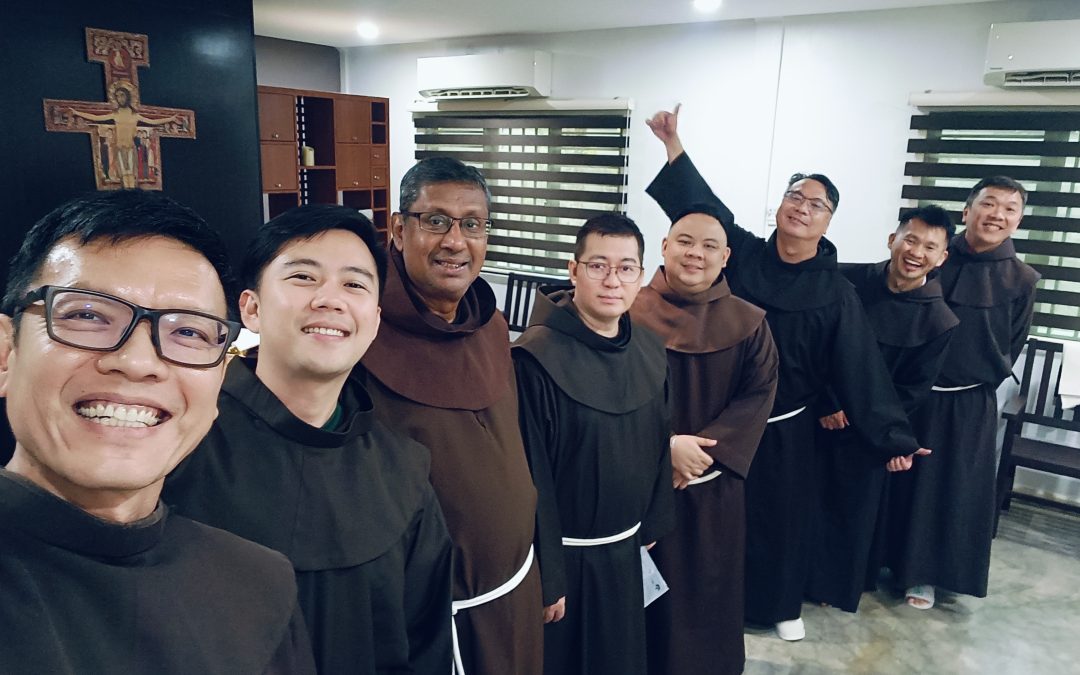
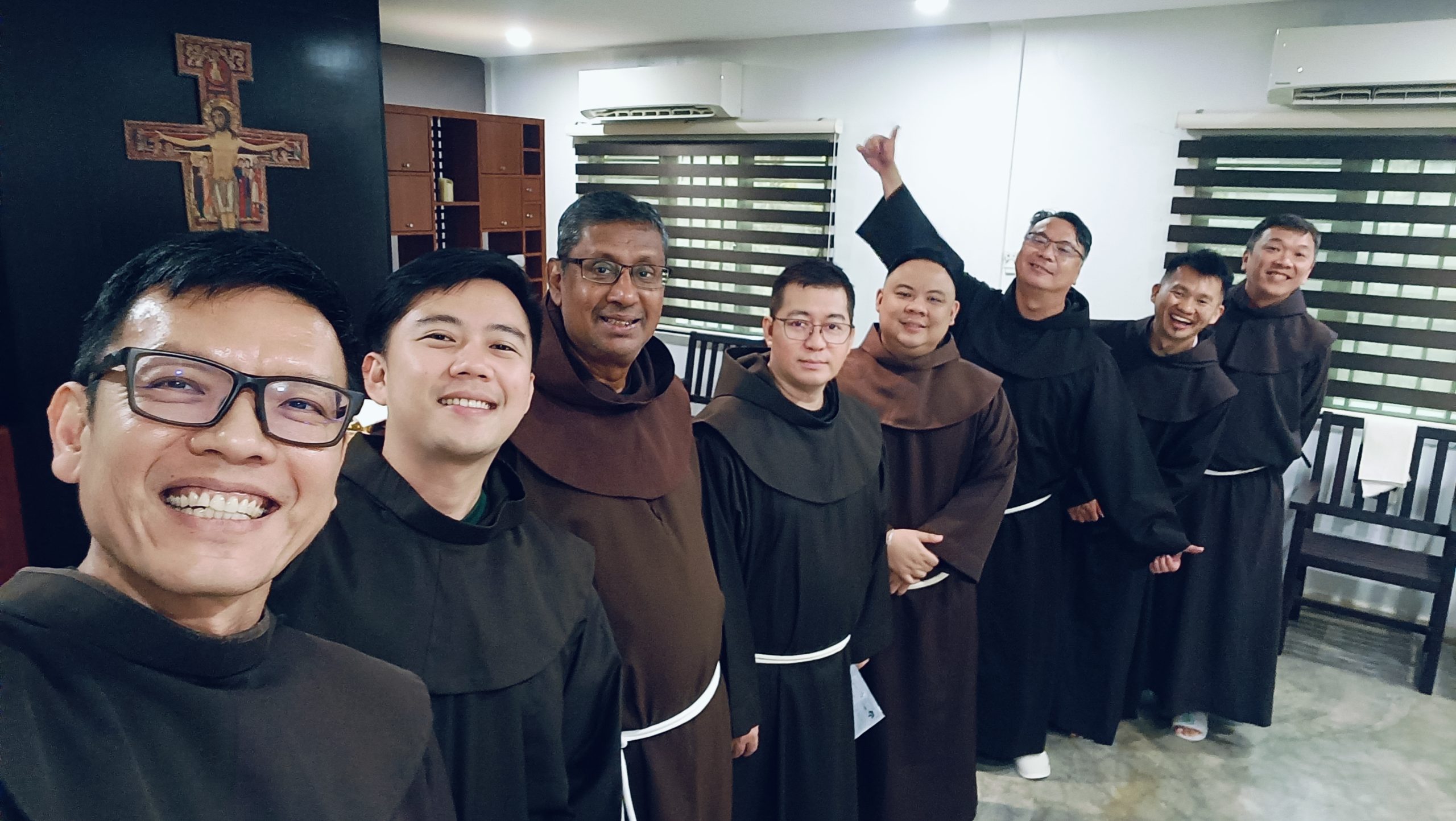
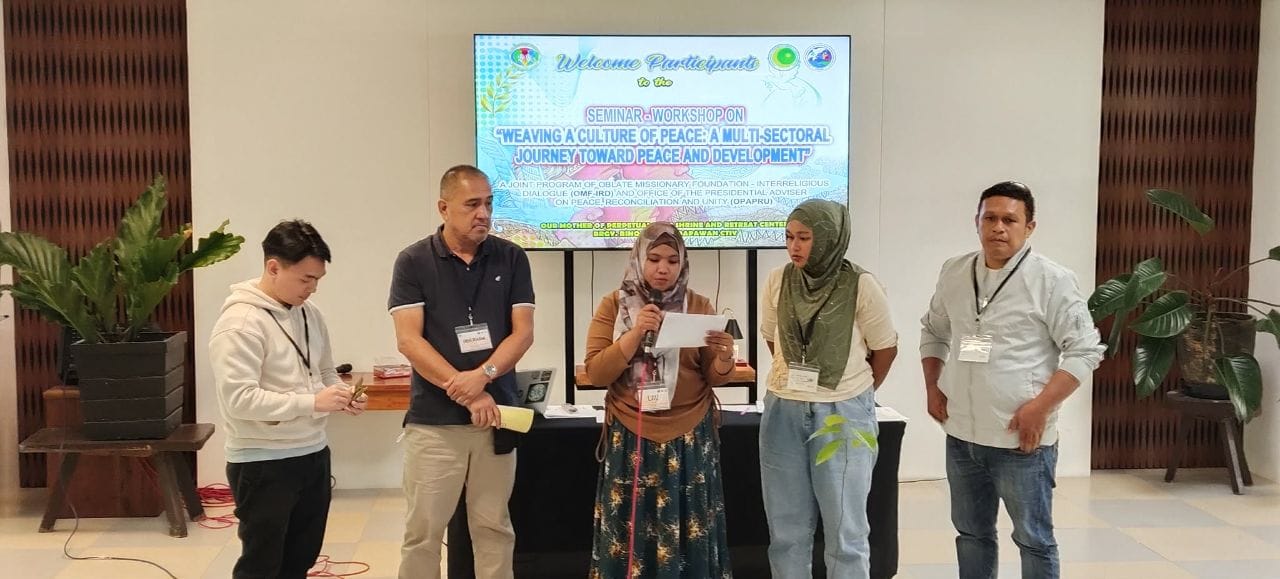
The Guardians at the Training of Guardians in August.
Formation in the Custody continued to develop in 2026 with the conviction that formation is not simply about preparing friars for ministry; it is about forming them for a life of Gospel discipleship, fraternity and mission.
A key undertaking of the Formation Council was the review of our Ratio Formationis Franciscanae, with a focus on strengthening Human Formation as the foundation for Christian and Franciscan formation. Human Formation seeks to help a person grow to manifest, as far as possible, the “human perfection which shines forth in the Incarnate Son of God” (Pastores Dabo Vobis, 43).
We are continually formed by our habits, environments, relationships and what James K A Smith calls our “formative micro-practices”. The question therefore is not whether we are being formed, but what we are being formed into. We are called to become more intentional about our daily lives and to ask whether they are helping us to flourish or, unintentionally, contributing to our malformation.
Similarly, in our review of the Vocation Interview Board and Psychological Testing processes, we are considering how our discernment processes can be grounded in a deeper understanding of human formation. An interdisciplinary Vocation Interview Board, bringing together expertise in psychology, educational pedagogy, law and Franciscan spirituality, can strengthen the integrity of vocational discernment.
Our discussions on psychological assessment have likewise emphasised a holistic approach. Beyond identifying mental health concerns and areas requiring growth, we also want to recognise the strengths, capacities and resources that candidates bring. Understanding a candidate’s history is equally important, particularly in discerning how his past experiences may shape his emotional and relational well-being within priestly and Franciscan life.
These reflections have already found concrete expression. From 10 to 13 August, the Guardians gathered in Kuching for formation on attachment needs, and community development and dynamics. The formation aimed to strengthen their capacity to serve as Guardians and to accompany friars in their human and fraternal growth.
Our Ongoing Formation programme has similarly focused on human formation, relationships and community dynamics, reflecting on how our presence makes sense within the Church and world today, and what it means to minister faithfully in Malaysia and Singapore. The Il Cantico community in Kota Kinabalu engaged in this process on 1 September. The next session will be with the community at Greccio Friary, our student house in Singapore.
In 2027, we hope to broaden the revision of the Ratio Formationis Franciscanae through collaboration between Formation, Justice, Peace and Integrity of Creation (JPIC), Mission and Evangelisation, and Professional Standards and Safeguarding. Each of these areas is an important part of our Franciscan life: JPIC flows from our Franciscan identity; mission flows from who we are; and safeguarding from our commitment to human dignity and communities where people can flourish safely.
The challenge is not simply to create better programmes or procedures, but to foster a culture of formation in which these dimensions come together in a coherent and mutually enriching way.
Ultimately, formation is about becoming. We are being formed every day. The question before us is: Who are we becoming, together, as brothers? And how might our becoming enable us to embody more authentically the beauty of the Gospel, the fraternity of Francis, and the hope of Christ in the world today?
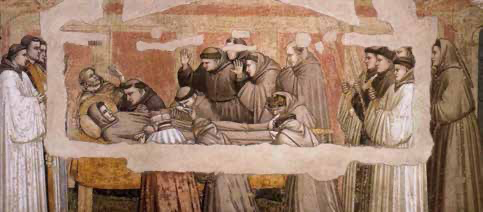
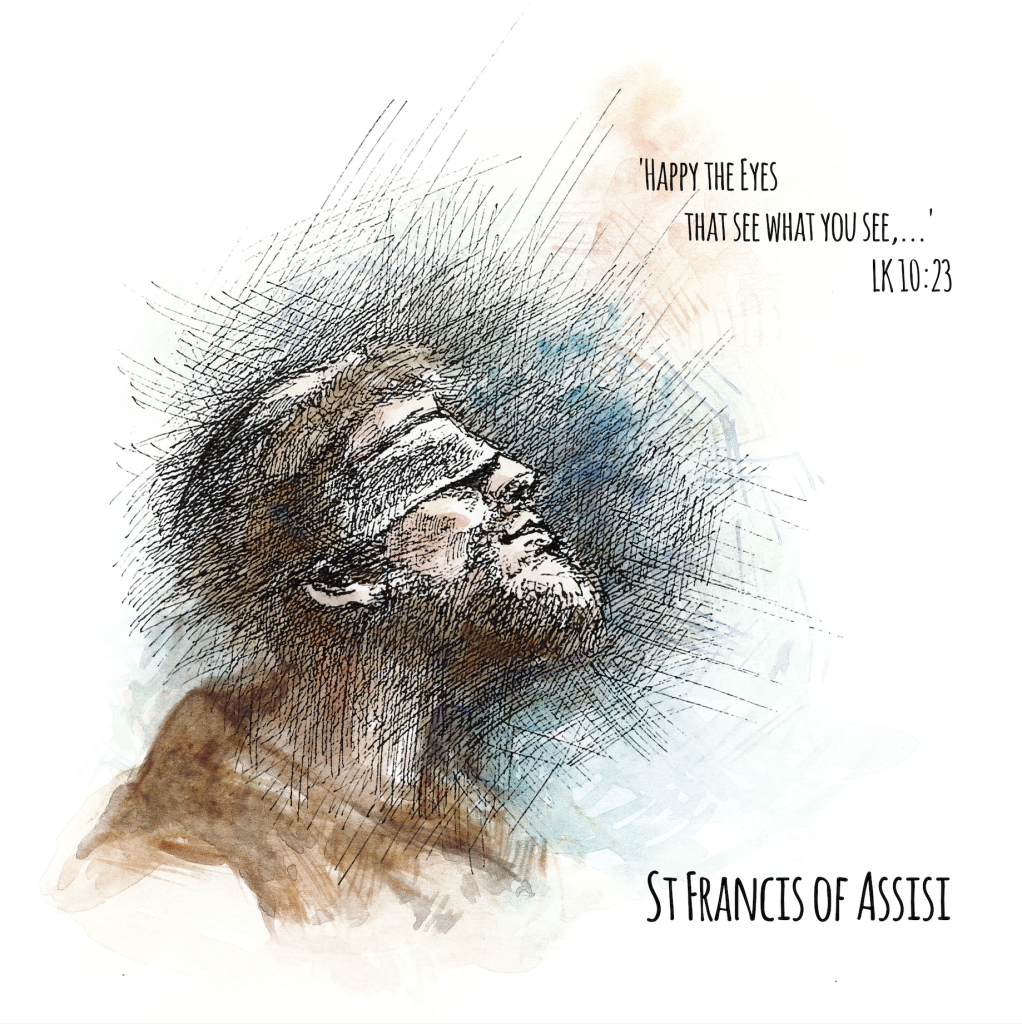
In 2026, we mark the 800th anniversary of the death of St Francis of Assisi. Eight centuries after his earthly journey ended, the seed of the Gospel planted in his heart continues to germinate. His legacy is not simply something to remember; it is an invitation to live differently today.
Francis’ conversion began when the Lord led him among the lepers and taught him mercy. As Francis wrote in his Testament:
“The Lord granted me, Brother Francis, to begin to do penance in this way: while I was in sin, it seemed very bitter to me to see lepers. And the Lord Himself led me among them and I had mercy upon them. And when I left them that which seemed bitter to me was changed into sweetness of soul and body; and afterward I lingered a little and left the world.” (Testament 1-3)
His encounter with those who were poor and excluded transformed his understanding of life. Soon afterward, before the crucified Christ at San Damiano, he discovered the depth of God’s self-giving love. The poor and Christ crucified became foundational reference points for his life.
How can we allow that spirit to take root in us?
1. Choose mercy
Move toward, rather than away from, those who are vulnerable, forgotten, or difficult to understand. Francis discovered that poverty, humility, simplicity, and “minority” become meaningful when they lead us to mercy. Poverty without mercy becomes an idol; mercy without poverty is reduced to ideology.
2. Keep Christ crucified at the centre
Make space each day for prayer, gratitude, and contemplation of Christ’s self-giving love. Let the cross reshape the way you see yourself, others, and God.
3. Live faithfully within the Church
Francis saw the Church, despite its weaknesses, as fertile soil where the Gospel could grow. His devotion to the Eucharist taught him to recognize God’s humility and love in the sacramental life of the Church.
4. Build fraternity without power
Serve rather than dominate. Listen, welcome, forgive, and care for those around you. Francis envisioned a brotherhood rooted in mutual service, humility, and familiarity.
5. Become a person of peace
Let “peace” be more than a greeting. Refuse needless quarrels and judgments; practice gentleness, humility, courteous speech, dialogue, and reconciliation.
The 800th anniversary is a moment to ask whether the seed planted in Francis is bearing fruit in us: mercy toward the poor, love for Christ, fidelity to the Church, Eucharistic faith, humble fraternity, and the witness of peace.
We are pilgrims of hope. Wherever we are, whatever our vocation, we can make Francis’ Gospel spirit visible – one act of mercy, one gesture of fraternity, and one step toward peace at a time.
Peace and all good!
Adapted from Francis of Assisi: A Seed for Eternal Life, a letter from the Franciscan Family in conjunction with the 800th anniversary of the death of St Francis.
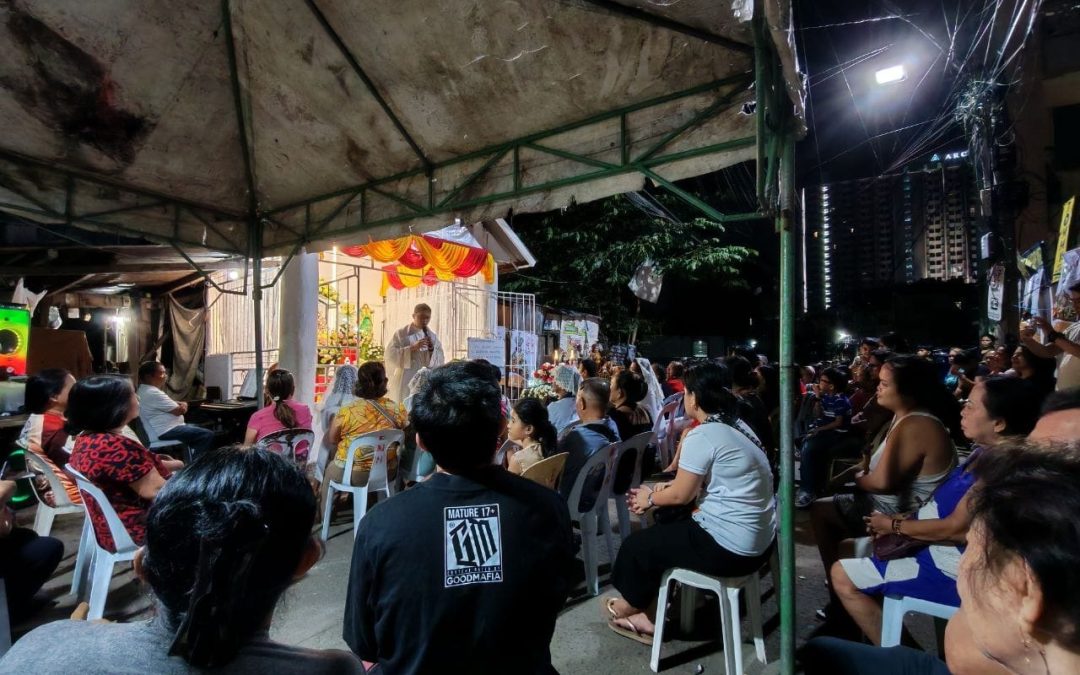
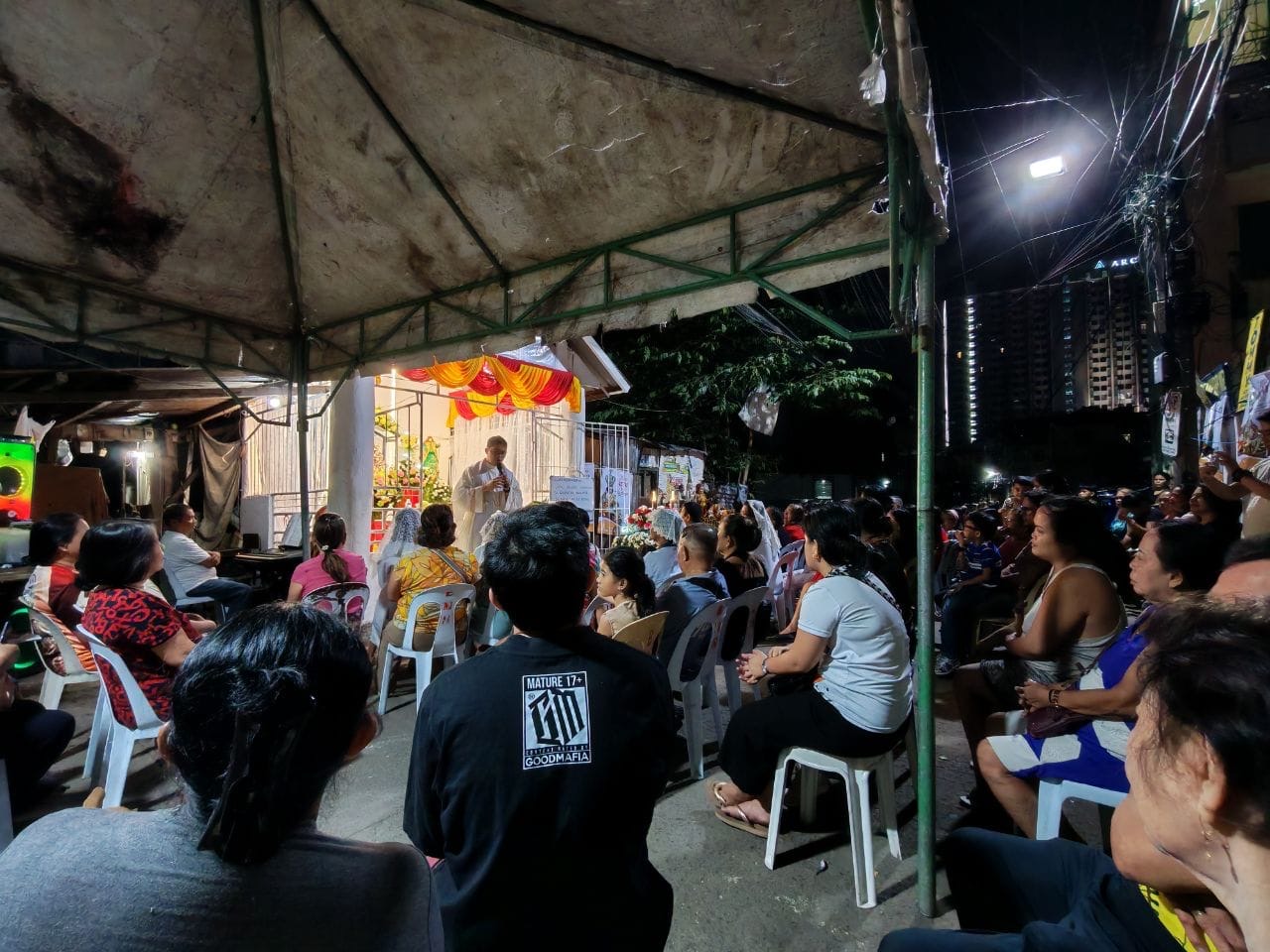
Friar Jorgerson attending Mass celebrated on the street.
Stepping into the unknown marked the beginning of my Franciscan year with the Province of San Antonio de Padua in the Philippines. Tasked with broadening my understanding of mission, evangelisation, and the call to justice, peace, and integrity of creation (JPIC), I discovered that true mission means walking into uncertainty with faith and finding God’s grace in the lives of the people we serve.
At the Sinulog Festival, one of the biggest feasts in southern Philippines, I was introduced to the Santo Niño. At first, I wondered why people were so devoted to this little child figure but, as time passed, I found myself returning often to the Basilica of Santo Niño for confession, Mass, and prayer. This cultural immersion revealed to me the deep faith of the people, and how devotion shapes their lives.
Visiting different friaries taught me much about mission, evangelisation, and justice. The friars serve where others hesitate to go – poor, remote, even risky areas – immersing themselves in the impossible, living with little, and building dialogue between Muslims and Christians without demanding anything in return. As Friar Arturo Daquilanea OFM told me, daghang gracia (full of grace) – God repays what people cannot.
I came as a stranger, but was treated as family, welcomed with warmth and fraternity. My fraternal bond expanded beyond the Custody of St Anthony (Malaysia-Singapore-Brunei) to the wider Franciscan world, and this is what I treasure most.
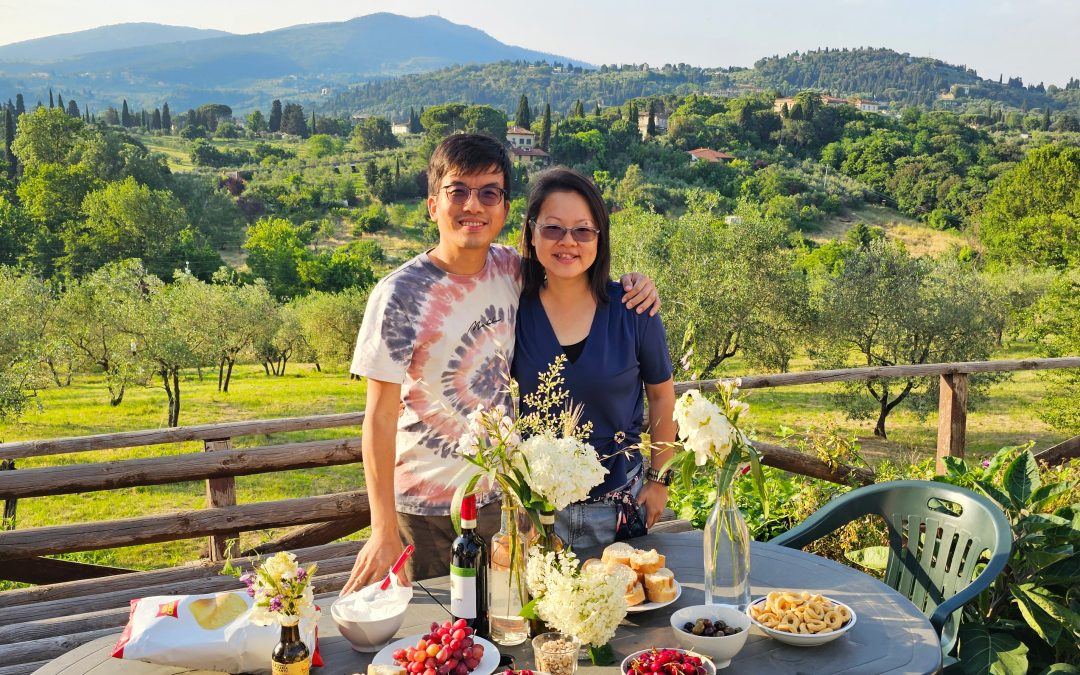
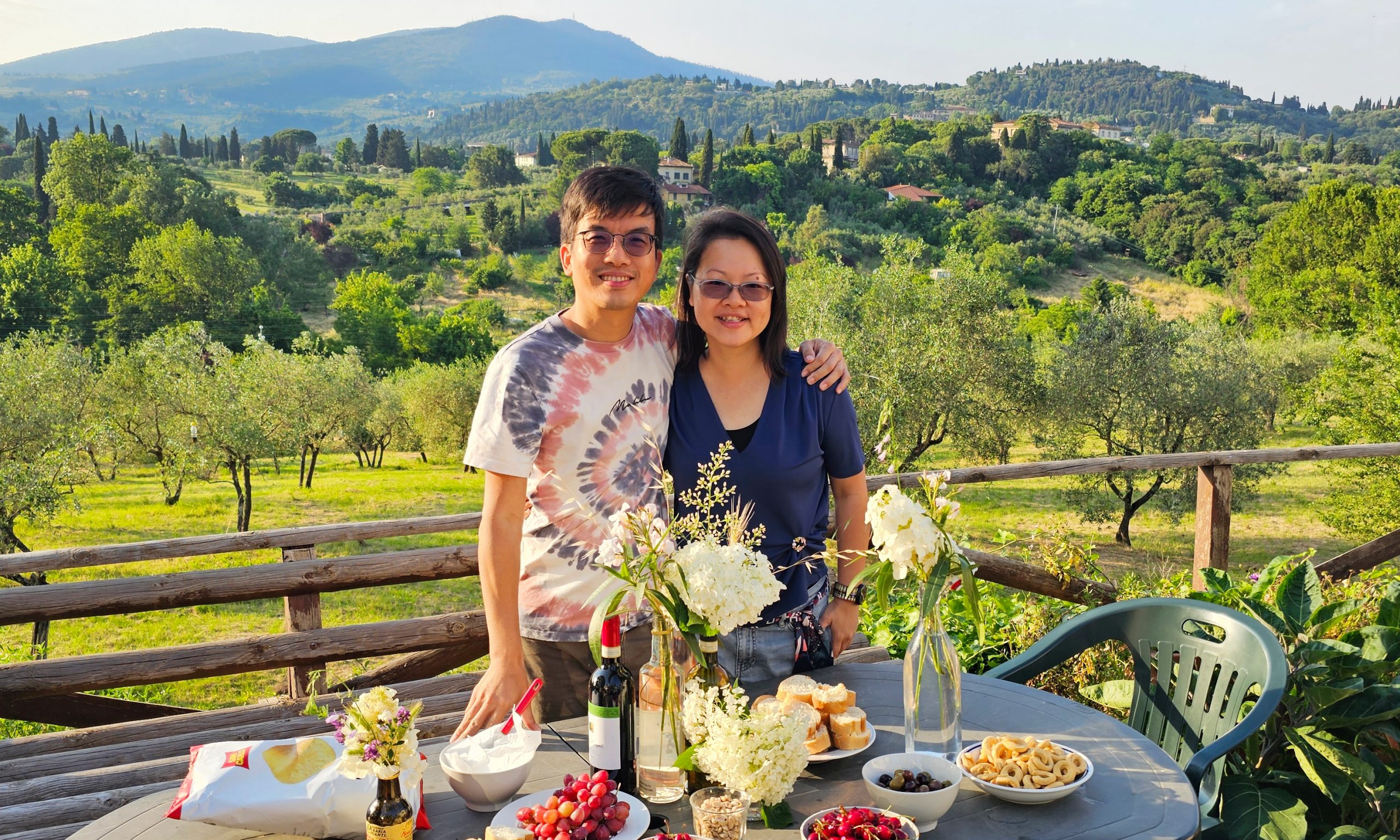
Joseph Ng and Susan Toh, the artists behind the artworks for the Franciscan Calendar 2027.
The artworks in the Franciscan Calendar 2027 are a collaborative effort by husband and wife, Joseph Ng Swee Hong and Susan Toh Li Chuin, who are parishioners of the Church of St Mary of the Angels. The project was an opportunity for them to work together, complementing each other’s artistic skills that were shaped by their studies in Florence, where they completed their master’s degree in sacred art in 2025.
They shared that the invitation to create these artworks felt like a gentle nudge from the Lord. For Joseph, this meant revisiting the more than 3,000 daily sketches he has drawn since December 2017. He began this practice during his morning prayer, using Lectio Divina and following the Roman Catholic liturgical calendar, to remember God’s word. Browsing through the 43 volumes of sketchbooks turned out to be an emotional pilgrimage. As he flipped through the pages, he relived the highs and lows of his faith journey, beginning as a neophyte about 10 years ago. Each sketch contains a memory, a personal message, or a struggle at that moment in time, yet each also points to God’s love and guidance through the scriptures over the past nine years.
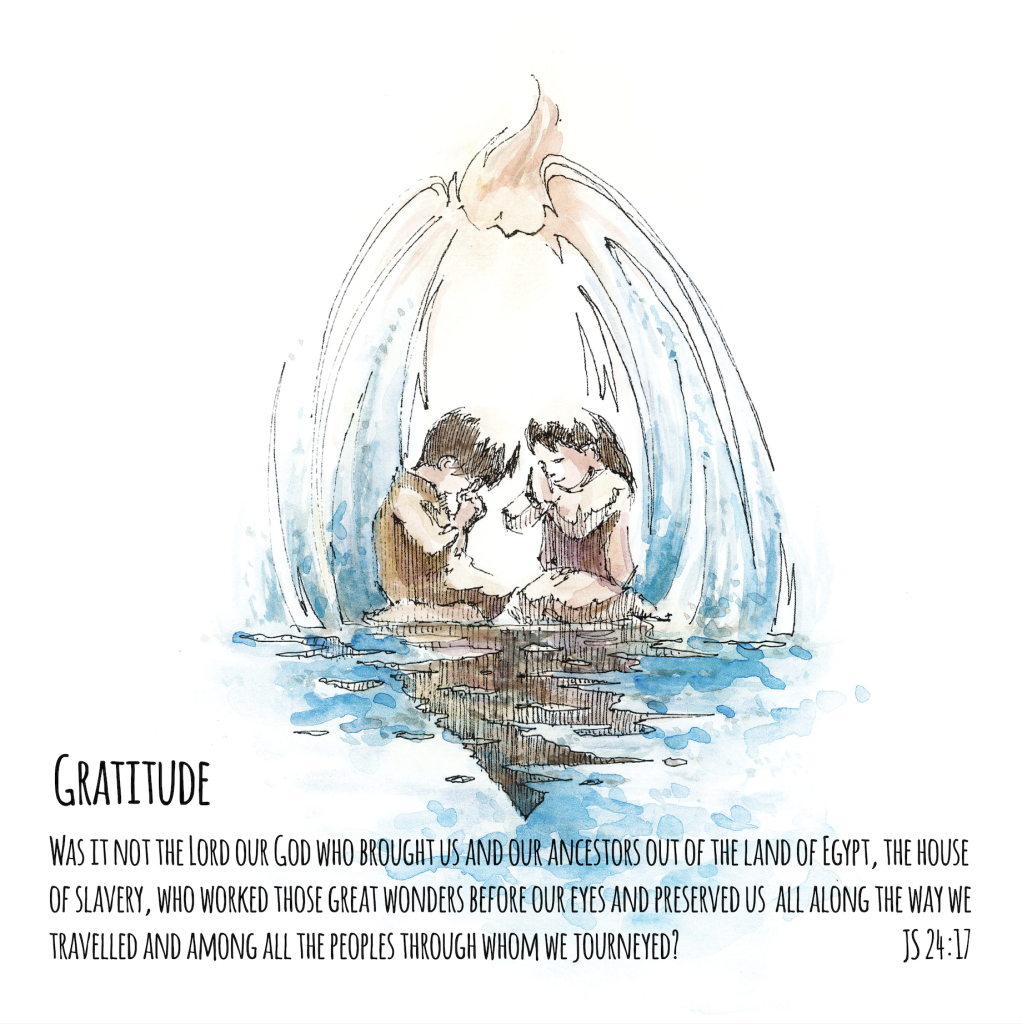
As they reviewed the sketches, they were reminded that God is an active Father who never stopped seeking them when they strayed. For example, the sketch chosen for the theme of Gratitude for the month of November shows Joseph and Susan as two little children at prayer. Just as the Israelites were called out of slavery in Egypt, God called them out of a life and profession they had pursued for over two decades to draw them closer to Him in a different vocation. Though their path ahead was fraught with uncertainty, the angel of the Lord sheltered them beneath her wings, a sign of divine protection and guidance. Joseph’s sketches were visual prayers, a way of seeing God’s hand at work in their lives, leading them forward with hope and teaching them to trust in His providence.
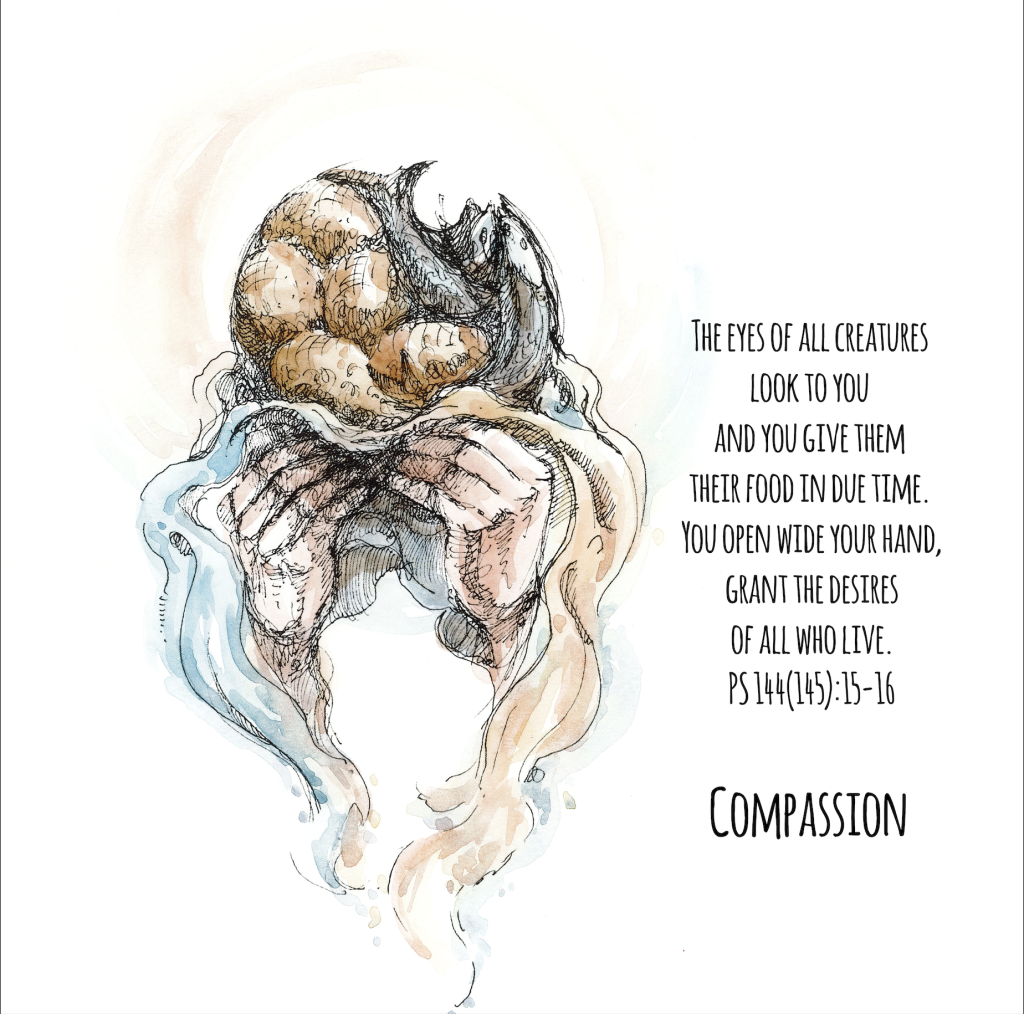
For Susan, this was a prayerful opportunity to enter into Joseph’s dialogue with the Lord while revisiting their shared moments through each sketch. Adding watercolour to his reflection sketches became an act of companionship rather than simply an artistic task. By bringing colour and warmth to his drawings, she hoped to make more visible the meanings, emotions, and prayer present within each sketch. For example, in the sketch selected for the theme of Compassion for the month of July, the miracle of the five loaves and two fishes in Christ’s hands are multiplied into something far greater than themselves and seen as a foreshadowing of the Eucharist. A subtle glow of light is added to draw out this meaning, highlighting the sacredness of the act of offering and depicting Christ’s compassionate love through warm colour tones. He takes what little we have, transforms and multiplies our humble gifts, and gives them back to us in abundant love.
Drawing from their own journey of faith, Susan and Joseph hope that these images will invite quiet reflection on Scripture. They pray that these artworks, rooted in God’s word, will accompany viewers in their daily prayer and, as they encounter them throughout the calendar, help them discover a deeper sense of God’s presence – just as the journey of creating them has deepened their own.