It’s that special time again when we intentionally look over the year that has passed and see where our journeys, especially our spiritual journeys, have taken us. We ask ourselves, “Where has God been in my life, and where is he leading me to?”.
During Advent – a season of waiting with a purpose – we wait for the second coming, the ultimate return of all things back to God; and closer to the week of Christmas, we turn our focus to the first coming of Christ at Bethlehem. Christ reminds us that we are not alone on our journeys; just think of his incarnation at Christmas, and the repeated coming again in the flesh at every Eucharist.
I look back on the year and give thanks to God for the blessings, graces and opportunities for growth, and the times of struggle that opened windows for a greater realisation of self.
One of the greatest joys for me was the meeting of Guardians (community superiors) in September. We have been meeting quarterly online for two years, but our in-person meetings deepen our relationships and train Guardians for their role as animators of our fraternities.
“Animation” is a tricky word, especially when used in the context of a fraternity. To animate is to give life and if we want to be true to its root meaning (anima = soul), then it is to give soul to the brotherhood. That’s the labour of love of the Guardian for each community, and likewise, of the Custos for the brotherhood of seven communities in Malaysia and Singapore. Encouraged deeply by the dedication of other provinces to the training of Guardians, I have tried to implement formation and training of our Guardians for their primary spiritual call to care for souls – particularly the “soul” of the fraternity. We spent three full days in Kuching, Sarawak working on this, and we also had training in finance and accountability.
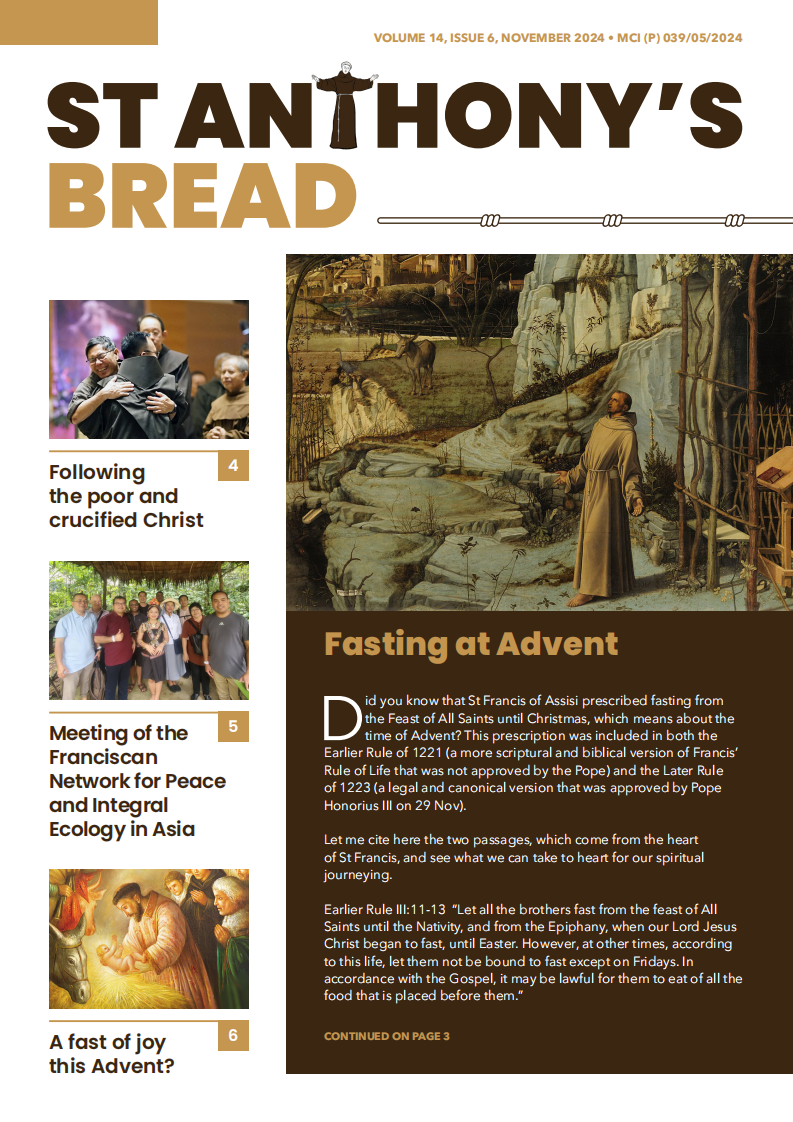
In October, I was with our Asian animators for JPIC (Justice, Peace and Integrity of Creation) for a meeting in Sabah to consolidate our current efforts, collaborate with one another and the wider Franciscan Family, and create new initiatives to address real needs on the ground. The focus was on two areas – peace and integral ecology. You can read about this meeting in the News section. The presence of a Franciscan sister, a Secular Franciscan and an Anglican Third Order Franciscan shows the inclusivity and fraternal collaboration among us who follow the spirit of St Francis of Assisi.
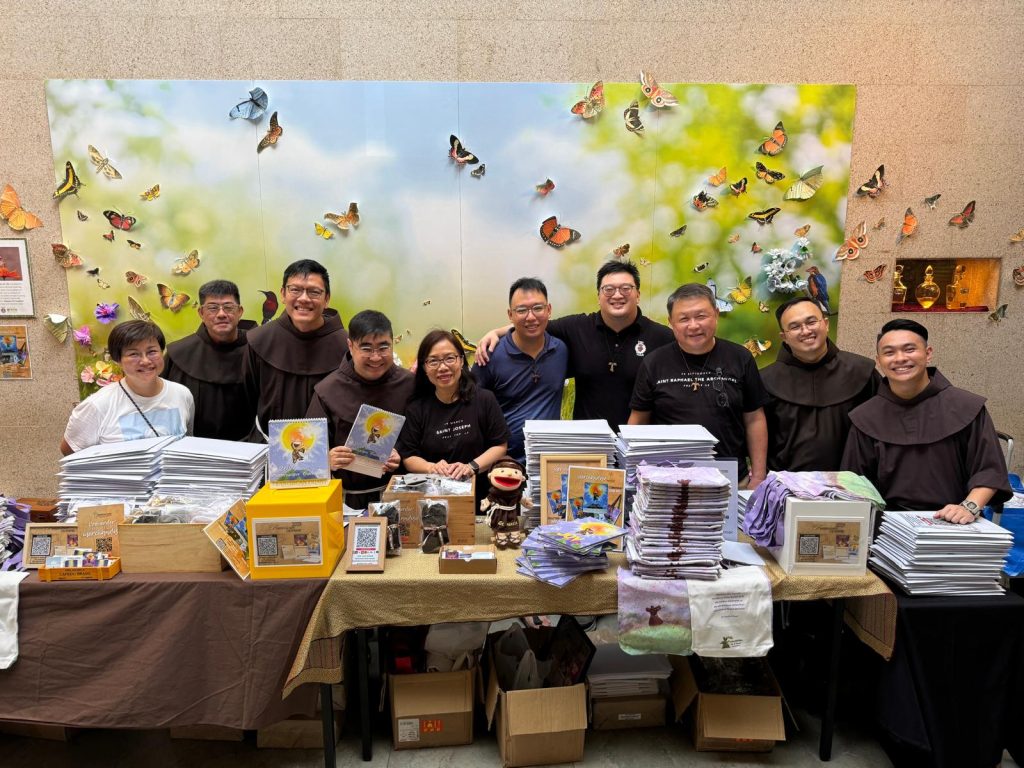
I am also grateful for the experience of promoting our Franciscan Calendar 2025, featuring artwork by Friar Robin Toha, and accompanying merchandise. Many thanks to our collaborators and the four parishes we worked with, and to those of you who bought our calendar and merchandise.
In November, Friar Vernon Chua and I accompanied 32 pilgrims on a Franciscan Italy pilgrimage. I went from that to Rome for the meeting of Franciscan Conference Presidents at our OFM Curia (HQ), my first as the President of the South Asia, Australia and Oceania Conference (SAAOC). Upon my return to Singapore, I jumped straight into the Closing Residency Programme of the Asian Franciscan Formators Training (AFFT). These two weeks of in-person sessions included an experience of the process of Franciscan Formative Accompaniment with a Swiss friar-psychologist.
There is so much happening, and we friars are fortunate to have you journeying with us in prayer and generous contributions. We remain extremely grateful to you all, and we wish you and your loved ones a very fruitful Advent into Christmas and the New Year!
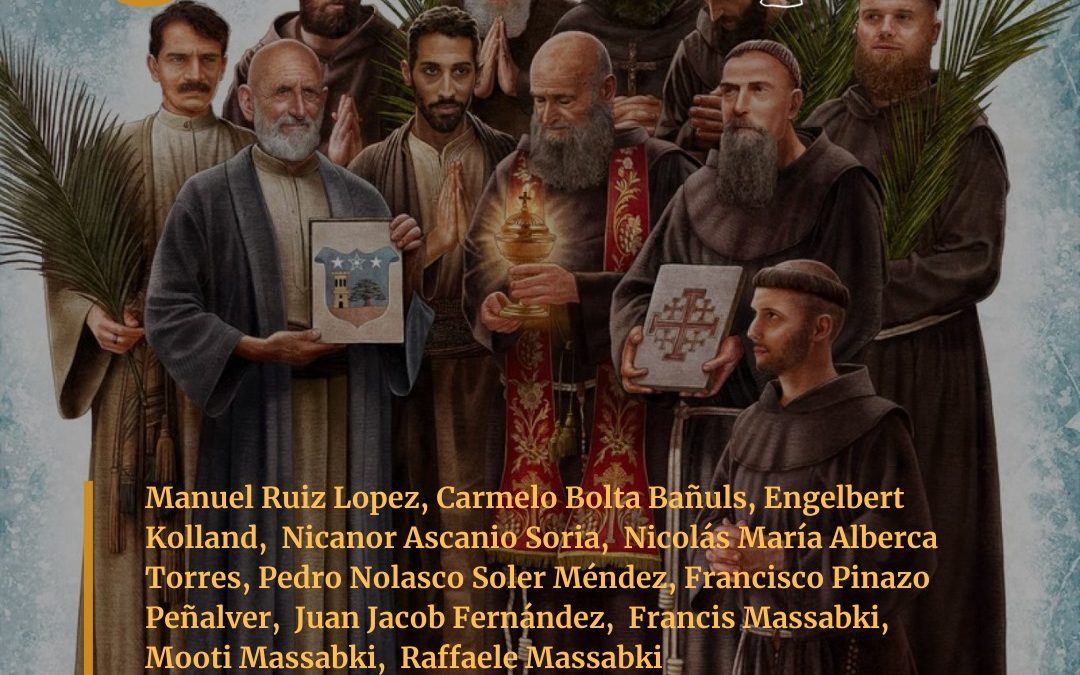
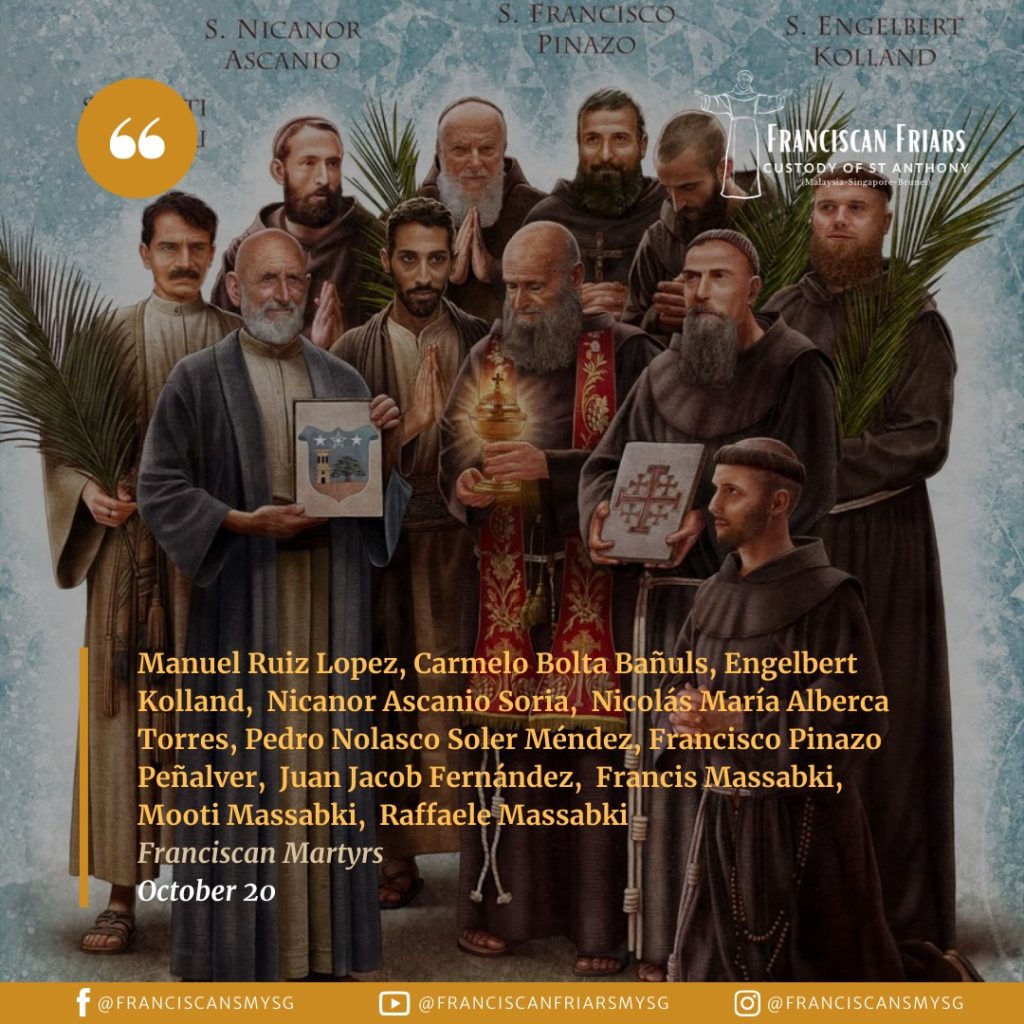
In the framework of the celebrations of the Eighth Centenary of the death of St. Francis 1226-2026, in the commemorative year of the Stigmata 2024, on Sunday 20 October Pope Francis will proclaim eight Friars Minor of the Custody of the Holy Land, martyrs of the faith in Damascus in 1860, saints. They are accompanied in martyrdom and glory by the three blessed Massabki brothers, lay Maronites.
In July 1860, the persecution of Christians by the Shi’ite Druze in Lebanon spread to Syria. On the 9th July , the populous Christian quarter of Damascus was set on fire and the people put to the sword. Christians of various denominations and rites suffered all sorts of violence. That same night the Franciscan friary of St. Paul was also attacked. The eight religious who lived there – seven of Spanish nationality and one of Austrian nationality – together with three lay Maronite collaborators who had taken refuge there, were slaughtered for refusing to deny their Christian faith and embrace Islam. The bodies of the martyrs, pitifully recovered a few days after the massacre, were buried in a common tomb which, with the rebuilding and consecration of the friary church in 1866, became a destination of devotion by the Christians of Damascus.
The new saints of the Order of Friars Minor and the Maronite Catholic Church will be:
Manuel Ruiz López, Guardian of the friary; was born in 1804 in San Martín de las Ollas, Burgos, Spain. He entered the Friars Minor in 1825 and was ordained a priest in 1830. The following year he was sent to the Holy Land where, after learning the local languages, he carried out a fruitful apostolate. Forced to return to Europe in 1847 for health reasons, he returned to the Holy Land in 1858. On the night of the massacre, as soon as the rioters entered the friary, he ran to the church to consume the Eucharistic Species, and was slaughtered at the foot of the altar.
Carmelo Bolta Bañuls, parish priest, was born in 1803 in Real de Gandía, Valencia, Spain. In 1825 he was received among the Friars Minor and in 1829 he was ordained a priest. In 1831 he left for the Holy Land where he resided in the friaries of Jaffa, Damascus and Ain Karem at the Sanctuary of the Visitation. In 1851 he was transferred to Damascus as parish priest and teacher of Arabic.
Engelbert Kolland, parochial vicar, born in 1827 in Ramsau, Salzburg, Austria. He entered the Friars Minor in 1847 and was ordained a priest in 1851. He reached the Holy Land in April 1855. He carried out his missionary apostolate first at the friary of the Holy Sepulchre, Jerusalem, then in Damascus as assistant parish priest, where he was much loved by the people.
Nicanor Ascanio Soria, was born in 1814 in Villarejo de Salvanés, Madrid, Spain. In 1830 he entered the Friars Minor. Due to the suppression of religious, he was ordained a priest amongst the diocesan clergy. With the reopening of the College for the Missions of Priego di Cuenca, he was able to return to the Friars Minor in 1858. He arrived in the Holy Land in February 1859 and was assigned to the friary of Damascus. His readiness for martyrdom was a constant note of his spirituality.
Nicolás María Alberca Torres, born in 1830 in Aguilar de la Frontera, Córdoba, Spain. Already a religious amongst the Brothers of the Jesús Nazarene Hospital in Cordoba, he was received amongst the Friars Minor in 1856 and ordained a priest in 1858. Called to missionary life, he arrived in the Holy Land in 1859 and was assigned to the friary of Damascus to learn the Arabic language.
Pedro Nolasco Soler Méndez, was born in 1827 in Lorca, Murcia, Spain. After some work experience he was received at the age of twenty-nine amongst the Friars Minor in 1856 and ordained a priest in 1857. The following year he submitted a request for the mission of the Custody of the Holy Land, where he arrived on the 20th February, 1859. He was sent to the friary of St. Paul in Damascus where he spent just over a year.
Francisco Pinazo Peñalver, was born in 1802 in the village of El Chopo in Alpuente, Valencia, Spain. He was admitted to the novitiate of the Friars Minor in 1831. As a lay brother he held the office of sacristan until 1835, the year of religious suppression in Spain. In order to re-embrace community life, he opted for service in the Custody of the Holy Land, where he arrived in October 1843. For about 17 years he worked as a cook and tailor in various friaries. In the friary of Damascus, at the time of his martyrdom he was the sacristan.
Juan Jacob Fernández, was born in 1808 in the town of Moire, Ourense, Spain. In 1831 he entered as a lay brother amongst the Friars Minor. Unfortunately, the suppression of 1835 interrupted his experience of conventual life for a few years. In 1858 he asked to be associated with the Custody of the Holy Land. In 1859 he was serving as the cook at the friary in Damascus.
Francis Massabki, a Maronite Christian, silk merchant, was well known in Damascus and esteemed as an honest and pious man. He was married and the father of eight children. He gave an example of great generosity everywhere, especially towards the poor and needy. He was linked to the Franciscan friars for whom he acted as a proxy. Together with his brothers Mooti and Raffaele he was at the friary of St Paul at the hour of his martyrdom.
Mooti Massabki, lived with his wife and five children in the same house as his older brother Francesco. He attended the convent of St. Paul daily, both for prayer and to carry out teaching activities in the local school for the boys. Ready to shed his blood for Christ, as he taught in catechism lessons, he did not hesitate to offer his life in the name of faith. His two sons, Naame and Joseph, were pupils at the convent school at the time and were eyewitnesses to the martyrdom.
Raffaele Massabki, younger brother of Francis and Mooti, unmarried, gladly lent his help to his family and to the friars; he was very devoted to Our Lady and paused for a long time in prayer in the church of the friary. He was still present within the conventual walls of St. Paul on the night between 9th and 10th July 1860, when the Druze burst in, by whom he was murdered together with his two brothers.
In 1872 the Order of Friars Minor began the process for the beatification of Manuel Ruiz and the seven confreres. With a special procedure authorized by Pius XI at the request of the Maronite Patriarchate, the names of the three Massabki brothers, collaborators of the religious, were added to the group of Friars Minor shortly before the beatification. The rite was solemnly celebrated in St. Peter’s Basilica in the Vatican on the 10th October, 1926.
The resumption of the Cause has recently been determined by the observation of the ever-growing fame of martyrdom of the eleven Martyrs of Damascus and the spread of their cult throughout the world, particularly in the Maronite Church. Associated with this was the certainty that their canonization could constitute a message of dialogue, peace and unity in the Middle Eastern context, which was less and less serene and more and more agitated by the winds of war. To this end, the Holy Synod of Maronite Bishops in the year 2022 invoked from Pope Francis the canonization of the Blessed Massabki Martyrs, heroic exponents of Maronite lay holiness. The Minister General of the Order of Friars Minor and the Custos of the Holy Land also joined in the petition, emphasizing the aforementioned pastoral opportunities and in honour of the Eighth Centenary of the death of St. Francis of Assisi.
In the Consistory of the 1st July 2024, Pope Francis established that the solemn Canonization would come to pass in St. Peter’s Square on Sunday the 20th October, 2024, World Mission Day.
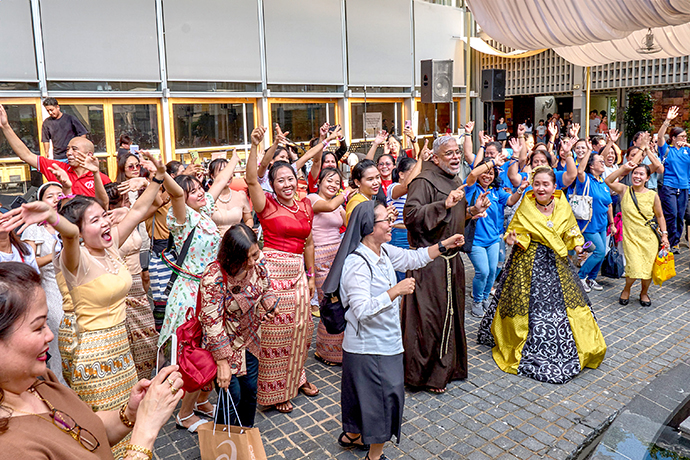
St Mary’s Parish Priest, Fra Michael D’Cruz OFM, joined the vibrant closing celebration by dancing alongside members of the different migrant communities.
Contributed by ACMI.
The Archdiocesan Commission for the Pastoral Care of Migrants & Itinerant People (ACMI) celebrated the 110th World Day of Migrants and Refugees at the Church of Saint Mary of the Angels on Sept 22.
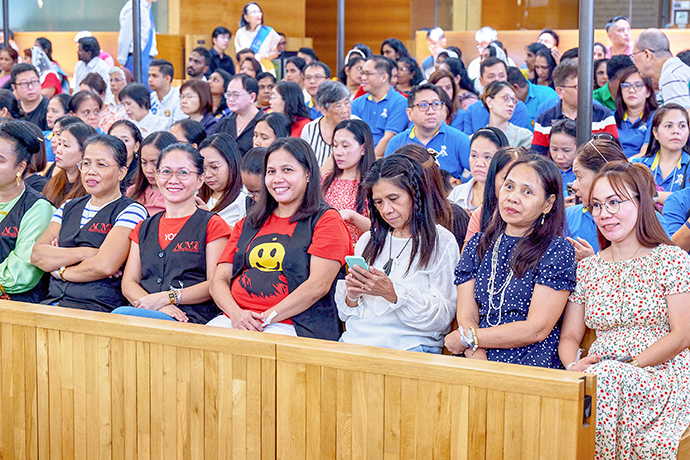
Over 1,400 migrants, collaborators, guests, and the local community began the day with Mass celebrated by Cardinal William Goh, together with concelebrants and chaplains from the various migrant communities and St Mary’s.
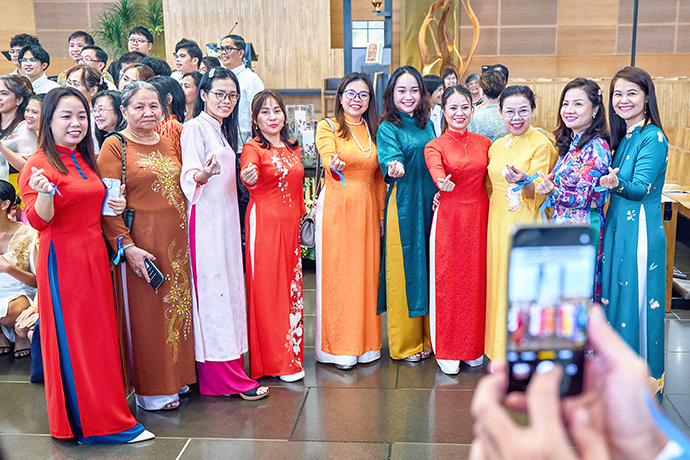
Many migrants, such as the Vietnamese community, came dressed in their ethnic costumes, adding a splash of colour to the occasion.
Readings were in various languages, and the choir included hymns in both Tagalog and Mandarin.
In his homily, Cardinal Goh reminded the congregation that Singapore was built by migrants, and that the country has benefited from their labour.
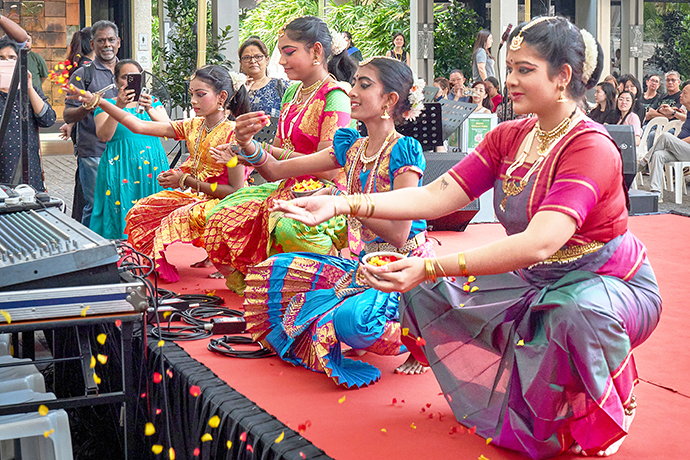
The St Mary’s Tamil Community welcomed Cardinal William Goh with a traditional dance before the Mass began.
He also urged Singaporeans to be generous and compassionate towards their migrant brothers and sisters.
“Creation belongs to everyone, not just a selected group of people,” he said.
Among the congregation were some of ACMI’s Skills Development students, who take part in upskilling and language courses on Sundays to broaden their knowledge.
He asked the congregation to be generous with the blessings they received, and to focus more intentionally on the last, the lost, and the least.
“If we want to change the world, we need to first change ourselves,” he said, encouraging the faithful to live the Gospel and be the face of Christ in the world.
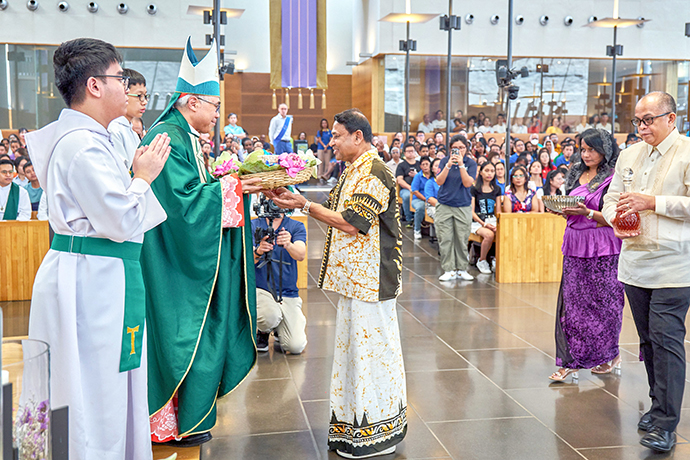
Representatives of the various migrant communities bringing up the gifts during the Offertory. Photos: VITA Images and Marcus Chung.
Embracing diversity
Following the Mass, 11 migrant communities showcased an array of performances from upbeat songs to traditional dance numbers, showing the crowd their unique ways of praising the Lord, while sandwiches prepared by the parish kept the crowd satisfied as they clapped, sang, and danced to the music.
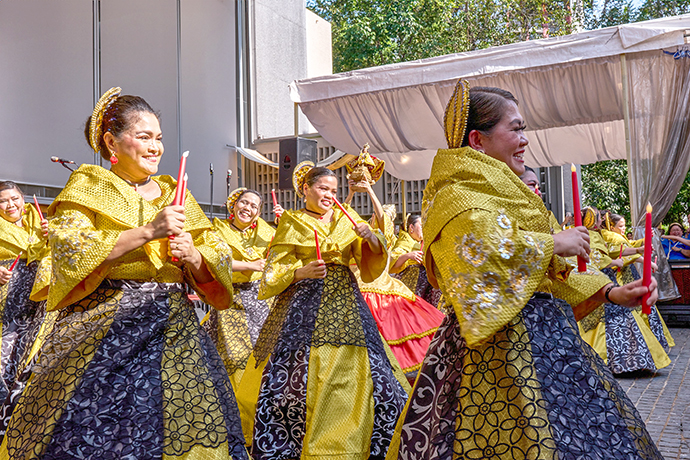
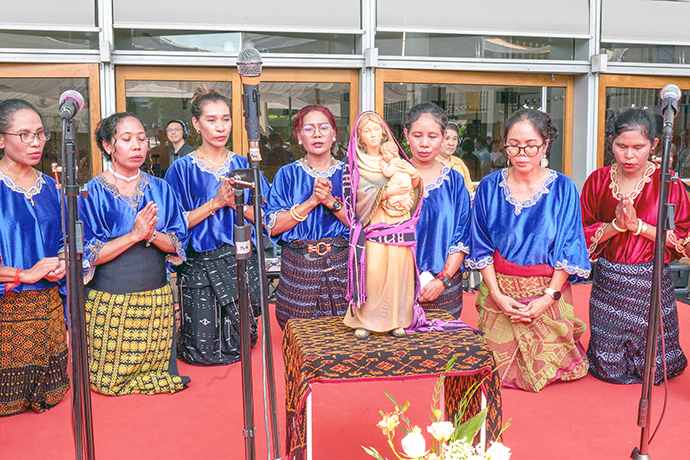
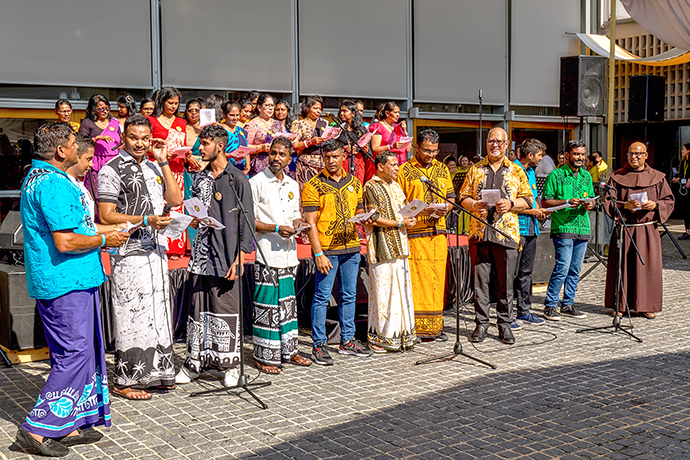
The Church of St Mary of the Angels’ migrant communities, featuring the 1pm choir and the Filipino community, showcased a traditional Sinulog dance that honours the child Jesus.The Indonesian community performed Ina Maria, a song dedicated to the Blessed Virgin Mary. Photos: VITA Images and Marcus Chung.The Sri Lankan community sang two hymns, Diya Soyana and Rajaliyakage, which speak of a deep love and trust in the Lord through all circumstances, with Fra Julian Mariaratnam OFM (R) joining in for a song.
A toolkit on how to celebrate migrants throughout the year in English, Mandarin, Malay, and Tamil, can be found at rebrand.ly/ACMItoolkit. This includes resources for organising a Migrant Sunday Mass – Scripture readings, homily pointers, and prayers – and activity and gift ideas for parishioners and friends of migrants.